FRA Proposes High-Speed Train Noise Standards Above 160 MPH
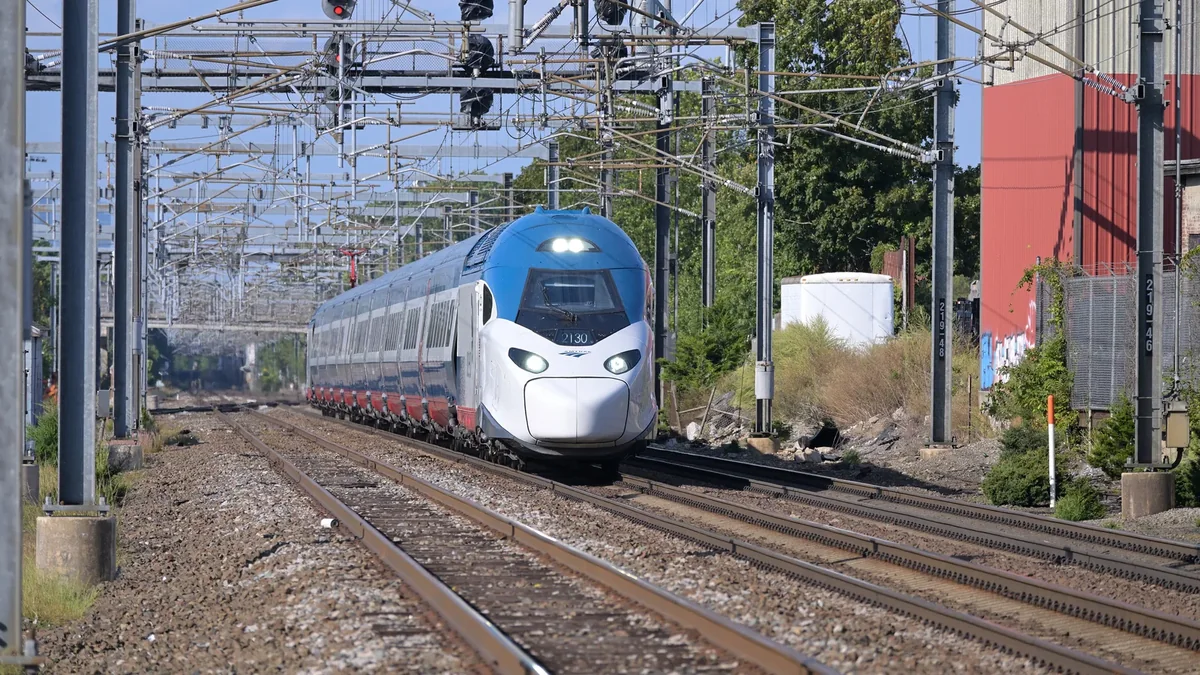
USA: The Federal Railroad Administration has proposed new high-speed train noise standards for operations above 160 mph, addressing a regulatory mismatch between conventional mechanical-noise limits and aerodynamic noise at higher speeds.
Alternative standard for 160–220 mph
The FRA proposal would add an optional compliance route in 49 CFR Part 210 for trains operating above 160 mph and up to 220 mph. Railroads would not be required to use it: the existing 40 CFR Part 201 standards would remain in force for operations at or below 160 mph and could still be used to demonstrate compliance at higher speeds.
FRA’s technical basis is the change in dominant noise source as speed rises. Mechanical, propulsion and wheel-rail noise generally dominate at lower speeds, while aerodynamic noise from airflow around the train becomes the main contributor above roughly 160 mph.
The proposed alternative standard uses an equivalent sound level over the train’s full pass-by rather than the current maximum-level approach. It sets a normalized baseline of 96 dB(A) at 160 mph, measured 25 feet from the track centerline. The permitted level would increase with speed to about 103 dB(A) at 220 mph. Measurements would be taken at heights of 4 and 12 feet above the top of rail, with the higher microphone intended to capture upper-body sources such as pantographs.
Don’t miss…Monadelphous Wins Around $200m BHP Car Dumper Contract
How the new compliance pathway would work?
Compliance would be demonstrated through pass-by testing at the train’s maximum operating speed under specified conditions. The proposal would require a railroad to notify FRA 30 days before testing and keep a detailed test report available for agency inspection. Subject to proposed conditions, results from a previously tested operation could also support compliance at speeds between 160 mph and the maximum speed already demonstrated, up to 220 mph.
For operations above 220 mph, FRA proposes a separate special-approval process rather than extending the 160–220 mph formula indefinitely. A petition would need to describe the proposed noise standard, testing methods, measurement criteria, operating environment and supporting analysis. FRA would publish notice of the petition in the Federal Register and provide an opportunity for public comment. The agency identifies magnetic-levitation systems and operations wholly within enclosed rights-of-way as examples that could require project-specific treatment.
The change is proposed, not final
The U.S. Department of Transportation announced the initiative on July 31, 2026, but the official document is a Notice of Proposed Rulemaking and request for comments. The new compliance routes therefore are not yet final requirements. DOT says FRA expects the reform to save high-speed rail developers $100 million over 30 years, while traditional noise limits remain in place for operations up to 160 mph.
News on railway transport, industry, and railway technologies from Railway Supply that you might have missed:


