Mumbai’s Tunnel Road Network and Its New Mobility Vision
14.11.2025
Mumbai’s Tunnel Road Network marks a major shift in the city’s mobility plan because it strengthens key corridors, cuts heavy congestion, and supports more reliable regional connectivity for daily commuters.
This is reported by the railway transport news portal Railway Supply.
How the Tunnel Road Network Improves Urban Mobility?
MMRDA now moves ahead with the Detailed Project Report for the Tunnel Road Network and, in MMRDA’s official press note, treats it as the city’s third transport layer. In practice, planners accept that surface routes can barely grow anymore.
Don’t miss…Groningen Drops Its “Hydrogen Trains” Project over Costs
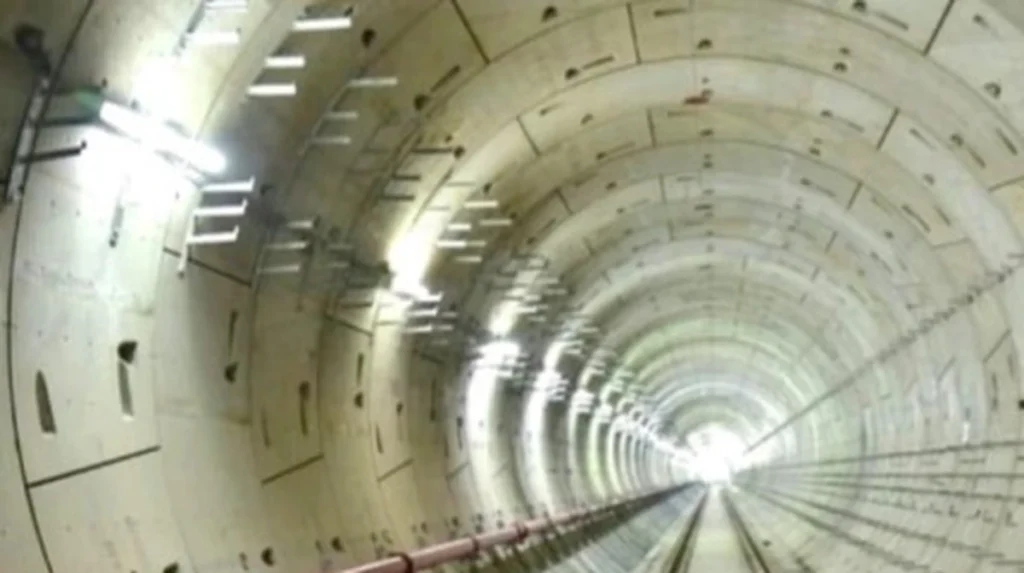
The scheme envisions a subterranean expressway that links the Coastal Road, the BKC high-speed rail hub and Chhatrapati Shivaji Maharaj International Airport, a plan also detailed by The Economic Times. So the city channels traffic below ground, easing the burden on crowded surface routes.
MMRDA ties this vision to its “Mumbai in Minutes” strategy, which aims to tighten links between road corridors, the metro network and coastal infrastructure. In real terms, that means shorter trips between business and residential areas.
Phase 1 stretches for about 16 kilometers between the Worli Sea Link, BKC and the airport. It links into the Mumbai–Ahmedabad High-Speed Rail Corridor and eases the chronic north–south load on WEH and SV Road.
Phase 2 adds roughly 10 kilometers between EEH and WEH and gives cross-city drivers a direct east–west tunnel option. Phase 3 runs close to 44 kilometers and forms a long underground spine from north to south.
Why the Tunnel Road Network Matters for Long-Term Planning?
On 30 September 2025, the Deputy Chief Minister and MMRDA chairman approved a consultant for Phase 1. Tenders followed on 10 October and bids close on 17 November. For a project, that pace is quick.
Chief Minister Devendra Fadnavis says Mumbai’s rise as an economic center depends on moving people and goods efficiently, and he calls the tunnel system a major step, as reported by Hindustan Times. For officials, multi-level connectivity is no longer optional.
Deputy Chief Minister and MMRDA chairman Eknath Shinde describes the Tunnel Road Network as a third layer beneath the surface that ties in with coastal roads, the metro network and the planned bullet train corridor.
Metropolitan Commissioner Dr. Sanjay Mukherjee stresses that the DPR and techno-economic study examine geology, environmental impact, socio-economic effects and safety. To be fair, those details decide whether the alignment can actually work on the ground.
Once built, the tunnel network sends much of the through-traffic underground, so surface streets can breathe a little. That shift cuts emissions, opens space for pedestrians and cyclists and supports broader goals for cleaner urban air.
For businesses, nearly everything comes back to access. Faster trips between South Mumbai, BKC and the airport reduce wasted time, and, as one planner might put it, “you can see the cliff coming otherwise.”
Taken together with the Coastal Road, the metro network and surface expressways, the Tunnel Road Network completes MMRDA’s three-layer mobility strategy. In real terms, movement above, on and below ground now fits into a single plan.
News on railway transport, industry, and railway technologies from Railway Supply that you might have missed:
Find the latest news of the railway industry in Eastern Europe, the former Soviet Union and the rest of the world on our page on Facebook, Twitter, LinkedIn, read Railway Supply magazine online.Place your ads on webportal and in Railway Supply magazine. Detailed information is in Railway Supply media kit