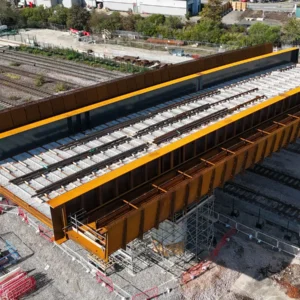
Mumbai–Ahmedabad Bullet Train Electrification Advances
INDIA: Electrification work on the Mumbai–Ahmedabad Bullet Train is advancing as the country installs its first 2×25 kV high-speed traction system across the 508 km corridor in Maharashtra and Gujarat.
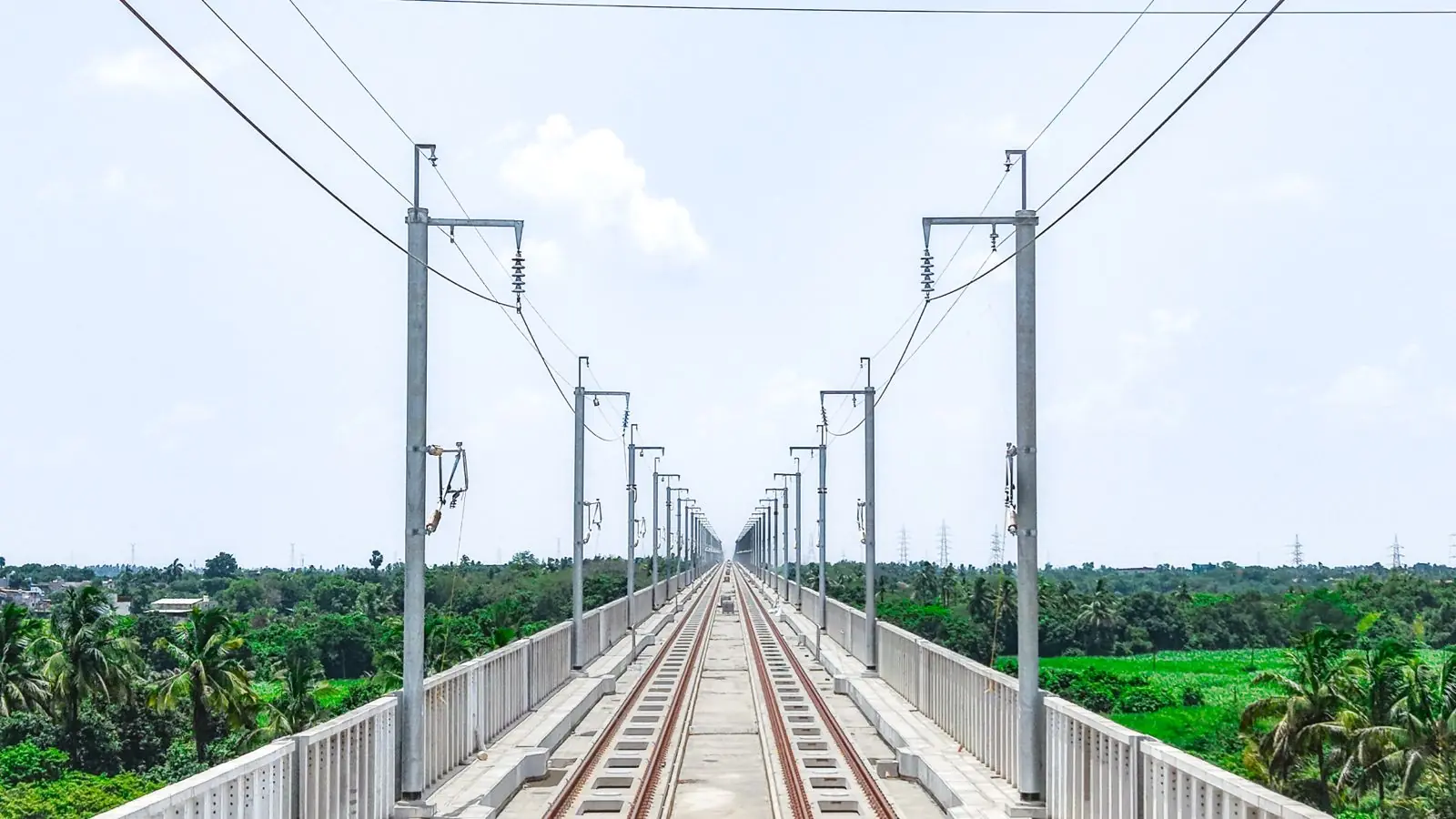
The system is being installed alongside civil construction and track laying. According to the Ministry of Railways’ July 22 update, it is designed to provide stable power for trains operating at up to 320 km/h.
A 2×25 kV network for 320 km/h operation
Electricity will flow from the National Power Grid through specially designed grid substations to 14 traction substations. Five will be in Maharashtra and nine in Gujarat, distributing power between sections as trains travel along the route.
The network will also include 31 switching posts for continuity of supply and rapid fault isolation. Another 16 distribution substations will serve stations, signalling equipment, maintenance facilities and other operational infrastructure.
Don’t miss…Pune Metro Line 3 Gets Safety Approval for 13-km Section
The wider Mumbai–Ahmedabad High-Speed Rail project covers 508 km. Its new overhead electrical network will extend across approximately 1,125 track km, including depot lines.
Nearly 22,000 masts will support the catenary
Nearly 22,000 steel masts and more than 25,700 cantilever assemblies will carry the compound catenary system. The masts will stand between 10.5 and 14.5 metres high.
The contact wires are installed under calculated mechanical tension so the pantograph can collect power continuously at high speed. This arrangement is intended to prevent interruptions, fluctuations and sparking during operation.
Major parts of the electrification package are now being manufactured in India. They include transformers, cross arms, ground wires, protection wires and feeder wires, together with other traction power, distribution and electromechanical components.
Earthquake detection linked to train protection
The corridor’s traction substations will be equipped with early earthquake detection seismometers capable of initiating protective action within seconds. The plan provides for 28 instruments: 22 at traction substations and switching posts along the corridor, plus six inland units in earthquake-prone areas of Maharashtra and Gujarat.
When seismic activity is detected, the protection system will initiate an immediate train stop. The electrical network will also be supervised in real time from a central control centre, with automated systems designed to respond to faults within fractions of a second.
News on railway transport, industry, and railway technologies from Railway Supply that you might have missed: