Montreal REM stations move into planning phase
19.06.2026
Montreal REM stations are moving into the planning phase after an announcement by CDPQ Infra, Quebec’s government and the city of Montreal.
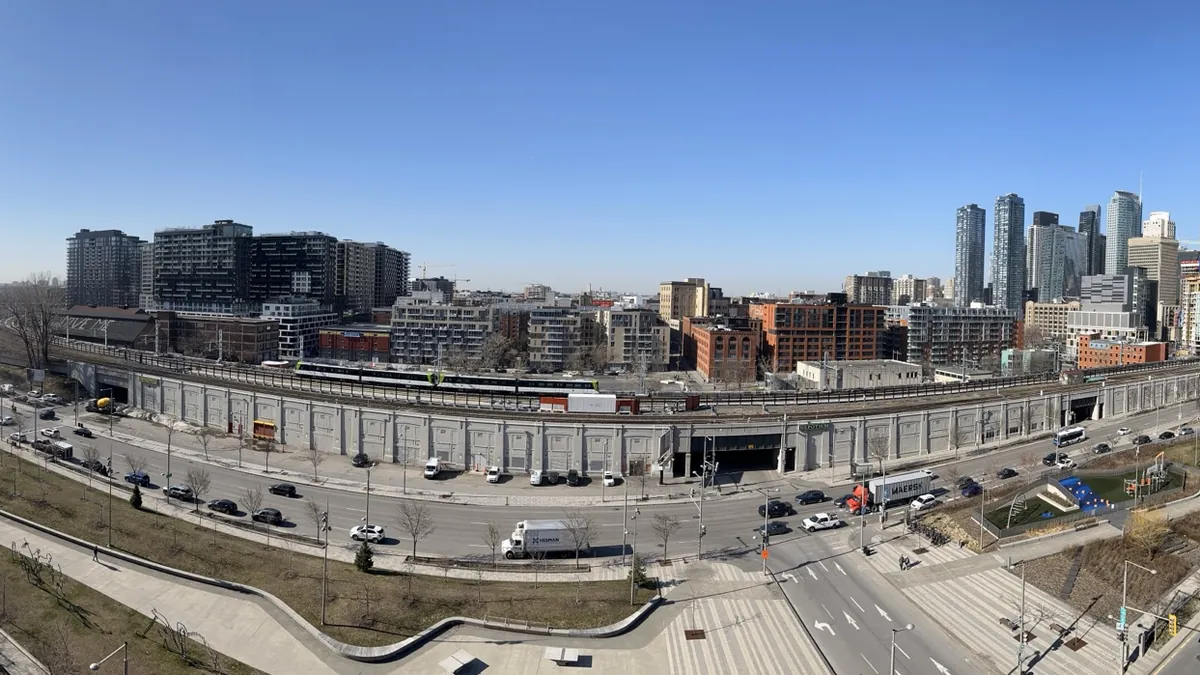
Planning phase for Montreal REM stations
The work covers the Griffintown-Bernard-Landry station and another station planned near Bridge and Wellington streets. REM is an automated light-rail system serving the Greater Montreal region.
The Griffintown-Bernard-Landry station will serve the northern side of the Lanchine Canal and support redevelopment around the Wellington Basin and on the canal’s southern side. CDPQ officials said the exact site and name of the second station will be confirmed later.
Construction of the Griffintown station had previously been planned for 2024, but planning was delayed in 2023 after Montreal requested an additional station. CDPQ Infra, the project developer, then recommended building both stations at the same time to reduce costs and limit disruption.
Danial Farina, president and CEO of CDPQ, said the joint construction approach offers the best solution for users and the REM network.
“It enables the implementation of the most efficient methods to deliver this major enhancement while limiting impacts on REM service and local communities.”
Studies, funding and construction timing
The planning stage will include procurement, technical studies and environmental studies, while also setting the project’s final schedule and cost. CDPQ Infra expects the full project could be delivered over four years, with construction starting in 2028.
The REM network will remain in operation during construction.
Context
The planning stage adds an operational layer to the project, not only a financial one. CDPQ Infra says the synchronized construction approach is meant to limit impacts on REM service, local communities and costs. REM also says planning will help define ways to reduce disruption for users and nearby residents while involving community and neighbourhood stakeholders. The added complexity comes from work on an operating network, including the integration of a new station above active rail infrastructure and coordinated interventions across the REM network.
Funding for this phase includes CA$25 million from Quebec’s government and CA$250 million from the Canada Infrastructure Bank. With the additional CIB contribution, the bank’s total funding for the project has reached CA$1.83 billion.



