Modernization of the TGM4 Locomotive within the Coolergy Project
18.11.2025
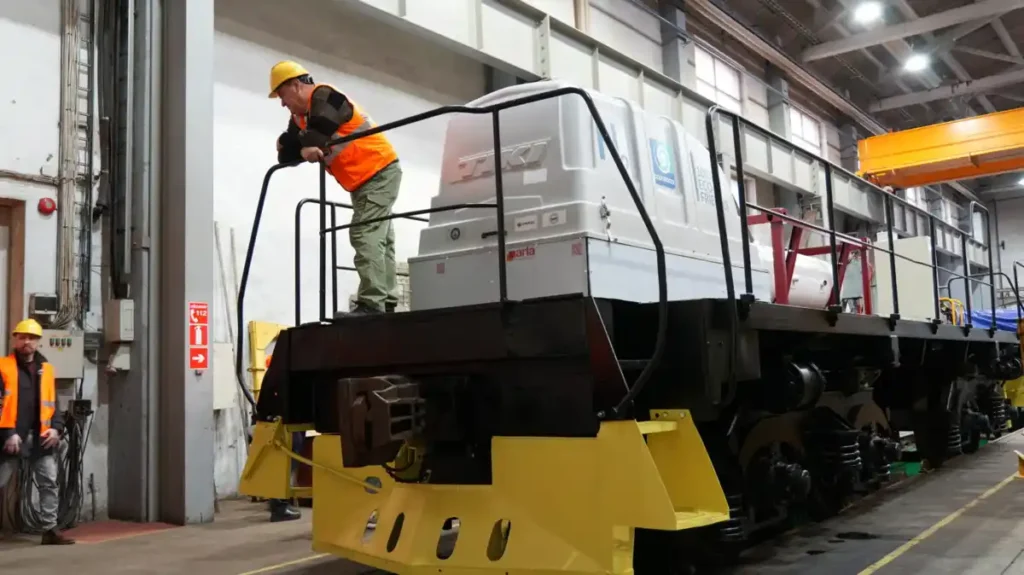
Modernization of the TGM4 locomotive within the Coolergy project moved from documents to metal as the company tested its hydrogen power unit on a rebuilt engine at Estonia’s Tapa depot.
This is reported by the railway transport news portal Railway Supply.
Modernization of the TGM4 Locomotive and the 2024 Agreement
At the Tapa site, engineers are still running staged trials of the new traction system. They expect to complete the upgrade of the first locomotive by June before handing it over for pilot industrial service. As one engineer might put it, “this is still very much a trial run, not a finished product.”
Don’t miss…Uzbekistan Is Modernizing Its Railways and Rolling Stock
The modernization programme rests on an agreement signed by Coolergy and Estonian firm Hanko Trans in early 2024 for twelve TGM4 locomotives operated by DZ Loko in Latvia’s Freeport of Riga. In practice, it frames how the partners move the project forward together.
After conversion to liquid hydrogen, each unit is meant to enter pilot operation in the port. That phase will show, in real terms, how the concept works under everyday port conditions.
Meanwhile, Coolergy is setting up production and liquefaction capacity at Eesti Energia’s Baltic Power Plant in Narva, as the company notes in its official release from Coolergy. A wind farm on the site, frankly, is what lets the company describe the hydrogen as “green.”
The agreement to convert twelve TGM4 locomotives and deploy them in the Freeport of Riga has also been covered in industry media, including Railway Supply, which underlines the project’s relevance for regional rail operations.
Modernization of the TGM4 Locomotive and Coolergy’s Technology Choices
Coolergy is handling the technical side of modernization together with Czech engineering firm Aurora Engineering. Its specialists prepared documentation for shifting TGM4 locomotives to hydrogen traction and drafted a future locomotive design for later stages of the programme. Engineers at Estonian company Operail Repairs rebuilt the first unit, and the firm provided production facilities to assemble the components and install them on the locomotive.
In practice, the modernization of the TGM4 locomotive rests on Coolergy’s modular hydrogen traction system. The company built it as a platform that can, in theory, be deployed on other types of transport as well.
Before anyone installed the system on a locomotive, the technology had already covered 4,000 kilometres of running, so engineers could observe how the modules performed under real conditions. Each module uses Toyota fuel cells rated at 80 kilowatts and weighing 320 kilograms; four modules bring total output to 320 kilowatts.
During the demonstration at the Tapa depot, engineers ran the system in a lower-power configuration because the project is still in a testing phase. Representatives of Lithuanian freight operator LTG Cargo attended the event, and the Coolergy team continues to check how the equipment behaves at each stage of the rollout. Once modernization of all twelve locomotives is complete, the port will, at least for now, have a pilot fleet reserved for extended operational trials under the hydrogen programme.
News on railway transport, industry, and railway technologies from Railway Supply that you might have missed:
Find the latest news of the railway industry in Eastern Europe, the former Soviet Union and the rest of the world on our page on Facebook, Twitter, LinkedIn, read Railway Supply magazine online.Place your ads on webportal and in Railway Supply magazine. Detailed information is in Railway Supply media kit