Metra 2026 budget moves forward with updated plan
14.11.2025
Metra 2026 budget sets out a revised financial plan that leans on new state support, scraps a proposed fare hike, and, frankly, keeps service steady as COVID relief winds down.
This is reported by the railway transport news portal Railway Supply.
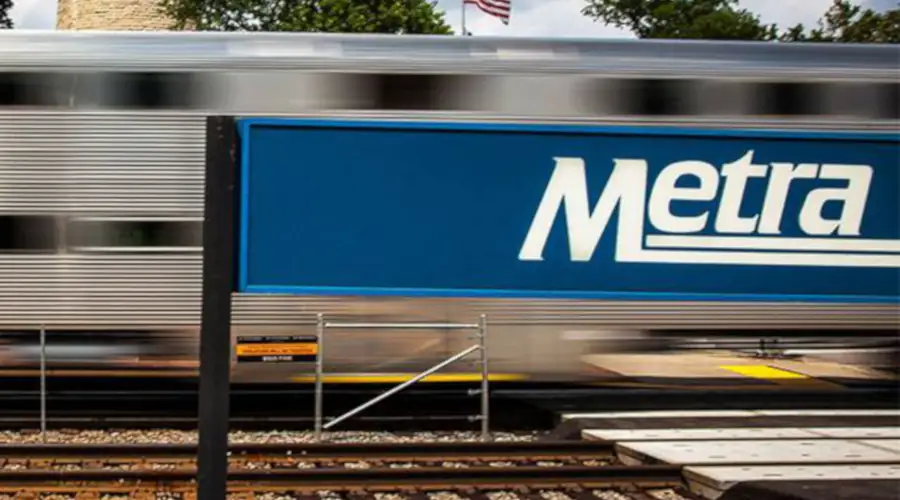
Understanding how the Metra 2026 budget is structured
New state support arrived after Metra unveiled its initial 2026 plan in October, and the Metra 2026 budget now folds that money into a set of targeted changes, as detailed by Railway Age. The agency uses the extra funding to cancel a planned fare increase and to layer in modest service upgrades. Lawmakers moved, in real terms, because federal COVID-relief money is nearly exhausted.
Don’t miss…Infrastructure Funding Under the Connecting Europe Facility
Metra expects the last of its COVID aid to disappear in the fourth quarter of 2026, so leaders channel the new state support into closing a projected $27.9 million gap. The revised Metra 2026 budget also drops a $60 million transfer from operations to the capital program. That choice, to be fair, aims to keep the operating side steadier while costs continue to climb.
The operating budget comes to $1.2 billion and includes $55 million tied to a NICTD construction project that expands capacity on the Metra Electric Line, according to Metra’s 2026 Proposed Budget and Program Book. NICTD eventually reimburses those costs, but the underlying operating bill still lands about $50 million higher than in 2025. Inflation, contractual commitments and market shifts, along with modest service growth, successful filling of vacancies, and higher Union Pacific and BNSF costs, really drive much of that increase.
Key funding sources that shape the Metra 2026 budget
Metra funds the updated operating plan with $305.1 million in system-generated revenue, including $187.9 million from fares, and with $635.9 million in regional sales taxes, a structure also outlined in Metra’s official 2026 budget announcement. The agency also leans on $206.1 million in remaining federal COVID support and uses $27.9 million in new state money to plug the projected gap.
The capital program totals $515.3 million and rests mainly on $426.7 million in federal formula dollars and discretionary grants. Illinois PAYGO adds $88.6 million, while the RTA Access to Transit grant contributes another $100,000.
Rolling stock takes $268.2 million of the plan, and $68.5 million goes to bridges, track and other structures. Signals, electrical systems and communications receive $59.1 million, while facilities and equipment account for $27.3 million. Metra sets aside $59.9 million for stations and parking and directs $32.3 million to support activities that keep the capital program moving.
Now the updated financial plan moves to the Regional Transportation Authority for its final sign-off. Metra leaders see this version as a step toward a steadier footing—even if, as one planner might put it, “we can see the cliff coming.” Short-term breathing room and longer-term uncertainty still hang over the numbers.
News on railway transport, industry, and railway technologies from Railway Supply that you might have missed:
Find the latest news of the railway industry in Eastern Europe, the former Soviet Union and the rest of the world on our page on Facebook, Twitter, LinkedIn, read Railway Supply magazine online.Place your ads on webportal and in Railway Supply magazine. Detailed information is in Railway Supply media kit