Malaysia ETS Johor Bahru to Kuala Lumpur launches Dec 12
23.11.2025
Malaysia ETS Johor Bahru to Kuala Lumpur services are scheduled to start on Dec 12, Malaysia’s Transport Minister Anthony Loke has confirmed, as reported by Channel NewsAsia.
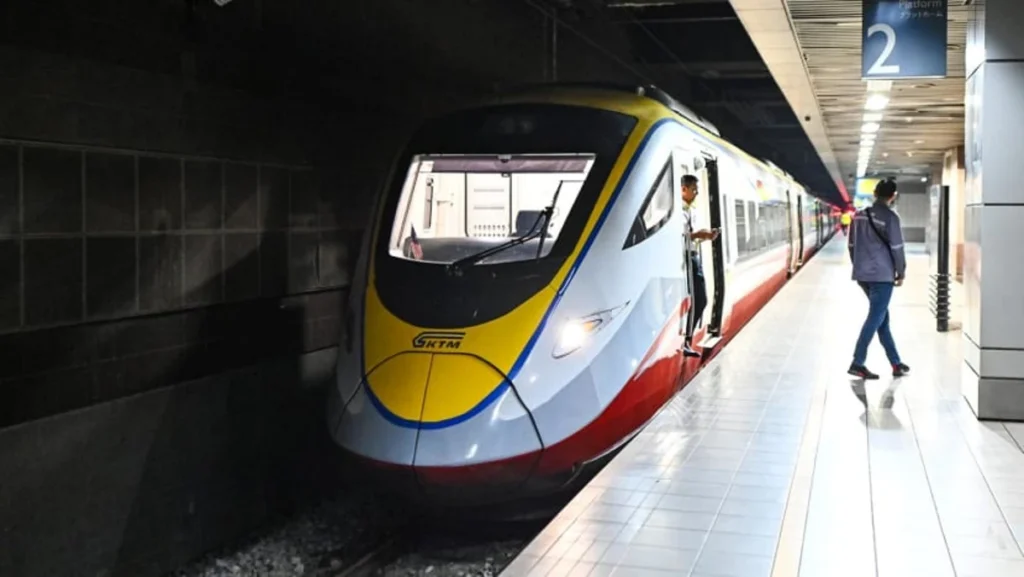
Speaking on Saturday (Nov 22), Loke said that in the first phase, Electric Train Service (ETS) Malaysia operations will concentrate on the Johor Bahru–Kuala Lumpur corridor, while longer-distance services to Padang Besar and Butterworth will follow in later phases.
This is reported by the railway transport news portal Railway Supply.
A day earlier, on Dec 11, Malaysia’s King, Sultan Ibrahim Sultan Iskandar, is due to formally launch the ETS in Johor Bahru before the line opens to the public, according to Malaysian daily The Star.
Loke also outlined how operations will differ by route length. On longer northern routes, the ETS will be capped at two services a day – one in each direction.
Don’t miss…California high-speed rail project gains funding momentum
By contrast, shorter sectors such as Johor Bahru–Kuala Lumpur can accommodate more frequent trains, he said at the Kluang Rail Festival. He further encouraged passengers heading to northern states to use available transit connections to continue their trips beyond the ETS route.
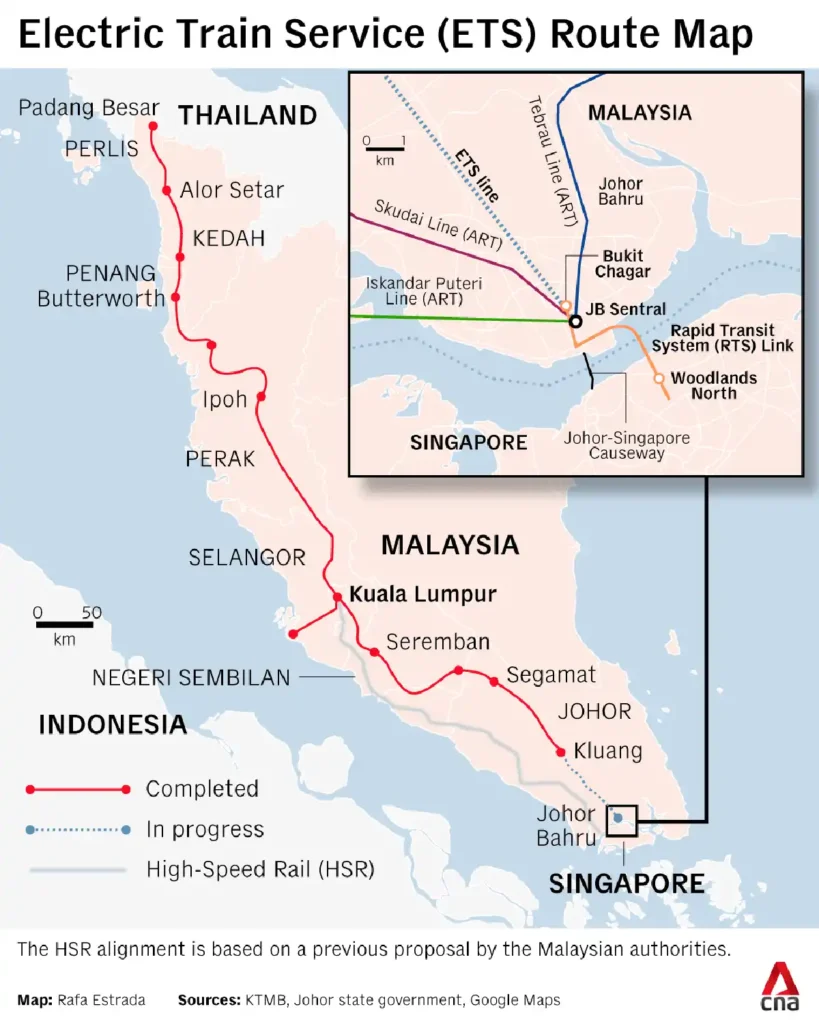
Malaysia ETS Johor Bahru to Kuala Lumpur: project background and route
The ETS project has been in the works for more than a decade. It was first announced in 2011 by national rail operator Keretapi Tanah Melayu Berhad (KTM), and construction of the RM8.9 billion (US$2.14 billion) scheme began in 2016. The line passes through the districts of Segamat, Kluang, Kulai and Johor Bahru. Over the years it has faced significant delays, leading experts to warn that commuter confidence in the line’s reliability could erode.
Once the ETS JB–KL route is fully running, rail journey times between Johor Bahru and Kuala Lumpur are expected to come down to about 3.5 to 4.5 hours, depending on the service chosen. Acting KTM chief executive officer Ahmad Nizam Mohamed Amin told CNA in a September interview that passengers will have a choice of silver, gold, platinum and express services, each with its own stopping pattern and level of onboard comfort.
Travel time, service classes and cost advantages
According to Ahmad Nizam, the ETS should be competitive both on price and overall journey experience. “In terms of cost, it is more economical compared to flying because we save on ticket prices,” he said, adding that the line could “revolutionise” transport options in the peninsula and give passengers a greener and potentially more cost-effective way to move between key cities. He also pointed out that, compared with driving, travellers can save time, reinforcing his view that ETS will be an attractive option for many users.
In addition to point-to-point trips between Johor Bahru and Kuala Lumpur, the ETS is expected to support economies and businesses in smaller satellite towns such as Kluang along the route and to make it easier for Malaysians to travel locally between important intermediate stops in the peninsula.
Linking Singapore and Kuala Lumpur via RTS Link and ETS
The impact of the Malaysia ETS Johor Bahru to Kuala Lumpur corridor is likely to be felt beyond Malaysia itself. Transport experts interviewed by CNA said that travellers from Singapore will also benefit once the Johor Bahru–Singapore Rapid Transit System (RTS) Link is completed, which is expected by the end of next year. At that stage, people travelling between Singapore and Kuala Lumpur will be able to cover the journey in about four hours by rail, combining the RTS Link with the ETS.
By road, meanwhile, travellers might be forced to encounter traffic jams both at the Causeway and on highways in Malaysia. Using RTS and ETS trains instead allows them, as transport planning expert Rosli Azad Khan of Selangor-based consultancy firm MDS put it, to “sit back and relax and not have to worry about congestion,” letting the railway carry them between the two cities rather than spending that time in traffic.
News on railway transport, industry, and railway technologies from Railway Supply that you might have missed:
Find the latest news of the railway industry in Eastern Europe, the former Soviet Union and the rest of the world on our page on Facebook, Twitter, LinkedIn, read Railway Supply magazine online.Place your ads on webportal and in Railway Supply magazine. Detailed information is in Railway Supply media kit