Russian Railways crisis threatens freight and economy
10.08.2025
The Russian Railways crisis is worsening as 300,000 idle wagons clog the network, severe staff shortages halt trains, and freight volumes fall for 20 consecutive months, OSINT analyst ChrisO_wiki reports.
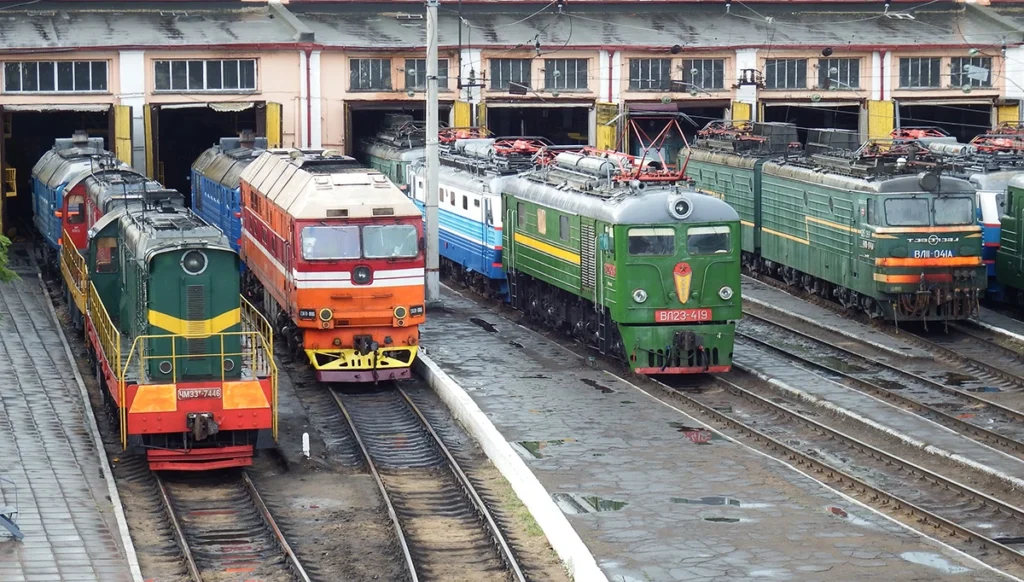
Russian Railways crisis impacts freight operations
OSINT analyst ChrisO_wiki’s latest investigation reveals that Russian Railways (RZD) is facing its deepest downturn in decades. Around 300,000 wagons—about 20% of its fleet—are idle, blocking tracks, depots, and marshalling yards. Entire freight trains have been abandoned for months. This is reported by the railway transport news portal Railway Supply.
Locomotive shortages and workforce attrition exacerbate the crisis. Some RZD divisions operate with up to 60% fewer staff than required. Since the company moves 47% of all Russian cargo—and 87% if pipelines are excluded—its instability affects the entire economy and military logistics.
Freight traffic fell 8% in 2024 compared with 2021, the sharpest drop since the 2009 global financial crisis. In just the first five months of 2025, volumes fell another 7%, following consecutive 4% declines in both 2022 and 2024.
War against Ukraine reshapes transport flows
ChrisO_wiki identifies the war against Ukraine as a central cause of the crisis. Sanctions have ended most Russian trade with Europe, while frequent Ukrainian attacks have reduced traffic to Black Sea ports. Westbound rail shipments now consist mainly of military cargo.
Don’t miss…Anantnag railway station begins freight operations in Kashmir Valley
Military freight, classified as “other cargo, including in containers,” has grown steadily since 2022 but remains far too small to offset civilian losses. Prioritisation of military loads displaces commercial cargo onto the roads, which led to an 8% rise in road freight in 2024.
Sanctions cause steep decline in key exports
Western sanctions have hammered multiple cargo categories. Timber exports fell 18%, ferrous metals 8%, and ore and coal 5%. Goods from Western companies that left Russia in 2022—labelled “cargo by industry”—plunged by 14%.
Even non-sanctioned shipments are in decline. Fertiliser volumes dropped 7% in 2024, while grain shipments collapsed by one-third in early 2025 as wheat cultivation became unprofitable. A worsening construction slump has reduced demand for steel, cement, and other materials.
Labour shortages cripple daily operations
The staffing crisis is unprecedented. About 200 trains are cancelled every day because RZD is short 2,500 drivers and 3,000 locomotive crew members. Many have left for better-paid army jobs, worsening operational reliability.
Low wages, poor working conditions, and high physical strain drive employees away. Some regions are operating close to collapse, with delays spilling over into other parts of the network.
Locomotive production in sharp decline
Despite Kremlin orders to increase manufacturing, locomotive output is falling. Between January and April 2025, electric locomotive production dropped 13% and diesel production 6%. Retired units are not being replaced fast enough, leaving thousands of new wagons unused at factories.
This shortage means that a significant share of RZD’s fleet cannot be moved, deepening congestion and reducing available freight capacity.
Investment mismanagement and tariff hikes
ChrisO_wiki’s report highlights questionable investment decisions. In 2024, one-eighth of the company’s investment budget was spent on a Moscow skyscraper for headquarters instead of on critical locomotive purchases.
Record freight tariff hikes have driven more customers to road transport. Combined with service delays and equipment shortages, these increases have accelerated cargo loss to the trucking sector.
Outlook: a slow and uncertain recovery
Even if the war ends and sanctions are lifted, RZD will face a slow road to recovery. Analysts warn of possible route closures, asset sales, and further tariff hikes if structural reforms are not implemented.
Without urgent workforce rebuilding, increased locomotive production, and targeted investment in infrastructure, the network’s decline could continue for years.
Source: Novaya Gazeta Europe
FAQ
What is the Russian Railways crisis?
The Russian Railways crisis is a long-running decline in freight volumes, driven by 300,000 idle wagons, staff shortages, sanctions, war disruptions, and falling locomotive output, according to OSINT analyst ChrisO_wiki.
How does the Russian Railways crisis affect the economy?
It disrupts supply chains, raises transport costs, and shifts cargo to road transport, which slows industrial production and reduces Russia’s economic resilience.
Can Russian Railways recover from the crisis?
Recovery requires workforce expansion, locomotive investment, and market access restoration. Analysts believe improvement will take years, even after the war ends.
News on railway transport, industry, and railway technologies from Railway Supply that you might have missed:
Find the latest news of the railway industry in Eastern Europe, the former Soviet Union and the rest of the world on our page on Facebook, Twitter, LinkedIn, read Railway Supply magazine online.Place your ads on webportal and in Railway Supply magazine. Detailed information is in Railway Supply media kit