Koralm line reshapes freight and passenger travel in Austria
17.11.2025
The high-speed Koralm line has opened for freight traffic in Austria, and ÖBB says its launch already sets the stage for faster, more predictable journeys between Klagenfurt and Graz in the coming years.
This is reported by the railway transport news portal Railway Supply.
Koralm infrastructure and how the line is built
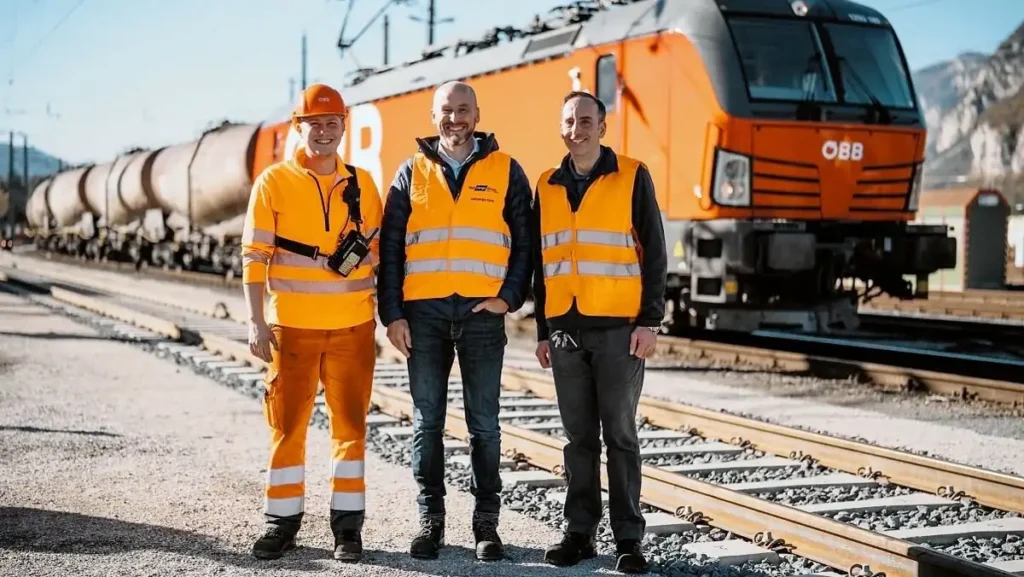
The new 130-km railway links Klagenfurt and Graz, and, as ÖBB-Infrastruktur outlines, it weaves through 50 km of tunnels, with the 33-km base tunnel acting as the core engineering element. Engineers also added more than 100 overpasses and 23 stations, so the route can carry dense traffic without constant bottlenecks.
Don’t miss…Kanpur Metro Progress and Insights Across Uttar Pradesh
Gradients drop from 16‰ on the old alignment to 10‰ on the new one, and that change sounds modest but really isn’t. Freight trains can now haul an extra 250–280 tonnes per run, and ÖBB can cut annual train-kilometres by around 300,000 while trimming energy use at the same time.
Construction formally wrapped up in November 2024, yet testing continued into June 2025 because the operator wanted to see how the line behaved under pressure. More than 280 test runs checked tunnels, bridges, stations and control systems, and, in practice, that gave planners confidence that day-to-day operations would not be built on guesswork.
Why the Koralm line matters for the Baltic–Adriatic Corridor?
The opening slots into the Baltic–Adriatic transport corridor as part of a new four-track “southern axis,” and the European Commission’s Baltic–Adriatic corridor overview underlines how this route connects major economic regions from the Baltic Sea to the Adriatic. It becomes easier to move heavy freight off congested highways and onto rail, so logistics companies gain capacity without endlessly widening roads.
Passenger services are due to start on 14 December 2025, with trains running at up to 250 km/h and cutting end-to-end time from about two hours to 41 minutes. For regular travellers this is not just a timetable tweak; it turns day trips and business meetings between the two cities into a simpler, almost routine choice.
For ÖBB and regional planners, the line offers more predictable slots for both freight and passenger flows, and that predictability still matters when margins are tight. It is, to be fair, what one planner might describe as “seeing the cliff coming” on road capacity — and choosing to shift more of the load to steel wheels rather than asphalt.
News on railway transport, industry, and railway technologies from Railway Supply that you might have missed:
Find the latest news of the railway industry in Eastern Europe, the former Soviet Union and the rest of the world on our page on Facebook, Twitter, LinkedIn, read Railway Supply magazine online.Place your ads on webportal and in Railway Supply magazine. Detailed information is in Railway Supply media kit