KORAIL SR merger plan fuels dispute over Korea high-speed rail
25.12.2025
South Korea’s KORAIL SR merger plan, as outlined in The Korea Times, has sparked a dispute over whether a single operator would improve Korea high-speed rail services or weaken competition.
This is reported by the railway transport news portal Railway Supply.
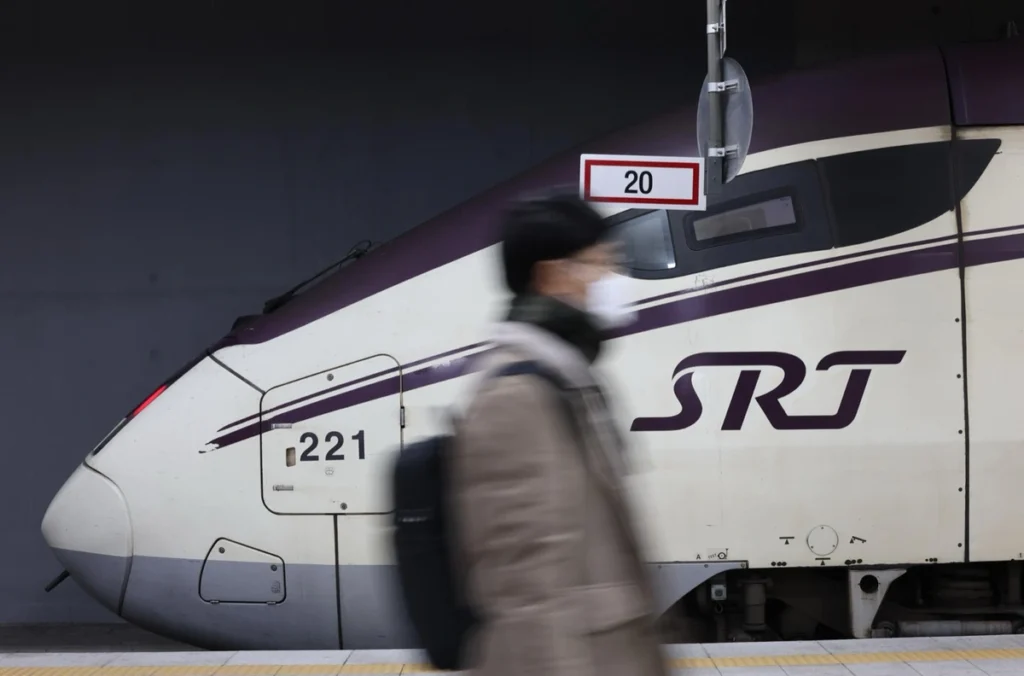
The government and KORAIL argue that combining the two Korea high-speed rail operators would make travel simpler and improve capacity. SR Corp., which runs SRT services from Suseo Station in Seoul to 29 destinations nationwide, says the merger would hurt the railway industry by removing rivalry between KORAIL and SR.
Don’t miss…Rail supplier news: deals from GATX, Alstom, FCA and GMP
KORAIL, working with the Ministry of Land, Infrastructure and Transport on KTX and SRT integration, says the combined structure would deliver greater benefits to passengers. KTX services serve 77 stations across eight routes, and officials say a single approach could also support a unified booking platform for KTX and SRT, as described by Railway Gazette International.
KORAIL SR merger plan: SR labor union opposition targets competition and capacity claims
Since Dec. 10, the SR labor union opposition campaign has produced a series of statements condemning the government’s merger roadmap. The union, referring to SR as a company established in 2016, says competition between KORAIL and SR has been a key driver of service improvements and industry growth. It warns that a merger would undermine fair market competition.
The union also challenges the argument that a merger would solve the chronic seat shortage on SRT services, a point officials cite as a main justification for integration. It says the problem cannot be fixed simply by merging the two operators and points to KORAIL debt 22 trillion won ($15 billion) as a risk.
The financial and workforce figures cited in the dispute underline how different the two companies are in scale. SR posted sales of 714 billion won last year and has around 680 workers. KORAIL recorded sales of 6.53 trillion won in 2024 and has approximately 32,000 employees. While SR generated operating profit measured in billions of won last year, KORAIL reported an operating loss of more than 111 billion won over the same period.
“The government’s merger roadmap, with a completion target set for next year, is superficial and fails to address the underlying structural problems,” the union said. “What the industry needs is not a merger but new legislation to ensure fair competition between the two operators and to build sustainable competitiveness.”
16,000 additional seats claim and the Suseo Station plan
Another flashpoint is the 16,000 additional seats claim. The union says KORAIL has not disclosed how it arrived at the figure and argues that the seat shortage reflects the government’s flawed assessment of public demand for SRT trains, not the fact that the companies operate separately.
It also warns the merger could lead to an all-out suspension of train services if workers at the merged entity were to stage a walkout. Alongside that, the union points to KORAIL’s weak financial condition and calls it “dangerous” to let the operator monopolize the industry through the merger.
The union says KORAIL has benefited from government incentives, including priority access over SR to carriage depots and stations, as well as advantages linked to rolling stock maintenance and leasing and railway usage. Despite such support, it says, KORAIL continues to carry heavy debt — and that a monopoly would threaten safety, operational efficiency, and service quality.
KORAIL response and KTX-1 simulations for extra capacity
KORAIL has largely stayed out of the public argument while coordinating with the government on the timing of a more detailed plan meant to bolster the merger’s legitimacy. A KORAIL official said the company can address SR’s concerns but has agreed not to “provoke SR with arguments,” adding that the merger plan is irrevocable and agreed by the government and KORAIL.
On the seat calculation, the official said KORAIL ran simulations based on deploying KTX trains to Suseo Station as part of the Suseo Station KTX stop plan. KTX-1 trains — the first KTX model introduced in 2004 and based on France’s TGV — have 955 seats, compared with 410 seats on SRT trains.
“By deploying a KTX-1 train to Suseo Station, we can operate an additional round trip departing from there,” the official said. “This would also save about an hour at Busan Station that is currently needed to clean and prepare an SRT train bound for Suseo.”
The official dismisses warnings that a walkout could bring services to a halt, saying emergency operations are always prepared. “Railways are an essential public service in Korea,” the official said. “We are required to maintain minimum operations even during walkouts, which allows us to operate about 90 percent of regular subway services and 80 percent of high-speed rail services.”
The government announced the KORAIL SR merger plan on Dec. 8. It said it aims to launch a unified booking platform for KTX and SRT by next March and complete the integration of the two companies by the end of 2026, according to The Korea Herald.
To enable the new booking system, authorities said they will add Suseo Station as a new stop for KTX trains departing from Seoul Station. The ministry said the new link between the two major stations will increase train services on the route and improve seat availability for users of both systems.
News on railway transport, industry, and railway technologies from Railway Supply that you might have missed:
Find the latest news of the railway industry in Eastern Europe, the former Soviet Union and the rest of the world on our page on Facebook, Twitter, LinkedIn, read Railway Supply magazine online.Place your ads on webportal and in Railway Supply magazine. Detailed information is in Railway Supply media kit