Key News: Central Asia Strengthens the Railway Sector
13.08.2025
In the first half of August, Central Asia recorded significant developments in the railway sector, including the launch of new rolling stock, the modernization of production facilities, and the introduction of advanced technologies. This is reported by the railway transport news portal Railway Supply.
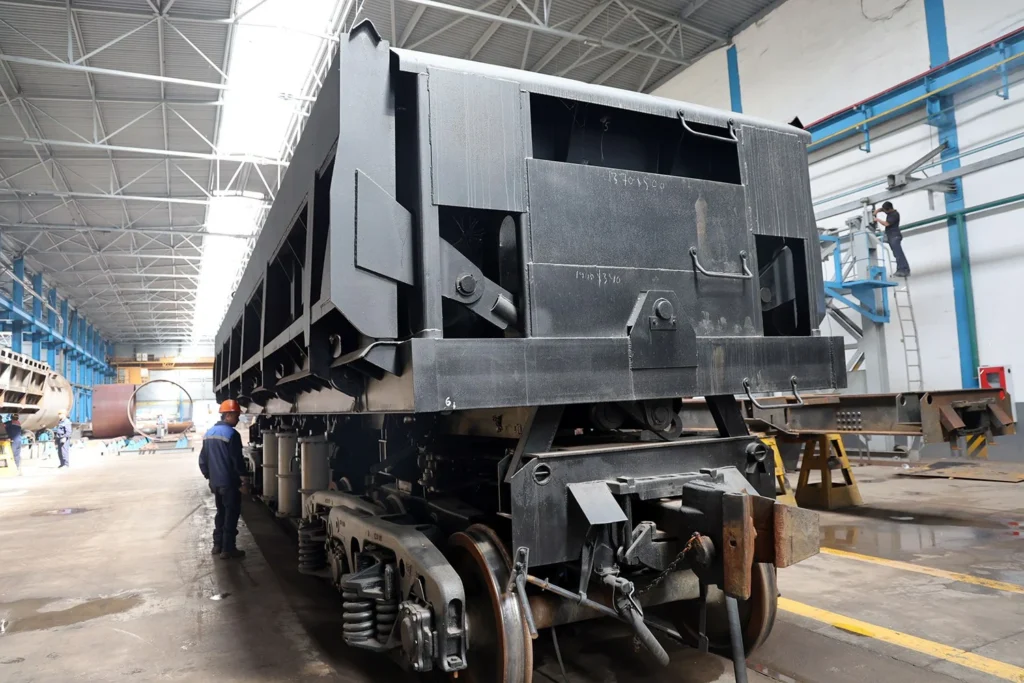
Central Asia: New Wagons and Production Capacities
The Andijan Mechanical Plant produced a six-axle Q-115 dump car with a 115-ton capacity for transporting rock. Under a $39.8 million contract, 196 wagons are to be delivered by 2026. Local production will reduce costs by 50% compared to imports.
Don’t miss…Ho Chi Minh City metro boosts safety with Teltronic tech
In Atyrau, TEXOL opened a fully automated wagon and wheel workshop with an annual capacity of 10,000 wheelsets. The facility will supply new wagons from the Atyrau Car Building Plant and carry out overhauls of TEXOL’s fleet. At the same time, construction began on a foundry capable of producing up to 60,000 tons of castings annually, with commissioning scheduled for 2027.
Central Asia: Infrastructure and Technology Upgrades
Kazakhstan Temir Zholy will receive three ballast cleaning machines and 90 hopper spreaders by the end of the year. This purchase is part of a railway network modernization program running until 2030. Sixteen units of specialized machinery have already been acquired, including the new ELB-4 ballast cleaner developed by Sinara – Transport Machines.
In Astana, Alstom opened a signaling systems competence center. It will deploy the Ebilock-950 microprocessor interlocking system across 85 stations, while also providing software adaptation and technology certification. The company operates seven industrial sites in Kazakhstan, including the EKZ locomotive plant.
Source: rollingstock
FAQ
What are railway projects in Central Asia?
They are large-scale infrastructure and production initiatives aimed at developing rolling stock, track maintenance equipment, and technologies in the region’s countries.
Will Central Asia increase its railway equipment exports?
Yes, the expansion of local manufacturing and reduced production costs create favorable conditions for entering foreign markets.
How does Alstom’s competence center in Astana work?
It focuses on implementing signaling systems, adapting software, and certifying technologies to enhance the safety and efficiency of the railway network.
News on railway transport, industry, and railway technologies from Railway Supply that you might have missed:
Find the latest news of the railway industry in Eastern Europe, the former Soviet Union and the rest of the world on our page on Facebook, Twitter, LinkedIn, read Railway Supply magazine online.Place your ads on webportal and in Railway Supply magazine. Detailed information is in Railway Supply media kit