Kanpur Metro Corridor-2 moves closer with second train arrival
24.12.2025
Kanpur Metro Corridor-2 moved closer to operations as its second metro train arrived and was safely unloaded at the CSA depot under construction within the CSA premises (Rail Analysis India).
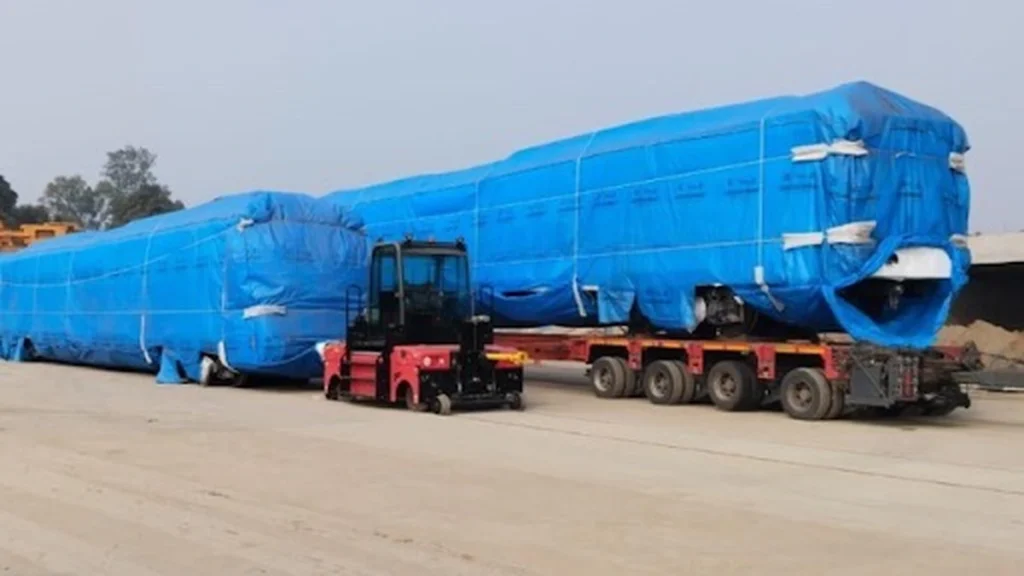
The update reflects progress and systems readiness under the Uttar Pradesh Metro Rail Corporation (UPMRC).
This is reported by the railway transport news portal Railway Supply.
The second train reached the depot within a month of the first, keeping the CSA–Barra-8 underground corridor on a steady track. Officials have also said a third trainset is expected soon. Meanwhile, depot works at CSA are moving quickly to support commissioning and maintenance activities, in line with the corridor summary published in the UPMRC project overview.
Don’t miss…National transport pass in Spain: what changes in 2026
CSA depot delivery boosts Kanpur Metro Corridor-2 progress
With another train now on site, the rollout schedule gains momentum. The CSA depot remains central to preparing trains for service and keeping the fleet in working order, while construction teams continue advancing depot systems and related infrastructure. The same direction is also reflected in coverage by Railway Supply.
Alstom Savli plant in Gujarat and Make-in-India manufacturing
The Corridor-2 trainset has been manufactured at Alstom’s Savli plant in Gujarat, underscoring India’s growing capacity for indigenous metro rail production. Built with a modular design approach, the train aligns with Make-in-India objectives while targeting international quality and safety benchmarks.
Kanpur Metro’s rolling stock induction began earlier, with the first trainset delivered to UPMRC in September 2021. The newly arrived unit continues that long-term investment and is described as featuring a more mature architecture and advanced systems as Corridor-2 heads toward the next stages of readiness.
Stainless-steel carbody, Flexx Metro bogies and Mitrac propulsion system
A core theme of the new trainset is greater automation and improved energy performance. The stainless-steel carbody architecture is presented as a durability-focused choice for demanding operating conditions, including temperature variation, vibration loads, and high-duty underground cycles.
Compared with lightweight aluminium, stainless steel is highlighted for corrosion resistance, longer frame life, and enhanced crash-worthiness—particularly relevant for dense underground corridors.
Ride comfort and stability are supported by Flexx Metro bogies, described as delivering improved lateral stability at higher speeds, reduced oscillation during tunnel transitions, and stronger suspension performance on curves and gradients. These bogies integrate with the Mitrac propulsion system, which is positioned around:
- energy-regenerative braking that feeds power back into the grid,
- modular propulsion assemblies designed to speed maintenance and reduce downtime,
- lower lifecycle costs across 15–20 years of operation, and
- reliability-focused features such as braking redundancy and headway control.
Underground alignment and passenger-focused features
Corridor-2 follows an underground alignment strategy intended to limit surface disruption and ease traffic impacts in Kanpur’s education, commercial, and transit-heavy areas. The underground approach is also framed as improving safety margins during monsoon seasons and extreme weather, helping maintain uninterrupted urban mobility.
Inside the coaches, the trainsets include passenger-centric features focused on comfort, accessibility, and safety. Reported amenities include fully air-conditioned cars, automated sliding doors with stainless-steel assemblies, ergonomic seating and optimized standing space, dedicated areas for persons with reduced mobility, and Passenger Information Systems (PIS) providing real-time updates. Safety systems are described as aligned with Indian rail security standards.
Beyond the fleet and infrastructure, the project is expected to bring wider socio-economic and environmental benefits. The stated outcomes include supporting green and sustainable mobility, reducing central-city congestion, improving long-term cost efficiency through energy-saving operations, boosting station-area retail and local economies, enabling urban revitalization via underground connectivity, and strengthening regional mobility to support socio-economic growth.
With a second train now positioned at the CSA depot and depot works moving quickly, Kanpur Metro Corridor-2 is steadily progressing toward service readiness.
The combination of indigenous manufacturing, upgraded technology, and rapid execution reinforces the city’s shift toward reliable, sustainable, and future-ready urban transport.
News on railway transport, industry, and railway technologies from Railway Supply that you might have missed:
Find the latest news of the railway industry in Eastern Europe, the former Soviet Union and the rest of the world on our page on Facebook, Twitter, LinkedIn, read Railway Supply magazine online.Place your ads on webportal and in Railway Supply magazine. Detailed information is in Railway Supply media kit