Israel Cancels West Bank Railway Construction: Reasons and Consequences
05.09.2024
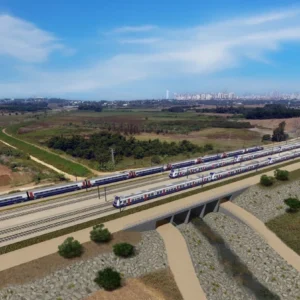
Israel has canceled an ambitious railway project that was intended to connect the northern regions of the country with the West Bank, this is reported by the railway transport news portal Railway Supply.

This was announced by Israel’s Minister of Transport, Miri Regev.
The project, initiated about ten years ago, envisioned the construction of a railway linking the Israeli city of Afula with the Palestinian city of Jenin.
It was planned that the railway tracks would pass through areas just 20 kilometers south of Afula.
Initially, the project was conceived as an important transport corridor that could enhance connections between Israel and the Palestinian territories.
This railway route could have served as a link not only within the country but also between the Palestinian Authority and Turkey. The Turkish government had acquired land for the construction of the railway and a cargo terminal, intending to connect the Palestinian territories with Turkey and the Mediterranean Sea through the port of Haifa.
This was part of Turkey’s broader strategy to strengthen economic ties with the region.
However, despite the project’s significance, its implementation faced numerous challenges and contradictions.
Experts repeatedly raised concerns about the feasibility and safety of the construction, given the complex political situation in the region. Ultimately, the project was deemed irrelevant and canceled.
The decision to cancel the railway construction has elicited a mixed response both within Israel and beyond.
Supporters of the project express disappointment, viewing it as a missed opportunity for developing transport infrastructure and strengthening economic ties.
Critics, on the other hand, believe that the project could have exacerbated tensions in the region and led to new conflicts.
The cancellation of the project also reflects a shift in Israel’s transportation policy priorities.
In the face of regional instability and economic challenges, the government prefers to focus on more realistic and less risky initiatives.
Nevertheless, the issue of developing transport links between Israel and the West Bank remains relevant.
Regardless of political differences, the need to improve infrastructure in the region is recognized by all parties.
In the future, new projects aimed at addressing this issue may emerge, but they are likely to be more carefully planned and take into account the lessons learned from the canceled construction.
Thus, the cancellation of the railway project highlights the complexity of regional politics and the importance of a balanced approach in implementing large-scale infrastructure initiatives.
Photo: IANS
Rail business, industry, and railway technology news from Railway Supply that you might have missed:
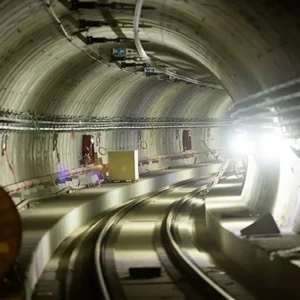
Complete Restoration of Traffic in the Gotthard Base Tunnel After Year-Long Repairs
Find the latest news of the railway industry in Eastern Europe, the former Soviet Union and the rest of the world on our page on Facebook, Twitter, LinkedIn, read Railway Supply magazine online.Place your ads on webportal and in Railway Supply magazine. Detailed information is in Railway Supply media kit