
InnoTrans 2026 lists 113 vehicles, including hydrogen and battery trains
The InnoTrans 2026 outdoor display in Berlin lists 113 vehicles from 17 countries, compared with more than 110 announced before the 2024 show and 133 counted at its close.
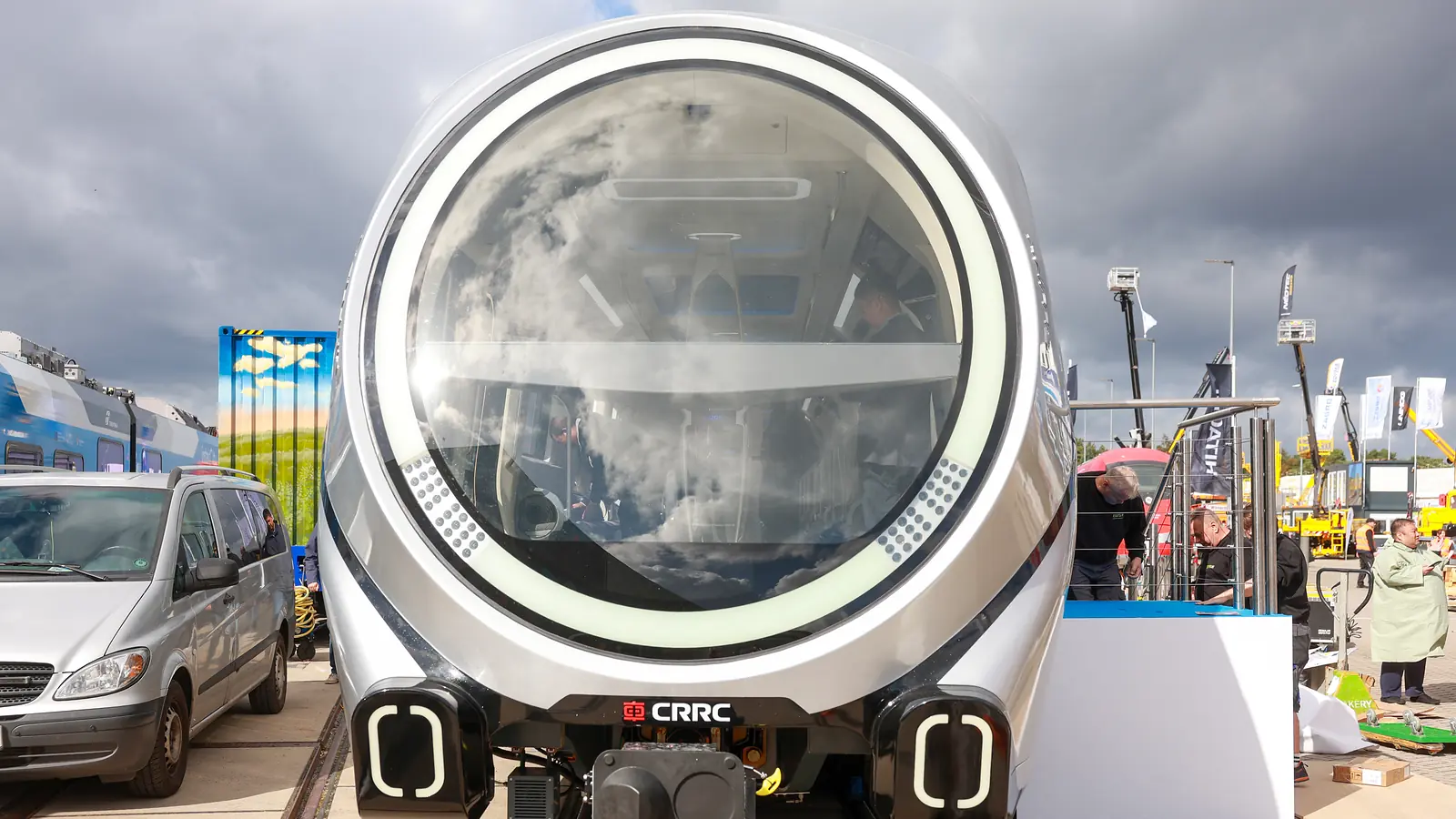
Messe Berlin puts the number of exhibitors in the outdoor exhibition area at 130, and 30 of them are taking part in this section for the first time. The area covers roughly 20,000 square metres gross, and the fair runs from 22 to 25 September. Exhibits from China and South Korea crossed to Europe by sea. Some finished the trip to Berlin on inland waterways, while other vehicles arrived by rail or road.
How the 2026 count compares with earlier shows
The 113 figure is a pre-show number. The organiser has not yet published a final count for 2026. Two years ago, Messe Berlin announced more than 110 vehicles in mid-August, and the same release put the 2022 edition at 128 vehicles plus 14 buses. By the end of the 2024 fair, its closing summary recorded 133 vehicles on 3,500 metres of track.
Hydrogen, battery and signalling technology on the tracks
Slovak freight wagon builder Tatravagónka has the largest line-up, with eight models. Stadler follows with seven, among them a narrow-gauge train powered by hydrogen and a battery-powered regional unit. Siemens Mobility and CAF are also showing vehicles with alternative propulsion, and CRRC is showing for the first time a hybrid locomotive powered by hydrogen fuel cells.
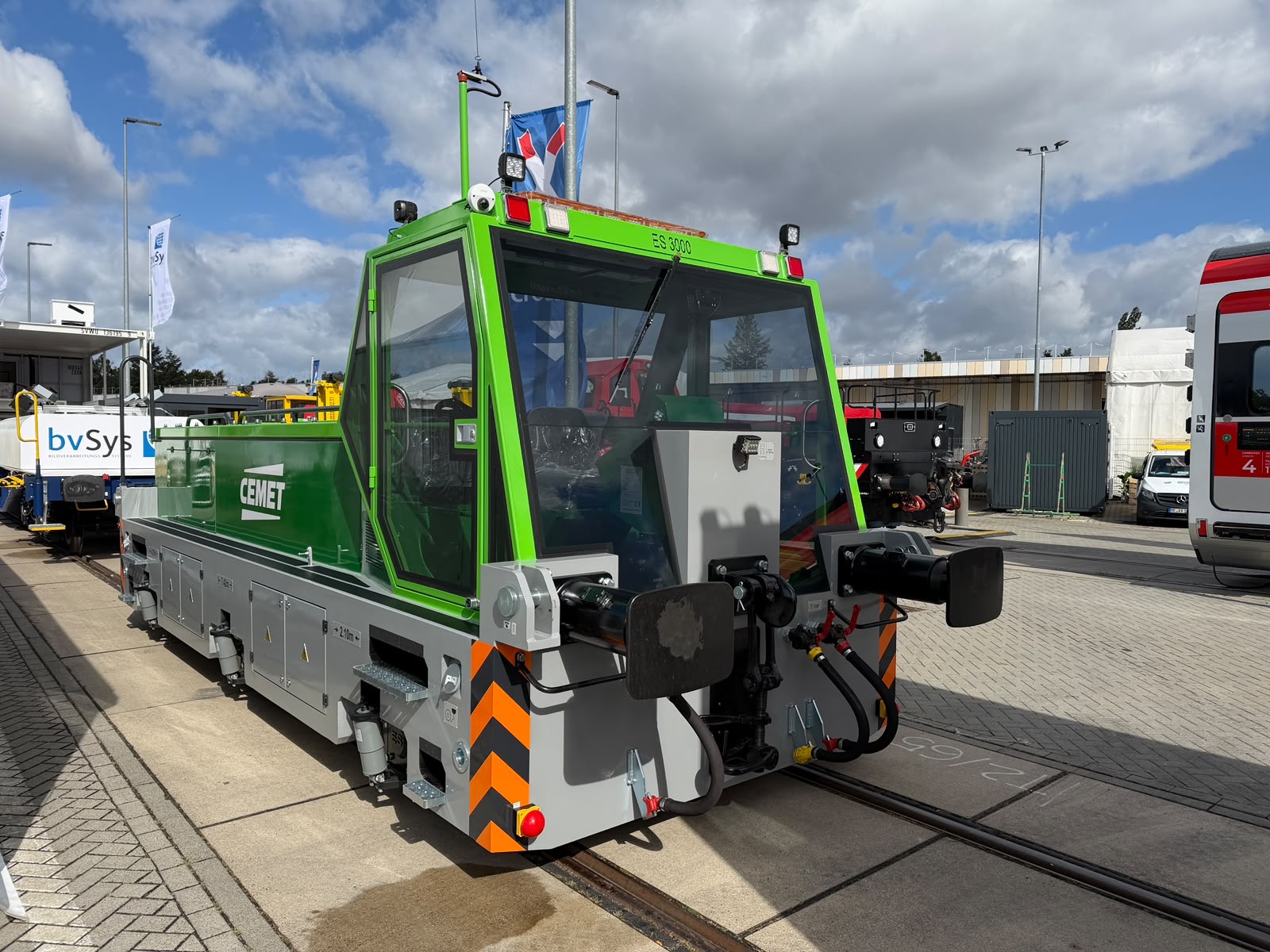
The Siemens Mobility outdoor programme centres on Vectron X, which makes its InnoTrans debut and which the company describes as a software-defined locomotive platform with an onboard app store. Alongside it stand a Mireo for ÖBB’s Alpine long-distance services and a battery Mireo Plus B for S-Bahn Mitteldeutschland with its Rail Charging Converter. An Inspiro London train for the Piccadilly Line completes the line-up.
Alstom brings three vehicles to the outdoor tracks. One is a Coradia Stream intercity train for Trenitalia, rated for up to 200 km/h. Its two Traxx Universal locomotives are fitted with Onvia onboard signalling and last-mile capability. The Railpool unit belongs to a 50-locomotive contract, and Alstom says it is the first new-build locomotive approved in France in over a decade. The Captrain unit belongs to an order for more than 30 Traxx from Captrain companies across Europe. It is equipped to run in France, Luxembourg, Belgium, Germany, Austria and Poland.
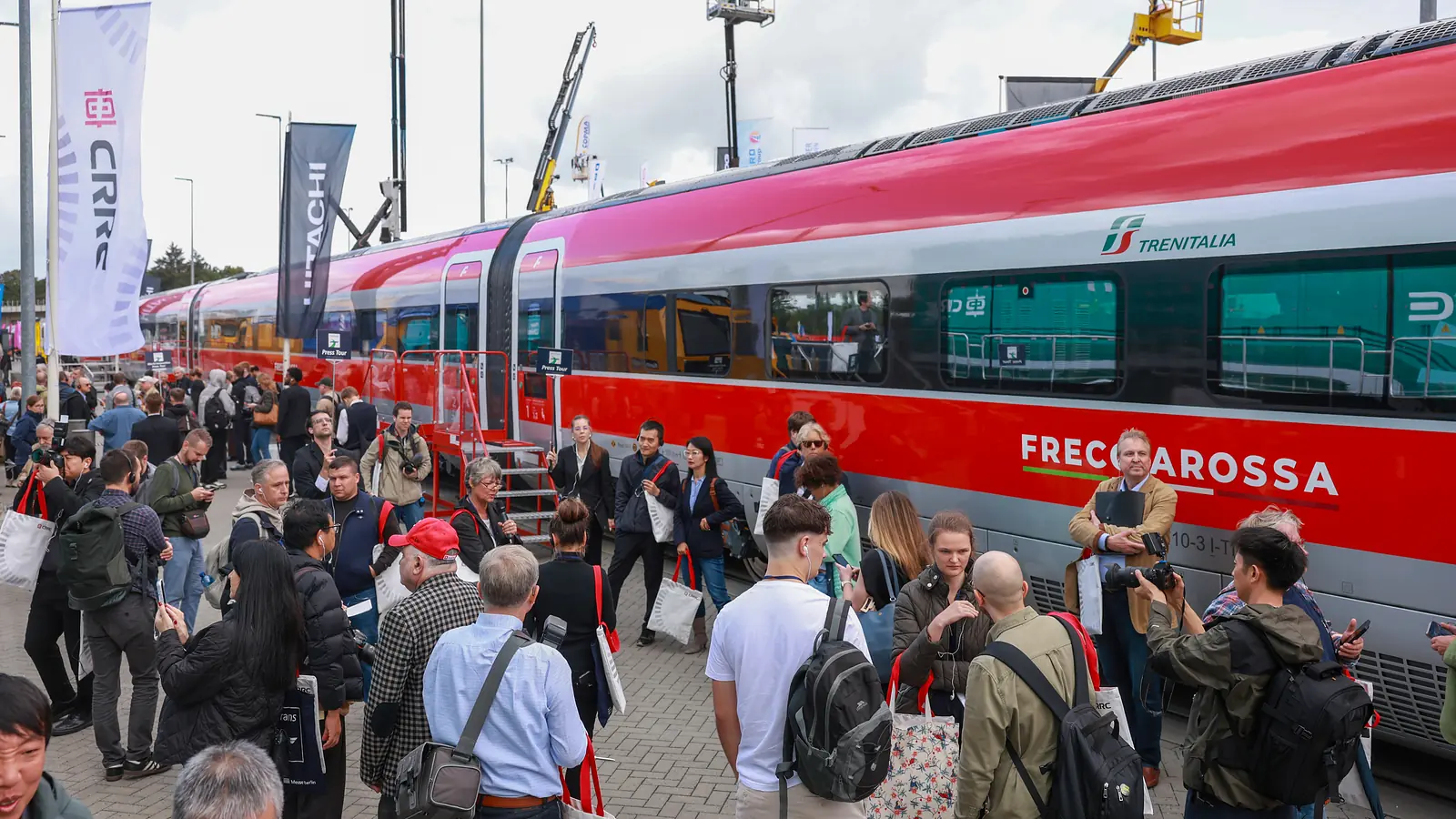
Hitachi and Hyundai Rotem high-speed trains
Hitachi’s ETR1000 Frecciarossa and Hyundai Rotem’s EMU 320 carry the high-speed theme on the outdoor tracks. The organiser credits both with speeds above 300 km/h. Hitachi Rail is displaying four cars of Trenitalia’s latest-generation ETR1000, among them a bistro coach and a VIP demonstration car, built at its plants in Naples and Pistoia. The manufacturer gives the new generation a top speed of 300 km/h and a certified maximum of 360. Trenitalia expects 57 of these trains in service from 2029 and plans to reach 74 by 2031.
| Exhibit | Customer | Published order | Fleet timing stated by the source |
|---|---|---|---|
| Traxx Universal (Alstom) | Railpool | Contract for 50 locomotives | Not stated |
| Traxx Universal (Alstom) | Captrain | More than 30 Traxx for Captrain companies in Europe | Not stated |
| Mireo Plus B (Siemens Mobility) | S-Bahn Mitteldeutschland | 16 two-car battery units within a 75-train Mireo contract worth about €500 million, signed in December 2023 | Service around Leipzig planned from December 2026 (release of November 2025) |
| Inspiro London (Siemens Mobility) | London Underground, Piccadilly Line | 94 trains | Not included: TfL’s October 2024 schedule is out of date |
| ETR1000 Frecciarossa, latest generation (Hitachi Rail) | Trenitalia | 36 trains under a 2023 agreement, 10 added through an option, 9 more under a March 2026 contract worth about €260 million | 57 in service from 2029, 74 planned by 2031 |
Five of the vehicles on the outdoor tracks belong to fleet orders whose size the manufacturer or customer has published. Figures and dates come from Alstom, Siemens Mobility and its S-Bahn Mitteldeutschland partners, Transport for London and Hitachi. Timings are the plans published on the dates shown and may since have changed.
Autonomous and remotely operated vehicles
Railevo is showing an autonomous rail taxi, which the organiser calls the world’s first. Ferrovie dello Stato Italiane has brought an unmanned vehicle, and TH Ostwestfalen-Lippe is presenting Monocab, a self-driving monorail vehicle developed for rural areas. Belgian exhibitor Otiv will run a train in the Netherlands remotely as a demonstration. Alstom, working with Deutsche Bahn and S-Bahn München, is steering a train in Hennigsdorf from its Berlin booth. Sessions run at 10:00 and 15:00 each day.
Night train prototypes and mock-ups
Several exhibitors are using the fair to show how overnight rail travel could look, with the emphasis on privacy, better use of space and new comfort ideas. Nox Mobility is presenting a prototype made up entirely of compartments for single or double occupancy. At its Luna Rail Lab, Luna Rail GmbH presents two-level seats and reclining zones together with private cabins for up to two passengers.
Tricon AG developed the ALISA lightweight sleeper car concept with partners including the Federal Ministry for Economic Affairs and Energy (BMWE), satek, the German Aerospace Center (DLR) and GETA interieur. Its mock-ups are housed in a tent outside the South Entrance. InnoTrans Director Kerstin Schulz linked the renewed interest to wider industry questions.
“The night train brings together many issues that are important to our industry: sustainable long-distance mobility, new customer expectations, and the question of how to balance comfort and cost-effectiveness.”