Inland Rail cessation puts Parkes decision in focus
10.06.2026
Inland Rail cessation north of Parkes has led country mayors in New South Wales to raise their concerns directly with Federal Infrastructure, Transport, Regional Development and Local Government Minister Catherine King.
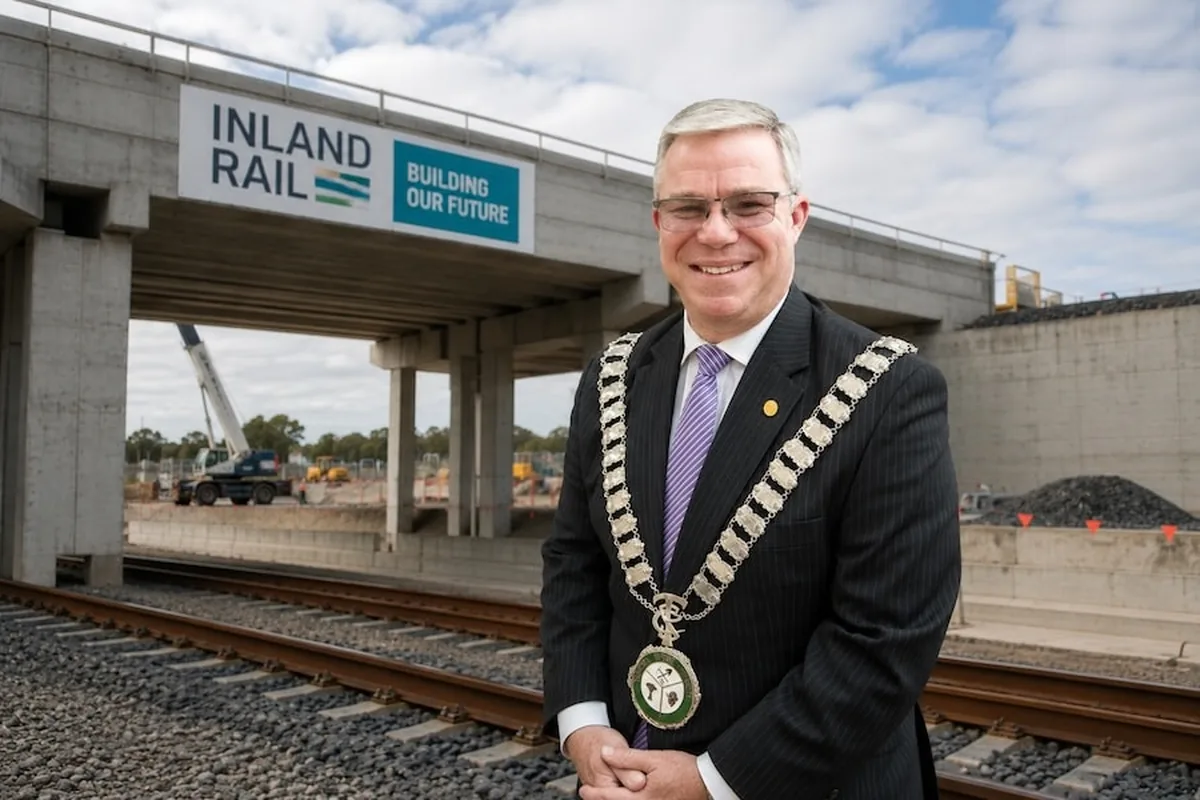
The Board of the Country Mayors Association of NSW met the minister over concerns from regional councils and industry about the federal project, which had been planned to create a rail connection between Melbourne and Brisbane.
Inland Rail cessation and regional concerns
The meeting followed frustration from local governments and private businesses over the sudden halt to the project beyond Parkes. CMA Chairman and Temora Shire Mayor Rick Firman OAM said members had agreed to seek talks with the minister after the government’s announcement.
“Following the government’s announcement, there was a unanimous resolution passed at our last CMA meeting to seek a meeting with Minister King to raise the many concerns our members have about the decision to terminate the Inland Rail at Parkes,”
Firman said councils and companies had already committed substantial funds on the expectation that Inland Rail would be completed.
“There is ample evidence of the millions of dollars that both local government and private enterprise have invested in anticipation of the Inland Rail’s completion. The truncation of the project has left many with large investments, made on the back of government promises, with literally nowhere to go.”
Cost escalation and rail priorities
Cost escalation was one of the main issues discussed. The project’s estimated cost has risen from an original $8.4 billion allocation in 2017 to about $45 billion. The CMA acknowledged that the increase needed scrutiny, but said the decision had also left regional communities and supply chain investors stranded.
“We were able to have a frank discussion with the minister about the decision. It is very evident that the budget, which started with an original allocation of $8.4 billion in 2017, rising progressively since then to $45 billion, deserves to be questioned,”
Firman said the government’s decision had left many between Parkes and the Queensland border, including Narromine, Narrabri and Moree, feeling devastated.
“However, there is no getting away from the fact that the government’s decision has left many between Parkes and the Queensland border, particularly Narromine, Narrabri, and Moree, feeling devastated.”
During the briefing, King told the CMA Board that the federal government would now focus its rail priorities on optimising east-west links from Parkes to Perth, as well as connections from Parkes to Port Botany and the Port of Newcastle. She also said the government wanted to preserve the existing north-south corridor alignment where possible.
Intermodal options and the Ebenezer proposal
Although the CMA remains disappointed that the full alignment will not proceed as originally planned, it is seeking alternative freight arrangements that could recover value from the billions already spent on the project. The association is asking the government to examine a revised interstate model involving the National Intermodal Corporation.
“While we are very disappointed with the decision, we are hopeful that the minister’s advice that the government is looking at working with the National Intermodal Corporation on intermodals that could feed into the Inland Rail will provide a viable fallback position for some,”
Firman said the CMA would keep pushing for options that could deliver better results for affected councils and their communities.
“The CMA will continue to lobby for better outcomes for our affected members and the communities they represent. We want to explore other possible scenarios for its completion – if it cannot provide a port-to-port freight solution because of the cost, why not an intermodal-to-intermodal approach with the rail line running from Beveridge in Victoria to Ebenezer in Queensland?”
The association’s proposal for an Ebenezer terminal aligns with Dr Kerry Schott’s 2023 independent review of Inland Rail. That review identified Ebenezer as the premier terminal option for maximising rail freight competitiveness, meeting service requirements, and aligning with local land use and end-user demand.
The CMA maintains that ending the line at Parkes would shortchange the freight sector and the Australian taxpayer.
“We do not believe that simply deciding to truncate the project is providing the community, transport operators or all three tiers of government with the best outcomes, either economically, socially or environmentally. Given the sunk costs already incurred, there must be a way to get a better return on investment,”
Firman said discussions with the minister would continue as the association looks for ways to improve the project’s outcome.
“We look forward to continuing to speak with the minister about pathways to success for this project.”



