India Plans Its Indigenous High-Speed Rail Signalling
INDIA: Indian Railways is developing the Bharat Train Control System, a signalling protocol intended to be open-source, equip future bullet-train corridors and reduce reliance on foreign train-control standards.
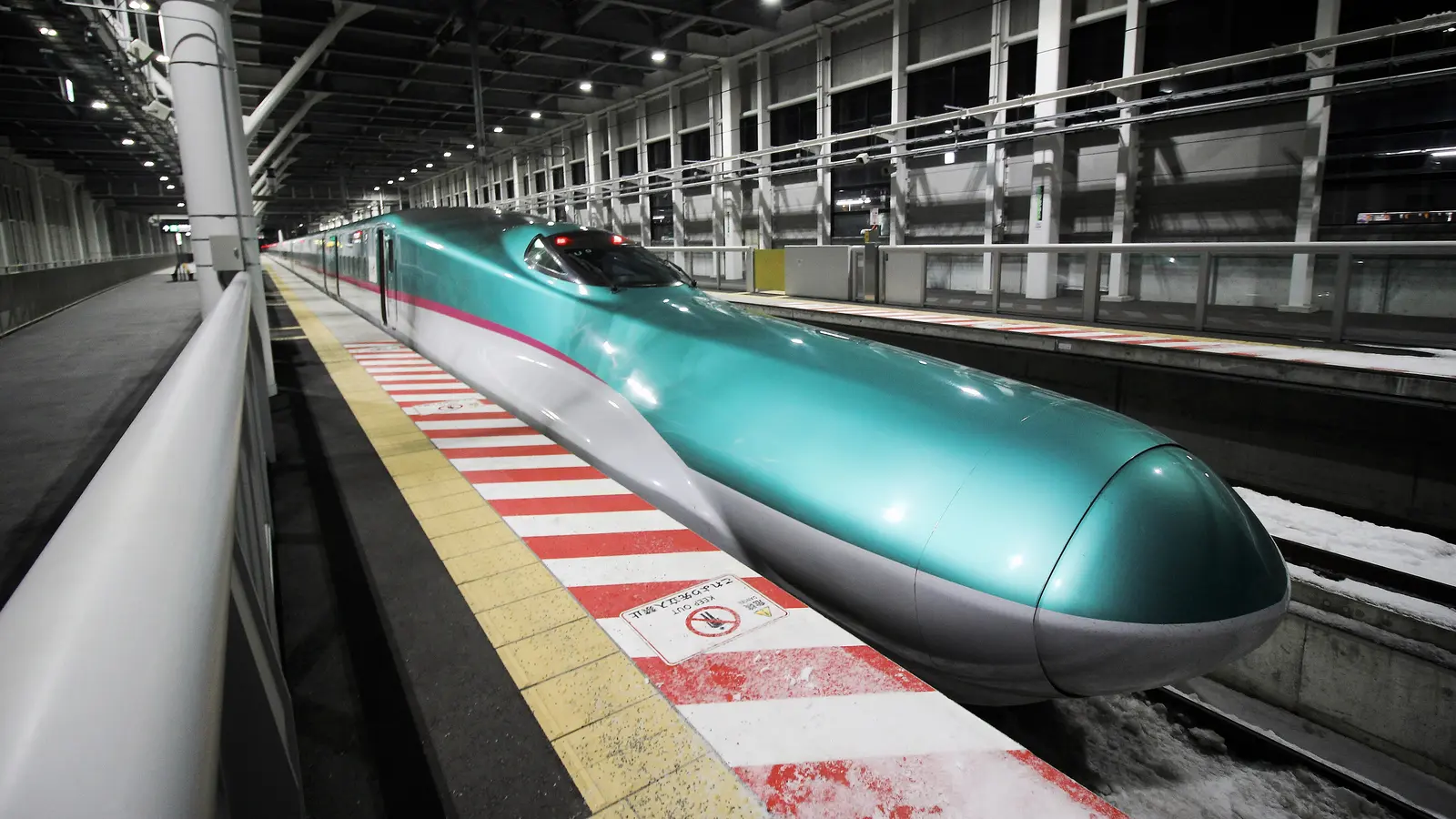
The project is intended for the nearly 7,000 km of new bullet-train corridors referenced by railway officials. Route designs and alignments for future lines are expected to receive approvals by mid-2027, according to the Times of India report.
BTCS would localise a core high-speed rail layer
Officials say BTCS is intended to be open-source, cost-effective, adaptable to Indian operating conditions and deployable across different corridors. One senior official said the technology could eventually be offered to other countries, although no export programme or development deadline has been announced.
Bringing the control protocol in-house would also create opportunities for domestic railway design companies and equipment manufacturers. The signalling initiative sits inside a broader localisation programme: a July 2026 government high-speed rail factsheet says the Integral Coach Factory and BEML are developing indigenous trainsets designed for 280 km/h.
Don’t miss…Maine Seeks Freight Rail Projects for $2 Million Grants
Mumbai–Ahmedabad provides the ETCS reference
BTCS is expected to build on experience from the Mumbai–Ahmedabad High-Speed Rail corridor, where ETCS Level 2 is being deployed. In June 2025, NHSRCL awarded a consortium led by Dineshchandra R Agrawal Infracon, Siemens Limited and Siemens Mobility GmbH a signalling and telecommunications order valued at approximately ₹4,100 crore.
Under the Siemens contract, the technology is designed for operations at up to 350 km/h, with real-time train supervision, continuous wireless communication and centralised traffic management. The programme has a 54-month execution period and includes 15 years of maintenance; Siemens Limited’s share is ₹1,230 crore.
Indian officials have not excluded Japanese protocols. They said Hitachi trains supplied by Japan are compatible with ETCS and that India could allow a switch to Japanese protocols if suppliers submit appropriate proposals. The response followed criticism from former Japanese minister Hideki Makihara over India not exclusively adopting Japan’s Digital Automatic Train Control system.
Two figures define the future corridor programme
The wider programme currently has two reported measures. Railway officials cited nearly 7,000 km of new bullet-train corridors in connection with BTCS. Separately, the government factsheet describes the seven corridors announced in the Union Budget 2026–27 as covering nearly 4,000 km, with expected investment of around ₹16 lakh crore.
Those seven routes are Delhi–Varanasi, Varanasi–Patna–Siliguri, Chennai–Bengaluru, Bengaluru–Hyderabad, Chennai–Hyderabad, Mumbai–Pune and Pune–Hyderabad. Their designs and alignments are expected to reach the approval stage by mid-2027, while the source gives no commissioning date for BTCS.
News on railway transport, industry, and railway technologies from Railway Supply that you might have missed: