India Develops a Common Model for High-Speed Rail Expansion
23.07.2026
India is developing a common delivery model for high-speed rail expansion, using lessons from the 508-kilometre Mumbai–Ahmedabad corridor to guide seven proposed routes covering nearly 4,000 kilometres.
A repeatable model for future corridors
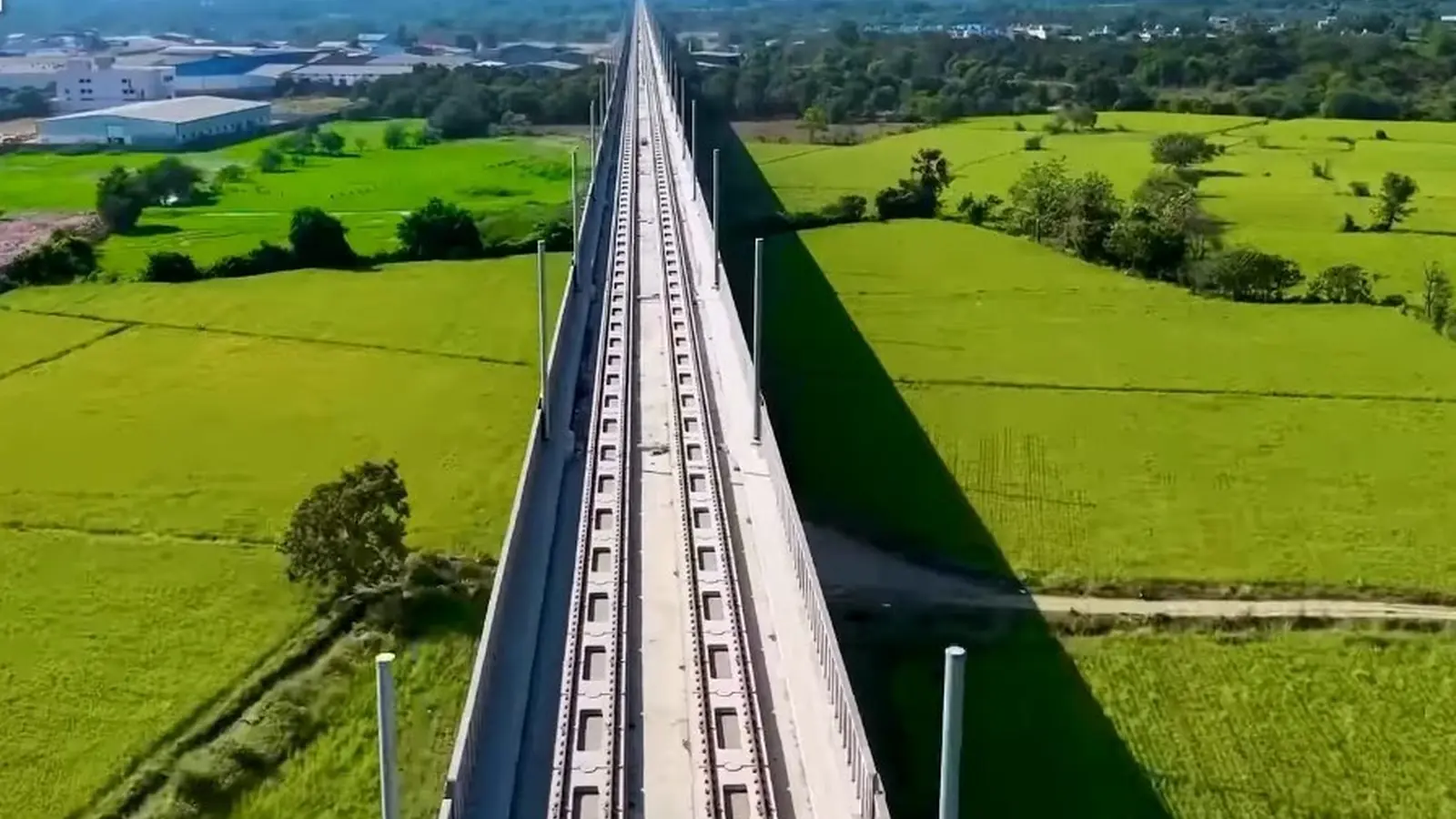
In a 3 July government backgrounder, India said the Mumbai–Ahmedabad High-Speed Rail project would provide a template for engineering, construction and operations on later corridors. Common standards are planned for piers, viaducts, track systems, station structures, overhead electrification and signalling.
Foundations would still be designed around soil conditions at each site. The common elements and procedures are intended to simplify procurement, spare-parts management, maintenance and staff training, while supporting faster construction, lower costs and consistent quality.
Mumbai–Ahmedabad provides the working template
The under-construction MAHSR line will extend approximately 508 kilometres between Mumbai and Ahmedabad, serving 12 stations. It is designed for 350 km/h, with a planned operating speed of 320 km/h, and uses Japanese Shinkansen technology and operating practices.
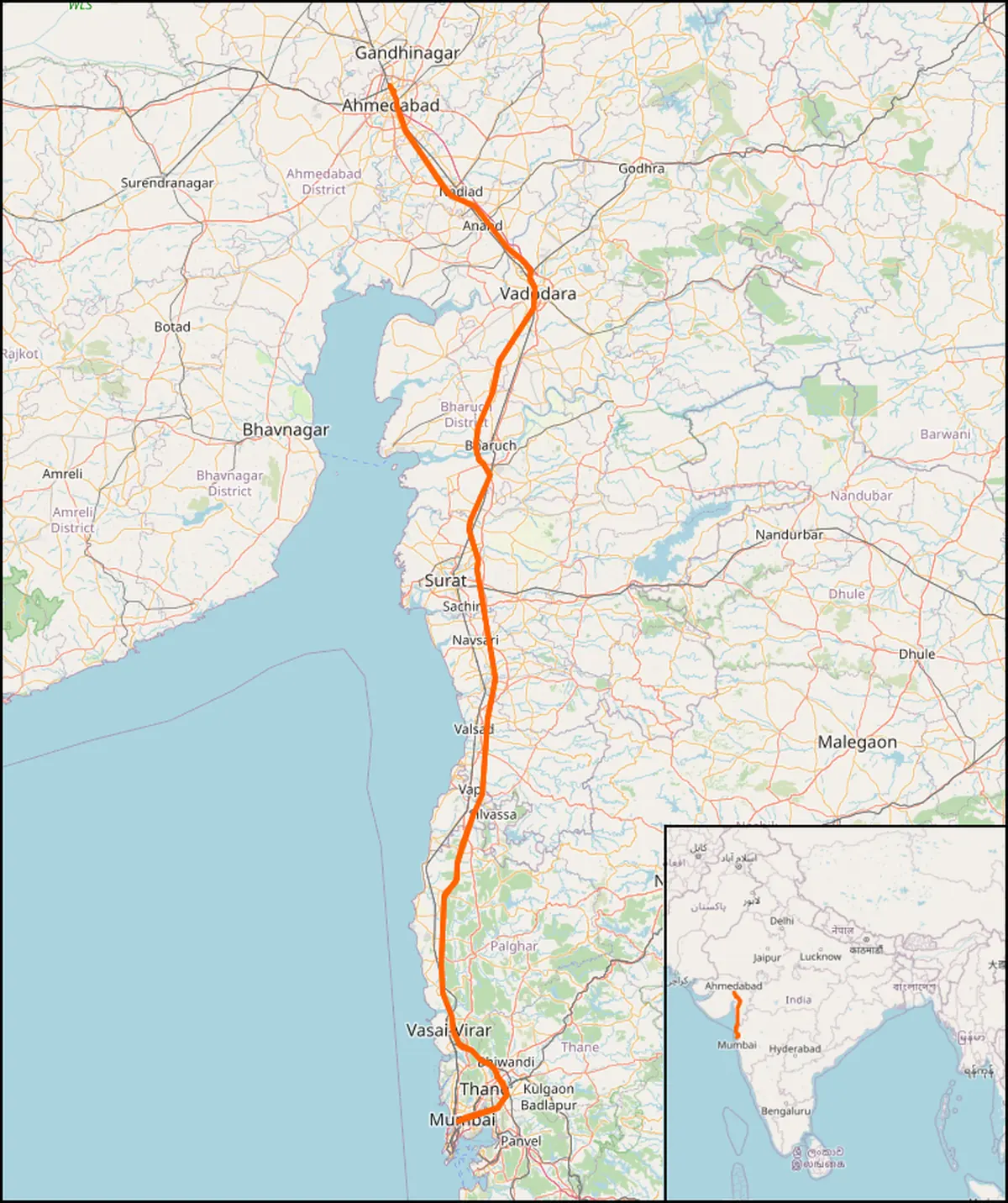
An official project update says the route crosses Maharashtra, Gujarat, and Dadra and Nagar Haveli, with about 90% of the alignment elevated. The first passenger service is expected in August 2027 on the Surat–Vapi section. Once the full corridor is operating, the Mumbai–Ahmedabad journey is expected to take about one hour and 58 minutes.
The project is introducing J-Slab ballastless track and a 2×25 kV overhead electrification system to India. Plans include more than 20,000 overhead line masts, 12 traction substations, two depot traction substations, 16 distribution substations and rolling-stock depots at Sabarmati, Surat and Thane.
Don’t miss…Caltrain FY26 Ridership Exceeds 12.5 Million Rides
Domestic manufacturing forms part of the model
Integral Coach Factory and BEML are developing indigenous high-speed trainsets for speeds of up to 280 km/h. BEML’s original contract announcement covers two eight-car sets with a 280 km/h test speed, alongside tooling and testing facilities intended for future high-speed projects.
Indian companies are also expanding production of slab-track systems, specialist components and construction equipment. Research by the Indian Institutes of Technology, dedicated training and the adoption of Japanese engineering practices are intended to build local expertise around the programme.
Seven proposed routes would use the framework
India has identified seven proposed corridors with an estimated combined investment of around ₹16 lakh crore, or US$166 billion:
- Delhi–Varanasi
- Varanasi–Patna–Siliguri
- Chennai–Bengaluru
- Bengaluru–Hyderabad
- Chennai–Hyderabad
- Mumbai–Pune
- Pune–Hyderabad
Together, the routes cover nearly 4,000 kilometres. The standardised framework is intended to give future projects a common technical baseline while retaining site-specific foundations; no construction timetable for the seven corridors was disclosed.
News on railway transport, industry, and railway technologies from Railway Supply that you might have missed:



