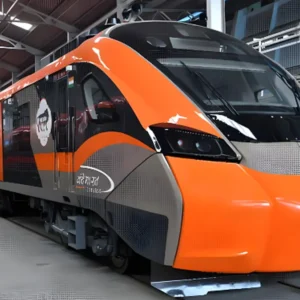
Hyderabad–Chennai bullet train project moves into next phase
23.11.2025
The Hyderabad–Chennai bullet train project has now moved into a decisive planning phase, with South Central Railway (SCR) sending the final alignment of the 778-km high-speed rail corridor to the Tamil Nadu government so it can be incorporated into the Detailed Project Report (DPR).
This is reported by the railway transport news portal Railway Supply.
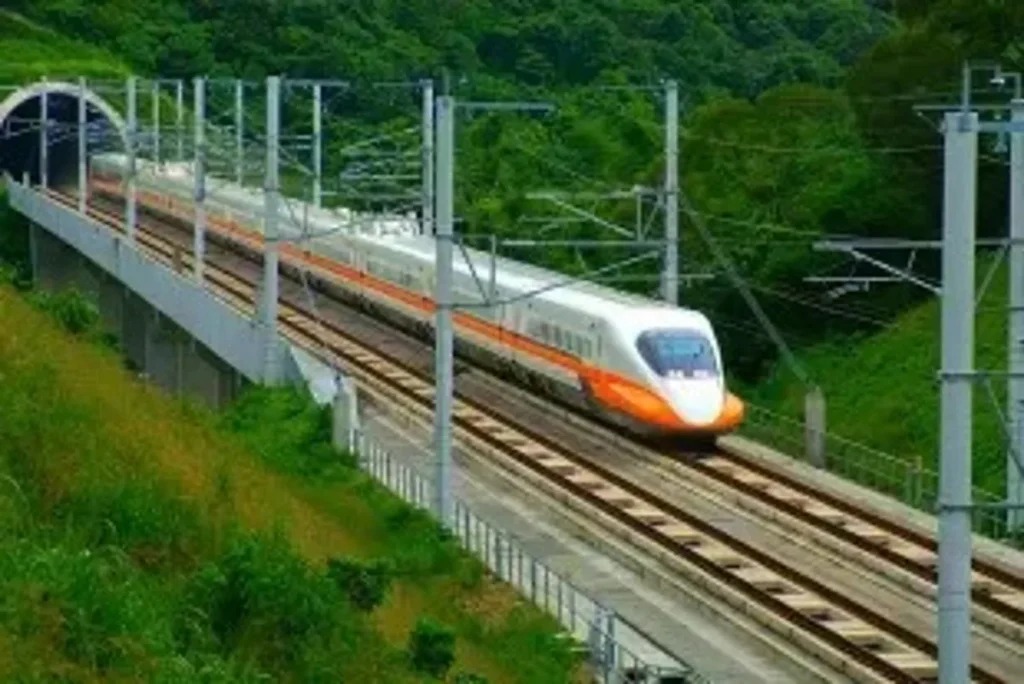
According to The New Indian Express, SCR has also asked for prompt approvals so that survey work on the Hyderabad–Chennai high-speed rail corridor can continue without being interrupted. Earlier, India launched a feasibility study for the HSL Hyderabad–Chennai route, as previously reported by Railway Supply. I Jayakumar, member secretary of the Chennai Unified Metropolitan Transport Authority (CUMTA), told TNIE that once Tamil Nadu signs off on the alignment, the DPR for the bullet train project should be finalised within about a month.
Hyderabad–Chennai bullet train project route and stations
The updated alignment reflects a key request from Tamil Nadu: instead of following the earlier route via Gudur, the corridor will now include a station at Tirupati. The high-speed line is planned to cut the current 12-hour journey between Hyderabad and Chennai to roughly 2 hours 20 minutes, offering a major reduction in end-to-end travel time between the two cities. This planned time saving is also highlighted in recent coverage of the corridor by Rail Analysis.
Don’t miss…Canadian trade infrastructure funding to boost exports
Within Tamil Nadu, two stations are proposed — one at Chennai Central and another along the Chennai Ring Road near Minjur — creating a crucial interface with the high-speed network. Around each of these stations, Railways has requested about 50 acres of land for transit-oriented development, with the aim of establishing new commercial and transport hubs around the bullet train stops.
In a letter sent earlier this week, South Central Railway urged the Tamil Nadu transport department to quickly firm up the exact station locations and give its approval to the alignment. In the same letter, SCR sought in-principle consent for land acquisition and asked that the high-speed rail corridor be built into the state’s long-term infrastructure master plan so planning and delivery can move forward in a coordinated manner.
Tamil Nadu stretch, tunnel and land acquisition
For Chennai and the rest of Tamil Nadu, the importance of the Hyderabad–Chennai bullet train project is underlined by the roughly 61-km stretch that passes through the state, anchored by the two key stations at Chennai Central and along the Chennai Ring Road/Minjur. This section serves as the city’s main gateway to the wider high-speed rail network and relies on surveys carried out by government consultancy RITES Limited.
Around 223.44 hectares of land are expected to be required for the Tamil Nadu portion of the corridor. None of this land lies within forest areas, which should make environmental approvals more straightforward. At the same time, the alignment crosses 65 roads and 21 high-tension power lines, so Railways and multiple state departments will need to work closely together to secure the clearances required for the elevated line and related structures.
A major engineering feature in this part of the Hyderabad–Chennai high-speed rail corridor is an 11.6-km tunnel. This tunnel will undergo detailed geotechnical investigations before engineers decide on the construction methodology, ensuring that ground conditions and safety requirements are fully understood beforehand. To keep survey and design work on schedule, Railways has proposed joint field inspections with Tamil Nadu teams so the time-bound Final Location Survey can move ahead smoothly.
Part of a wider southern high-speed rail network
The Hyderabad–Chennai bullet train project is one of two major southern high-speed corridors currently being planned, the other being the proposed Hyderabad–Bengaluru route. Together, these lines form part of a broader national effort to extend India’s high-speed rail network beyond the Mumbai–Ahmedabad corridor and to connect key economic centres across four southern states.
Momentum behind the Hyderabad–Chennai high-speed rail corridor increased after Andhra Pradesh Chief Minister N Chandrababu Naidu announced in September that survey work was already underway. His statement that the line is intended to link Hyderabad, Chennai, Amravati and Bengaluru has been widely reported, including by NDTV, which noted the broader regional connectivity and economic impact assumed for the proposed bullet train network.
In the northern outskirts of Chennai, the proposed route passes near several settlements, including Pondavakkam, Thatchoor, Vichoor, Mathur and Tondiarpet. Because of this, construction planning will have to balance the engineering requirements of a high-speed line with the need to minimise disruption for local communities. If approvals and surveys proceed as outlined, the Tamil Nadu section of the network could become a key showcase for how India’s expanding high-speed rail system can be integrated into dense urban and peri-urban environments.
News on railway transport, industry, and railway technologies from Railway Supply that you might have missed:
Find the latest news of the railway industry in Eastern Europe, the former Soviet Union and the rest of the world on our page on Facebook, Twitter, LinkedIn, read Railway Supply magazine online.Place your ads on webportal and in Railway Supply magazine. Detailed information is in Railway Supply media kit