Hanoi Launches $50 Billion Five-Line Metro Programme
22.07.2026
Hanoi has started building five metro lines in parallel, launching a preliminary $50 billion programme intended to connect the airport, city centre and expanding urban districts by 2030.
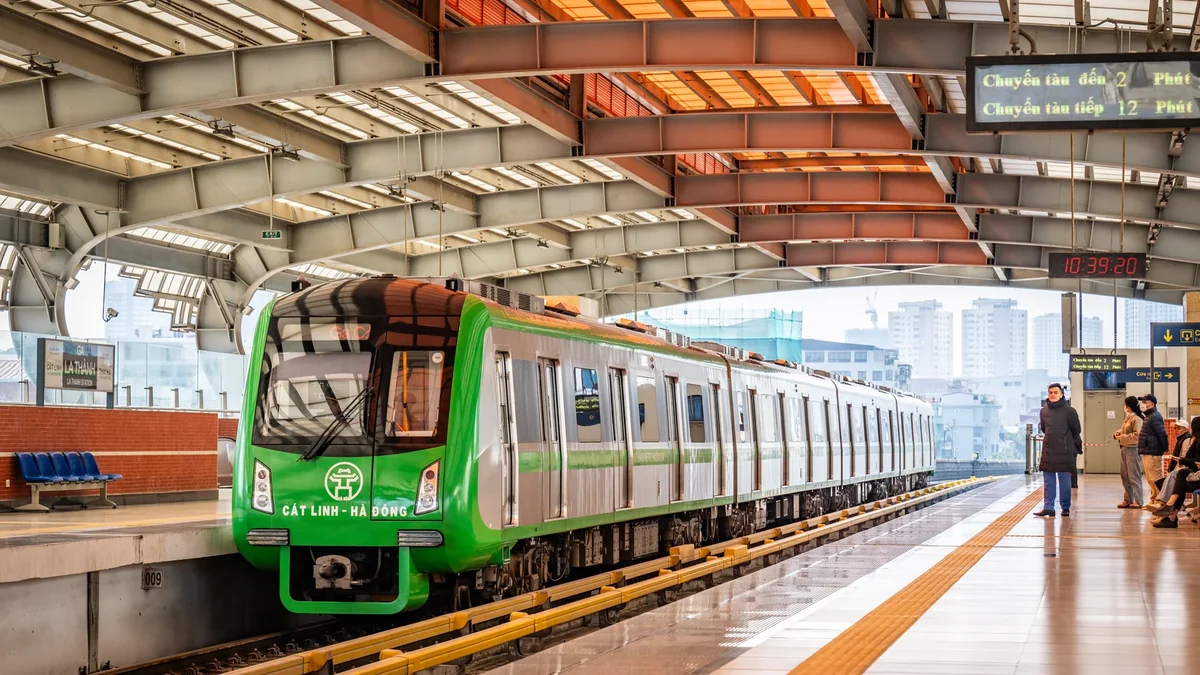
The ground-breaking ceremony took place on June 22 in the presence of Prime Minister Le Minh Hung. Lines 1, 2, 8, 10 and 14 are being delivered under EPC contracts covering engineering, procurement and construction.
The Vinhomes–VinSpeed consortium has been appointed as the EPC contractor for all five projects. Hanoi is therefore moving away from developing one route at a time and towards coordinated construction of an interconnected metropolitan network.
Don’t miss…London Weekend Hopper Offers All-Day Travel for £1.75
Five Hanoi metro lines cover every major direction
The Vietnamese Government’s project announcement gives a combined length of 298.5 km. This figure matches the published lengths of the five individual routes:
- Line 1 — 81 km: a north–south route connecting Ngoc Hoi, Hanoi Station, Yen Vien and Noi Bai International Airport.
- Line 2 — 56.5 km: another airport and north–south connection running through Tran Hung Dao, Thuong Dinh and southern districts.
- Line 8 — 91 km: a west–east corridor linking Hoa Lac, Mai Dich, Ring Road 3, Linh Nam and Duong Xa.
- Line 10 — 43 km: an orbital route connecting Dong Anh, Vo Chi Cong, Ring Roads 3 and 2.5, and Times City.
- Line 14 — 27 km: a route connecting the Thang Long Bridge area with Hong Ha and Gia Lam.
The supplied industry report states a total of 303.5 km. However, the government’s 298.5 km figure corresponds to the sum of the five published route lengths and is used here as the verified programme total.
Line 1 will provide connections between the urban metro, Hanoi’s main railway facilities, the future high-speed railway and Noi Bai Airport. Lines 2 and 14 will cross central parts of the capital, while Line 8 will serve western technology areas and eastern industrial and logistics districts.
Line 10 is designed as a circular connection, allowing passengers to travel between outer districts without passing through the historic centre.
Completion is targeted for 2030
The programme has preliminary investment estimated at approximately $50 billion. According to the Vietnam News Agency’s project outline, Line 1 alone represents an estimated VND 389.53 trillion, or about $14.8 billion.
Hanoi aims to substantially complete all five lines by 2030. Once operational, they are expected to connect with other parts of the developing metro system, including Lines 3 and 5.
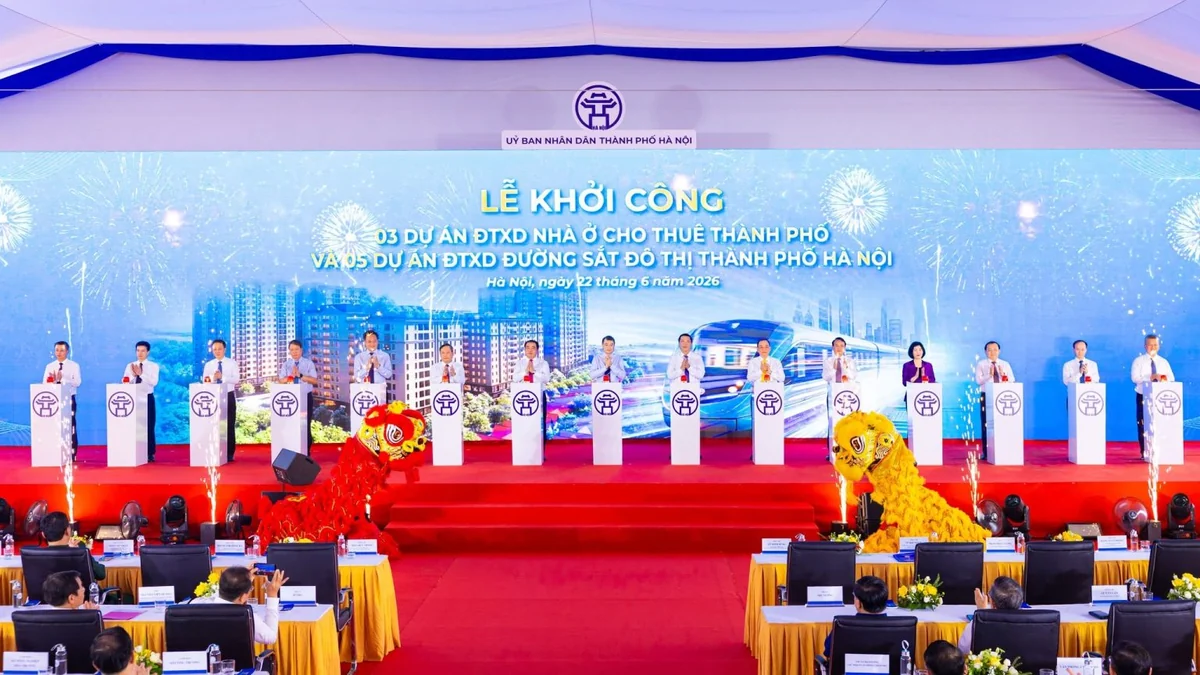
The capital currently has two operational urban railway sections: the Cat Linh–Ha Dong line and the elevated section of the Nhon–Hanoi Station route. The expansion programme would therefore move Hanoi from a small operating system towards a citywide network covering airport, residential, employment and industrial destinations.
Hanoi plans a 979 km urban railway network
The wider master plan provides for 18 urban railway lines with a combined length of approximately 979 km. Hanoi intends to complete around 500 km by 2035, with the remaining sections planned for the 2035–2045 period.
Metro stations are also intended to anchor transit-oriented development, concentrating housing, commercial facilities and public services around high-capacity transport corridors.
For Hanoi, the immediate change is the simultaneous start of five large projects. The longer-term objective is an integrated network capable of shifting more journeys from motorcycles and cars to public transport while supporting growth beyond the historic city centre.
News on railway transport, industry, and railway technologies from Railway Supply that you might have missed: