Federal-State Partnership grant funding at stake in FY26
10.01.2026
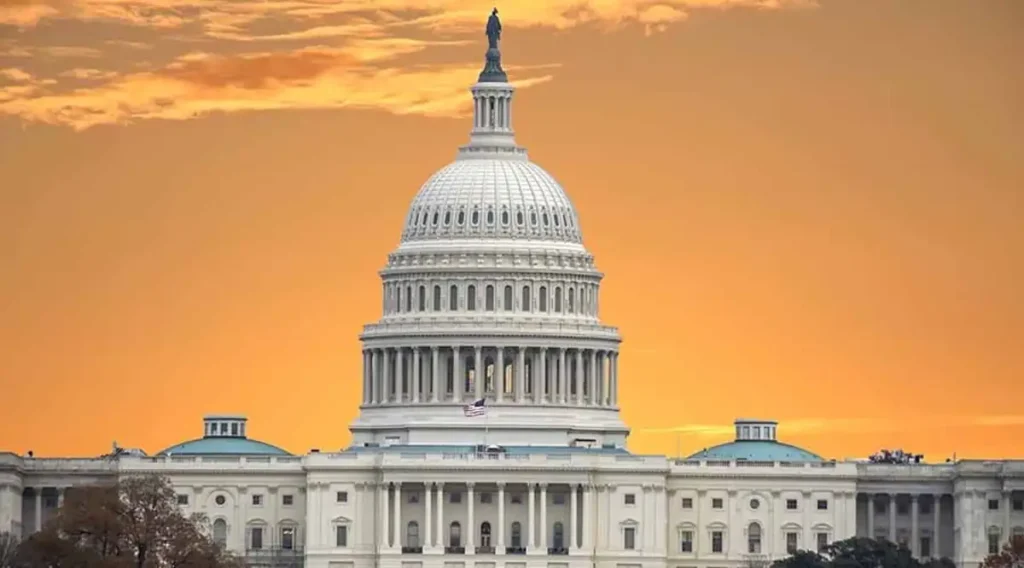
Federal-State Partnership grant funding is now at the center of the FY 2026 transportation spending fight. In a Jan. 09, 2026 appeal summarized in the Senator Chris Murphy press release, Murphy and 13 Democratic senators urged appropriators to keep at least $75 million rather than cut the account to zero.
This is reported by the railway transport news portal Railway Supply.
Murphy, a member of the U.S. Senate Appropriations Committee, led the letter to appropriations leadership, including the Transportation, Housing, and Urban Development (THUD) Appropriations Subcommittee. The senators argue that removing the funding would put Northeast Corridor work at risk and slow efforts to expand Amtrak passenger rail lines nationwide.
Why Federal-State Partnership grant funding matters in FY 2026?
The senators’ request focuses on the Federal Railroad Administration (FRA) Federal-State Partnership for Intercity Passenger Rail (IPR) grant program. They note the committee-passed Senate THUD appropriations bill includes $75 million for the account, while House Republicans have proposed zeroing it out.
Don’t miss…China railway passenger trips 2025 reach 4.59bn journeys
In the letter, the program is framed as a way to fund capital projects that reduce the state of good repair backlog, improve performance, or expand or establish new intercity passenger rail service—an overview also reflected in the Federal Railroad Administration’s program page. The senators emphasize that the Infrastructure Investment and Jobs Act (IIJA) reauthorized the program and provided five years of guaranteed funding, but they say this support was always intended to be supplemental to annually appropriated dollars.
They also cite IIJA authorizations that included up to $1.5 billion for the Federal-State Partnership grant program in fiscal year 2024. Still, they argue that IIJA investment by itself is not enough to fully address the nation’s rail state-of-good-repair (SOGR) backlog or to deliver the level of intercity passenger rail improvement and expansion they are seeking.
Northeast Corridor state of good repair backlog and economic risk
A major part of the letter is devoted to the Northeast Corridor (NEC). The senators write that the NEC’s SOGR backlog stands at well over $40 billion and warn it poses a serious threat to the nation’s economy.
To illustrate the stakes, they point to usage and economic activity tied to the corridor. Before the COVID-19 pandemic, Amtrak and commuter railroads on the NEC transported more than 800,000 people per weekday, and the workforce traveling on the NEC contributed roughly $50 billion annually to the economy.
They also cite an estimate from the Northeast Corridor Commission, stating that losing the NEC for a single day could cost the country $100 million in added congestion, productivity losses, and other transportation impacts. Without the necessary investments, they warn, disruptions could become more frequent and more severe over time, and missed work could lead to hundreds of millions of dollars in added costs.
Non-NEC expansion, corridor development plans, and Amtrak’s vision
The senators make a parallel case for funding outside the NEC, arguing the same program is key to expanding and establishing intercity passenger rail service nationwide. They point to Amtrak’s 2021 $75 billion, 15-year vision to bring more trains to more people across the country, including in underserved and unserved communities. A similar emphasis on nationwide rail investment appears in Railway Supply’s overview of Amtrak infrastructure activity.
According to the letter, Congress authorized the FRA Corridor Identification and Development Program, and the IIJA provided $12 billion through the Federal-State Partnership grant program as an initial down payment on non-NEC expansion. The senators say fully realizing the type of passenger rail network described in Amtrak’s vision would require robust additional funding in FY26 and beyond.
They also outline how annual funding is generally structured. Not less than 45% is reserved for NEC projects consistent with the most current NEC Service Development Plan. Not less than 45% is reserved for projects not located on the NEC, with preference for projects included in a corridor development plan previously selected by the FRA. In addition, a share of funding provided to non-NEC projects must benefit, in whole or in part, one of Amtrak’s fifteen Long-Distance routes.
Illustrative non-NEC projects cited in the letter
To show what federal investment could advance—assuming support from relevant states and communities and approval by the FRA—the senators list examples of non-NEC corridor development and related projects, including:
- Vermonter route expansion to Montreal
- Chicago Access Program projects in Illinois
- More frequencies and enhanced service on the Cascades Corridor in Washington and Oregon
- A new Front Range Corridor in Colorado and Wyoming connecting Denver, Colorado Springs, Pueblo and Cheyenne
- A new Massachusetts Inland Route service
- More frequencies on the Hiawatha Corridor in Wisconsin and Illinois, with extensions to Madison, Green Bay, Eau Claire and St. Paul
- A new Phoenix-to-Tucson corridor in Arizona
- More frequencies on the Downeaster Corridor in Massachusetts, New Hampshire and Maine
- A new “3C+D Corridor” in Ohio connecting Cleveland, Columbus, Dayton and Cincinnati
- Rebuilding an abandoned higher-speed rail corridor between Richmond, Virginia, and Raleigh, North Carolina
- Heartland Flyer route extension to connect Kansas communities, including Wichita, with Oklahoma City and Fort Worth
- Upgrades between Chicago, Indianapolis and Cincinnati, potentially including new service to Louisville
- A new corridor in Texas connecting Dallas/Ft. Worth, Austin and San Antonio
- Multiple new rail connections in California
- A multi-corridor network from a new Atlanta Hub station, including new corridors to Nashville, Charlotte and Savannah and elsewhere in the South
- Reestablish passenger rail service between Scranton and New York via New Jersey
In closing, the senators say they are writing on behalf of millions of constituents who depend on a safe and reliable passenger rail network, as well as those who do not have passenger rail as a meaningful option today. They urge appropriators to vigorously defend the $75 million appropriation for FY 2026 for the Federal-State Partnership for Intercity Passenger Rail grant program.
The letter was signed by Chris Murphy and Senators Angela Alsobrooks, Richard Blumenthal, Lisa Blunt Rochester, Cory Booker, Chris Coons, Dick Durbin, Andy Kim, Ed Markey, Jack Reed, Bernie Sanders, Chris Van Hollen, Elizabeth Warren, and Sheldon Whitehouse.
News on railway transport, industry, and railway technologies from Railway Supply that you might have missed:
Find the latest news of the railway industry in Eastern Europe, the former Soviet Union and the rest of the world on our page on Facebook, Twitter, LinkedIn, read Railway Supply magazine online.Place your ads on webportal and in Railway Supply magazine. Detailed information is in Railway Supply media kit