Expanding contactless payments across rail networks
17.11.2025
Across south-east England, rail operators roll out contactless payments at more than 50 stations, aiming to simplify journeys, reflect how people pay elsewhere, and support a £18.7 million modernisation push, as first reported by BBC News.
This is reported by the railway transport news portal Railway Supply.
The growing role of contactless payments in regional rail travel
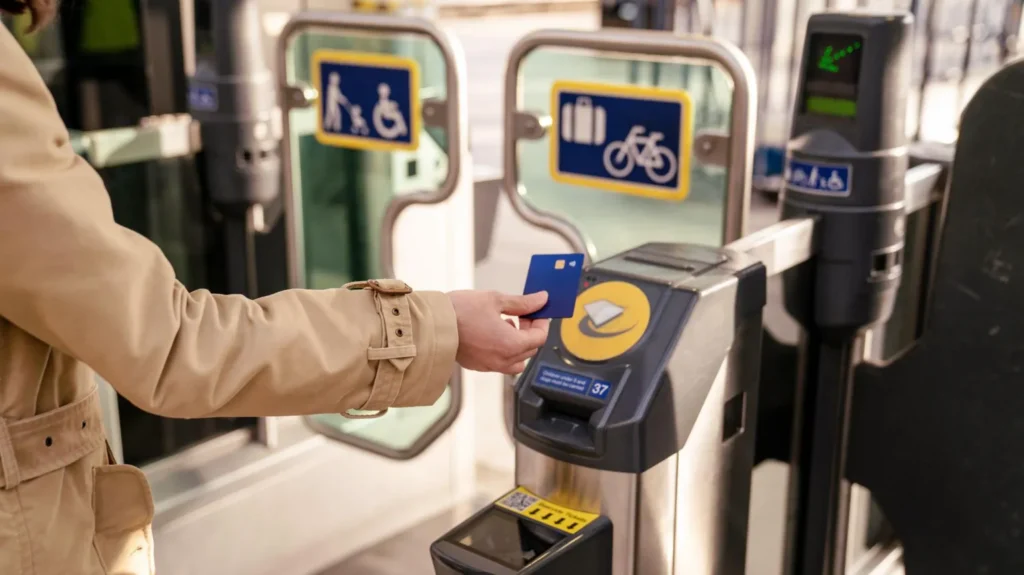
For many commuters, the appeal of contactless payments looks obvious: tap a bank card or phone at the barrier and walk through, instead of queuing for paper tickets or juggling single and return fares — very similar to the set-up described in National Rail’s contactless guidance.
Don’t miss…Hoosier Valley Railroad Museum Holiday Train Season
As officials put it, the Department for Transport wants fares and tickets to feel more convenient, accessible and flexible, rather than like a separate chore before every journey. Frankly, that speaks to the way people already use cards in shops and on buses.
Rail Minister Lord Peter Hendy links the change to a bigger picture, arguing that straightforward, stress-free travel across the south-east supports jobs, homes and local growth when rail remains a practical option for daily trips. To be fair, the language sounds ambitious – but it reflects a clear attempt to tie everyday ticketing tweaks to longer-term economic plans.
The Department for Transport emphasises that the programme supports a wider push to make travel more accessible, and it stresses the importance of modern, easy-to-use payment options. The initiative builds on growing public familiarity with digital payments, and it helps shape a more consistent travel environment across neighbouring counties. Officials frame this shift as a meaningful step in the long-term improvement of regional mobility.
Why rail operators expand contactless payments across more stations?
The government commits £18.7 million to this upgrade, and that figure, while not huge by infrastructure standards, still signals a serious push to embed contactless payments into routine rail travel across the south-east — a commitment also set out in a recent Department for Transport announcement. For many decision-makers, it marks a clear move away from the older, ticket-window model and towards something closer to everyday retail behaviour.
Stations used by publicly owned operators Greater Anglia and South Western Railway join the programme, and that brings Essex, Bedfordshire, Buckinghamshire and Hertfordshire into the same modernisation wave as Surrey and West Sussex. So, parts of the commuter belt begin to share a more similar experience at the gate, regardless of which operator runs the trains.
The argument, at least as it sounds, is that matching the ease of other payment systems helps rail stay competitive for everyday choices. Or, as one planner might put it, “we can see the cliff coming” if the experience falls too far behind what people get elsewhere. Still, supporters of the scheme present it as a practical, incremental step rather than a radical overhaul of how people travel.
News on railway transport, industry, and railway technologies from Railway Supply that you might have missed:
Find the latest news of the railway industry in Eastern Europe, the former Soviet Union and the rest of the world on our page on Facebook, Twitter, LinkedIn, read Railway Supply magazine online.Place your ads on webportal and in Railway Supply magazine. Detailed information is in Railway Supply media kit