Eurotunnel UK tax dispute over Channel Tunnel rates
21.11.2025
The Eurotunnel UK tax dispute has moved up a gear: the Channel Tunnel operator now says tax pressures in the UK have climbed so high that further investment no longer makes sense. Describing the current regime as “unsustainable”, the company plans to freeze its UK projects from 2026, as reported by RailTech.
This is reported by the railway transport news portal Railway Supply.
The announcement comes just days before Chancellor Rachel Reeves is due to unveil the Autumn Budget and set out the government’s latest tax and spending plans.
Don’t miss…Amtrak record ridership 2025 marks new era for U.S. rail
Eurotunnel UK tax dispute and 200% business rates hike
At the heart of the Eurotunnel UK tax dispute lies a proposed Channel Tunnel business rates increase from the UK Valuation Office Agency (VOA). According to a statement by Getlink published via Business Wire, the VOA wants to push Eurotunnel’s annual bill for these asset-based Business Rates up by an unprecedented 200% — from £22 million to £65 million, roughly from €26 million to €78 million.
Eurotunnel calls the planned hike “unjustified and confiscatory”, arguing that it threatens both the long-term future of the Channel Tunnel and the infrastructure projects linked to it. In the UK, Business Rates are an annual tax set by a central government body on the assessed value of assets rather than on a company’s profits.
Speaking to the BBC in London, chief executive Yann Leriche explained that, under these conditions, the group’s current and planned investments in the UK are becoming impossible to sustain. Facing such a sharp jump in fixed tax charges, he said, is “a real issue” for a rail business that has to plan many years ahead.
By the company’s own estimate, once other levies are counted, the total tax burden on its UK earnings could approach 75% — an unsustainable level of taxation in the UK for a cross-Channel rail operator. Because these asset-based taxes take no account of profitability, Eurotunnel argues they can quickly become crippling.
Legal options under the Franco-British Concession of 1986
For now, Eurotunnel is keeping the door open for talks with the VOA and its supervisory authorities. Negotiations will continue until the final valuation decision, which is expected by the end of March 2026. If the proposed rates are confirmed, the company says it will use every tool available to defend its position, including possible legal steps under the Franco-British Concession of 1986.
At the same time, the operator insists it is being put at a disadvantage compared with competitors whose activities are more carbon-intensive, face lower levels of taxation, or operate under different social and regulatory models. In its view, this combination produces “an unparalleled and unsustainable level of taxation”, making any fresh investment in the UK “non-viable”.
In real terms, Eurotunnel argues, that means it cannot realistically launch new services, create additional jobs or carry out what it considers necessary for the long-term development of its activities around the Channel Tunnel.
Barking rail freight terminal and Lille–London connection at risk
The company says the most immediate casualties of this tax-driven stance are its rail freight ambitions. Plans to revive the Barking rail freight terminal in east London have been shelved. Less than a decade ago, Barking was the arrival point for the first of the “New Silk Road” trains from Yiwu in China, which reached the UK via the Channel Tunnel.
A planned Lille–London freight connection has also been put on ice, underlining how UK business rates can directly shape cross-Channel rail freight plans.
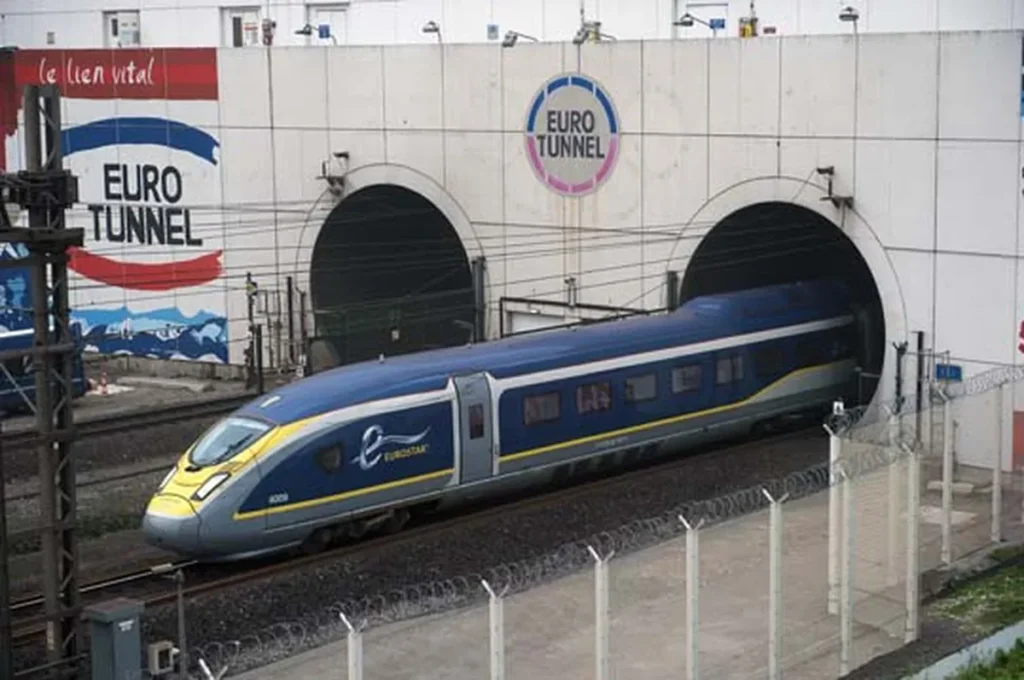
The Channel Tunnel itself links Folkestone in southern England with Calais in northern France. It is managed by Eurotunnel, owned by Getlink; the group’s broader performance and strategy have previously been covered by Railway Supply.
Passenger trains through the tunnel are run by Eurostar, the company’s biggest customer, with services from London to Paris, Brussels, Amsterdam and other European cities.
News on railway transport, industry, and railway technologies from Railway Supply that you might have missed:
Find the latest news of the railway industry in Eastern Europe, the former Soviet Union and the rest of the world on our page on Facebook, Twitter, LinkedIn, read Railway Supply magazine online.Place your ads on webportal and in Railway Supply magazine. Detailed information is in Railway Supply media kit