Passenger Train Projects Launching in Mexico for 2025
28.11.2024
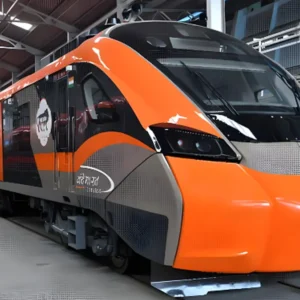
The Mexican government plans to launch four passenger train projects in 2025. The initial routes include AIFA-Pachuca, Mexico City-Querétaro, Saltillo-Nuevo Laredo, and Querétaro-Irapuato. This was reported by the railway transport news portal Railway Supply.

Expanding Passenger Train Projects Nationwide
According to Andrés Lajous Loaeza, head of the Regulatory Agency for Railway Transport (ARTF), the total budget for train projects in 2025 will reach $157 billion. He made the announcement during a press conference alongside President Claudia Sheinbaum Pardo and Infrastructure Secretary Jesús Antonio Esteva Medina.
Hydrogen Locomotive: A Revolutionary Step in Sustainable Transportation
The Ministry of Defense (DEFENSA) will oversee the construction of the AIFA-Pachuca and Mexico City-Querétaro segments. Meanwhile, the Ministry of Infrastructure, Communications, and Transport (SICT) will handle the Querétaro-Irapuato and Saltillo-Nuevo Laredo stretches. Additionally, SICT will procure the first fleet of passenger trains.
An interdisciplinary team comprising DEFENSA, SICT, and environmental and cultural agencies is preparing for these projects. This team includes SEMARNAT, INAH, CONABIO, and local governments. Their collaboration aims to ensure environmental compliance, cultural preservation, and local integration.
Benefits of Passenger Train Projects in Mexico
The trains will operate on dedicated tracks, allowing speeds of 160-200 kilometers per hour. Stations will serve both primary and secondary routes to enhance connectivity between cities and regions.
These projects aim to improve travel times, safety, and passenger comfort while reducing carbon footprints. Enhanced connectivity and better quality of life are also among the key objectives of this initiative.
The construction plan spans four phases, targeting over 3,000 kilometers of passenger rail lines. Specific routes include Mexico City-Nogales, Mexico City-Nuevo Laredo, and others. These lines will connect major cities and regions nationwide.
Phase one includes 786 kilometers of rail with segments like AIFA-Pachuca, Querétaro-Irapuato, and Saltillo-Nuevo Laredo. Phase two covers 910 kilometers, including routes such as Querétaro-San Luis Potosí and Mazatlán-Los Mochis.
Phases three and four will complete an additional 1,697 kilometers, with segments like Guadalajara-Tepic and Hermosillo-Nogales. In total, these projects aim to revolutionize passenger rail services across Mexico.
Lajous Loaeza emphasized that intercity and regional trains will significantly reduce travel times and improve connectivity. This marks a transformative step for Mexico’s transportation infrastructure.
Since 2018, passenger train projects have gained momentum under President López Obrador. Initiatives like the Interoceanic Train and the Maya Train have set the foundation for this ambitious expansion.
By 2025, these efforts will bring modern, efficient, and sustainable passenger train services to millions of Mexicans. This reflects the government’s commitment to advancing transportation and addressing environmental challenges.
Photo, source: www.bnamericas.com
News on railway transport, industry, and railway technologies from Railway Supply that you might have missed:
Rail Repairs Continue After Storm Bert’s Damage in Northampton
Find the latest news of the railway industry in Eastern Europe, the former Soviet Union and the rest of the world on our page on Facebook, Twitter, LinkedIn, read Railway Supply magazine online.Place your ads on webportal and in Railway Supply magazine. Detailed information is in Railway Supply media kit