Kazakhstan to Start Exporting Railway Wheels to Europe
11.09.2025
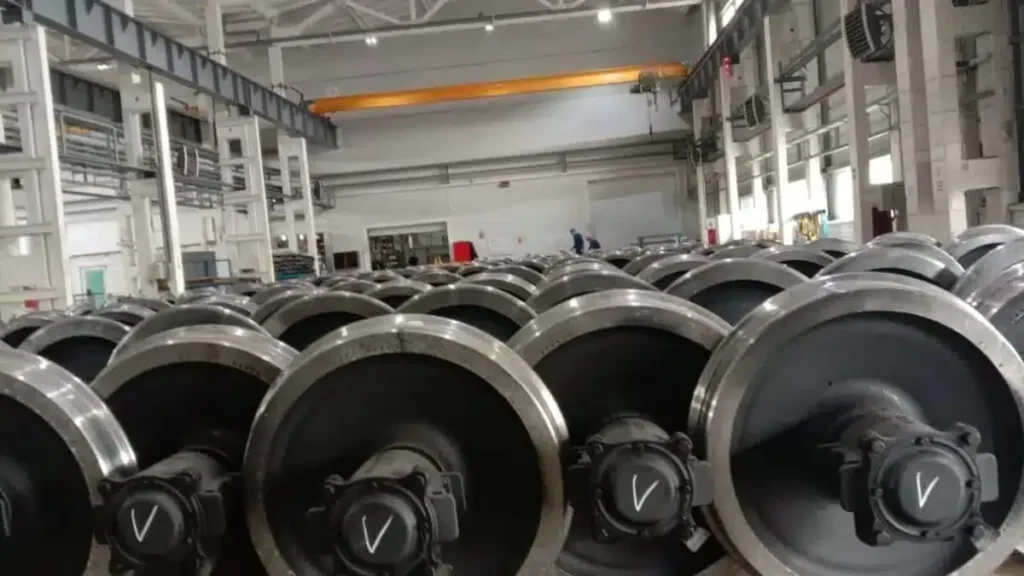
Kazakh firm Prommashkomplekt, under the umbrella of Railways Systems KZ, is gearing up for export growth and supplies of railway wheels into Europe. Output continues steady at the 260,000–270,000 monthly level, however, EU certification will be the deciding step for market entry.
This is reported by the railway transport news portal Railway Supply.
Railway Wheel Production and Certification
European export markets might be more lucrative than serving Russia or Kazakhstan, according to management, but certification can take two or three years because the product needs complete compliance with European Union standards.
Don’t miss…Amtrak lawsuit settlement with Norfolk Southern explained
At the same time, the firm continues to serve Russian customers, who account for over 70% of export volumes. In 2024, the plant produced nearly 270,000 units of its capacity of 300,000 units, with enough leeway for expansion.
Logistics and the Trans-Caspian Transport Route
The Trans-Caspian International Transport Route is also part of the logistics plan. Transportation is through Aktau, Baku, and thereafter through Europe. The plan, however, involves the reloading of cargo from the ships and back into the rail wagons, and so it is more expensive than the normal routing through Russia.
In spite of the arisen problems, the company boasts bright prospects. European market provides new perspectives for long-term contracts, and the project for Railway Systems KZ is strategic for the company’s development prospects.
When will European railway wheel export begin?
Shipments were only able to commence after certification via the EU is completed, and it might take two or three years.
How many railway wheels does Prommashkomplekt produce annually?
The company currently manufactures about 260,000–270,000 wheels annually and produces a total capacity of 300,000 units, with steady export volumes.
Why was the Trans-Caspian route chosen?
Provides direct access to European markets, but it is costlier because cargo must be reloaded onto vessels along the way.
News on railway transport, industry, and railway technologies from Railway Supply that you might have missed:
Find the latest news of the railway industry in Eastern Europe, the former Soviet Union and the rest of the world on our page on Facebook, Twitter, LinkedIn, read Railway Supply magazine online.Place your ads on webportal and in Railway Supply magazine. Detailed information is in Railway Supply media kit