JR West Unveils 3D-Printed Train Station in Japan
05.04.2025
JR West amazed everyone by constructing a 3D-printed train station in three hours last week. This innovative project cut costs and time dramatically. This is reported by the railway transport news portal Railway Supply.
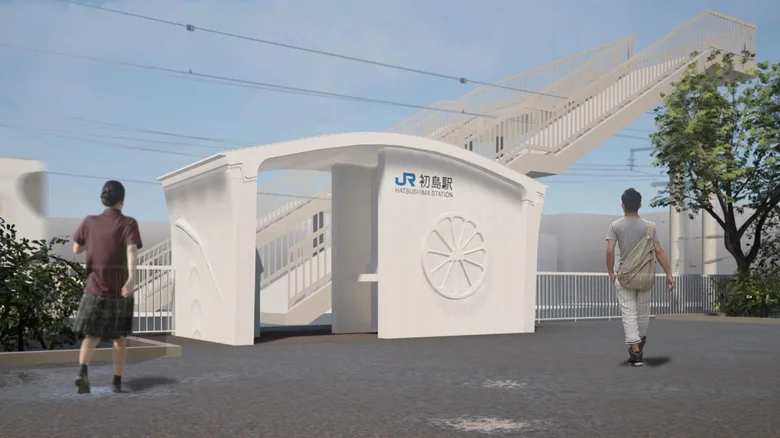
The company chose Hatsushima Station, a small wooden structure from 1949 serving fewer than 400 passengers daily, for this upgrade. After scheduling an overnight break, JR West sent workers to assemble Ascending quickly, workers assembled four hollow 3D-printed mortar sections into a modern facility.
Don’t miss…Indian Railways Expansion Gets $223.9M Boost
These lightweight pieces reached the site, and workers filled them with rebar and concrete for strong earthquake resistance. Although construction finished quickly, JR West targets a July opening for the modernized station.
Rapid Construction of the 3D-Printed Train Station
JR West proudly calls Hatsushima the world’s first 3D-printed train station, setting a new standard in infrastructure innovation. Now, the company explores using this method for other projects across its network.
Spanning just 12 square yards, the new station looks simple but meets all local community needs effectively. Its modest design proves efficiency and functionality outweigh appearances in rural areas.
Beyond railways, 3D printing transforms construction and manufacturing in various sectors around the world rapidly. For example, NASA plans to use it for Mars missions by turning soil into materials.
Sending traditional supplies to Mars costs millions, so NASA views 3D printing as a budget-friendly solution. Likewise, JR West saved nearly 50% on Hatsushima’s costs, roughly $50,000, compared to concrete methods.
Japan’s success contrasts with slow projects like California’s High-Speed Rail, still far from completion despite years of work. Instead, JR West shows rapid, affordable solutions exist, and 3D printing leads the way.
The Hatsushima project used pre-fabricated parts, so assembly took minimal labor and time compared to older techniques. Looking forward, JR West aims to expand this approach for sustainable, fast construction.
Scalability Challenges for the 3D-Printed Train Station
Experts praise JR West’s feat, but scaling this technology for larger urban stations raises questions for the future. Nevertheless, the railway stays confident and seeks new opportunities to grow.
Critics say the station’s basic look lacks flair, yet it serves rural commuters perfectly with practical design. As 3D printing advances, JR West might blend style and speed in upcoming projects.
Japan’s achievement excites industries worldwide, because companies want faster, cheaper building methods for their own needs. For now, JR West sets an example with its rapid station upgrade.
NASA’s Mars plans and JR West’s rail success both rely on 3D printing to tackle tough challenges efficiently. Soon, this technology could transform construction globally, so watch for more breakthroughs ahead.
Source: www.jalopnik.com
News on railway transport, industry, and railway technologies from Railway Supply that you might have missed:
Find the latest news of the railway industry in Eastern Europe, the former Soviet Union and the rest of the world on our page on Facebook, Twitter, LinkedIn, read Railway Supply magazine online.Place your ads on webportal and in Railway Supply magazine. Detailed information is in Railway Supply media kit