India’s First Undersea Tunnel to Revolutionize High-Speed Rail Travel
19.01.2025
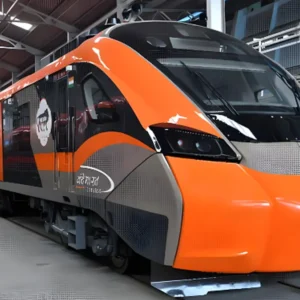
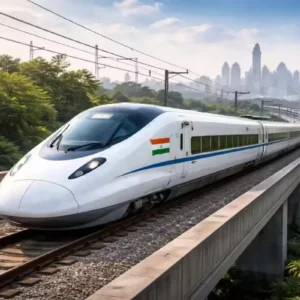
India’s first undersea tunnel is set to transform high-speed rail connectivity nationwide. This cutting-edge tunnel, part of the Mumbai-Ahmedabad corridor, will enable bullet trains to travel at 250 km/h. This was reported by the railway transport news portal Railway Supply.

India’s First Undersea Tunnel: A Technological Breakthrough
The seven-kilometer tunnel, constructed beneath Thane Creek, forms part of a 21-kilometer stretch. Linking Bandra Kurla Complex (BKC) to Shilphata, it will accommodate dual tracks, offering seamless and efficient transportation.
Don’t miss…Indian Railways Modernizes Operations with Cutting-Edge Safety Upgrades
This tunnel is a unique engineering marvel in India’s infrastructure landscape. Advanced technology has been utilized to ensure environmental sustainability, with special attention to ventilation, lighting, and safety. Trains passing through the tunnel will benefit from unmatched speeds and comfort.
The railway minister emphasized the significance of the undersea tunnel, comparing it to global standards. Unlike the Kolkata Metro’s under-river tunnel, this structure allows trains to travel faster, redefining Indian rail travel. The dual tracks make it possible for two trains to operate simultaneously, ensuring smooth and efficient services.
Mumbai-Ahmedabad Corridor: India’s High-Speed Future
The Mumbai-Ahmedabad high-speed rail project spans an impressive 508 kilometers and includes 12 strategically placed stations. Key locations such as Mumbai, Thane, Surat, and Ahmedabad have been integrated to boost connectivity and urban development.
The Bandra Kurla Complex station is a highlight of the project, described as an architectural wonder by officials. It features ten underground and seven above-ground levels, showcasing modern engineering excellence. This station reflects India’s ambition to develop world-class infrastructure capable of meeting growing urban demands.
Estimated at ₹1.08 lakh crore, the project represents a significant investment in the nation’s future. Officials have confirmed that 39 equipment rooms will be built at 37 locations along the route to ensure efficient operation and maintenance. The project is being constructed under the guidance of Japanese experts, ensuring adherence to international quality standards.
The tunnel, which forms a crucial part of the Mumbai-Ahmedabad corridor, symbolizes India’s commitment to innovation. Beyond transportation, the project aims to foster regional economic integration. Reduced travel times and enhanced connectivity will allow daily commuters and businesses to operate more efficiently, promoting growth and productivity.
Integration of Technology and Sustainability
The undersea tunnel’s design reflects India’s focus on sustainability and technological advancement. By adopting eco-friendly construction practices, the project minimizes environmental impact while maximizing efficiency. The use of modern materials and techniques ensures durability and safety under challenging conditions.
This landmark project is a collaboration between India and Japan, blending the best of both nations’ engineering expertise. Japanese technology, known for its precision and reliability, is playing a pivotal role in the project’s success. The Mumbai-Ahmedabad corridor is on schedule, with significant portions already under construction.
The project also highlights India’s commitment to reducing carbon emissions by encouraging the use of public transport. High-speed trains are an environmentally friendly alternative to road and air travel, offering faster and cleaner journeys.
India’s first undersea tunnel is not just an infrastructure achievement but a symbol of the nation’s potential. It is poised to redefine transportation, connect regions, and elevate India’s position as a global leader in engineering innovation. With its completion, India will step into a new era of technological progress and economic integration.
Source: www.timesnownews.com
News on railway transport, industry, and railway technologies from Railway Supply that you might have missed:
Don’t miss…Virgin to Revolutionize Channel Tunnel Travel with High-Speed Trains by 2029
Find the latest news of the railway industry in Eastern Europe, the former Soviet Union and the rest of the world on our page on Facebook, Twitter, LinkedIn, read Railway Supply magazine online.Place your ads on webportal and in Railway Supply magazine. Detailed information is in Railway Supply media kit