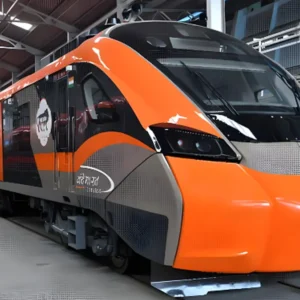
Delhi-Meerut RRTS Nears Completion with New Trial Runs and Updates
24.02.2025
The Delhi-Meerut RRTS project is nearing completion, with officials confirming the latest updates on trial runs. Around 55 kilometers of the corridor are already operational, ensuring rapid transit. This was reported by the railway transport news portal Railway Supply.

Delhi-Meerut RRTS: Track Completion and Infrastructure Updates
The Delhi-Meerut RRTS corridor spans 82 kilometers, connecting Delhi, Ghaziabad, and Meerut. Officials report that track installation is in its final stages, marking a major milestone. Approximately 55 kilometers of the corridor are already operational, offering high-speed travel.
Don’t miss…Camlin Rail Partners with Caltrain to Revolutionize Train Monitoring Technology
This corridor uses a precast slab track system instead of traditional railway tracks. The advanced technology ensures durability and supports trains operating at speeds of up to 160 km/h. Unlike conventional metro systems, this infrastructure enhances efficiency and reduces long-term maintenance needs.
Delhi-Meerut RRTS: Trial Runs and Future Operations
Since launching operations on October 21, 2023, Namo Bharat trains have transported over 6.6 million passengers. Officials confirmed that trial runs on the Meerut South to Shatabdi Nagar section began this month. Testing on the remaining segment in Delhi, from Anand Vihar to Sarai Kale Khan, is expected soon.
Meerut will also introduce a local metro service using the same infrastructure. Authorities emphasize that extensive testing is underway to ensure smooth operations. The integration of metro services with this corridor will significantly enhance regional connectivity and accessibility.
Corridor Design and Advanced Track System
The corridor features a mix of elevated (70 kilometers) and underground (12 kilometers) sections. Unlike conventional ballastless track systems, precast slab tracks were chosen for improved performance. Traditional track construction occurs on-site, but this project required a prefabricated approach for efficiency.
Factors such as reliability, reduced maintenance, and environmental sustainability influenced this decision. Officials highlight that the technology minimizes vibrations, ensuring a smoother passenger experience. This advanced track system is expected to set new standards for high-speed transit.
Manufacturing of Precast Slabs
The project required approximately 44,000 precast slabs for track construction. A specialized factory in Meerut, covering 45,000 square meters, was established for production. Automated systems ensured precision, enabling accurate alignment and smooth installation of the slabs.
Minimizing vibrations from high-speed movement was a key priority during development. Engineers optimized track performance to improve stability and passenger comfort. Officials confirmed that this approach reduces long-term maintenance costs while ensuring reliability.
Delhi-Meerut RRTS: A Key Regional Transit Initiative
The Delhi-Meerut RRTS corridor starts at Sarai Kale Khan and extends to Modipuram in Meerut. The project includes 16 Namo Bharat stations and nine additional metro stations in Meerut. Authorities anticipate that Sarai Kale Khan station will be operational by June this year.
Officials emphasize that the project will transform regional mobility, significantly reducing travel time. The initiative showcases India’s commitment to modernizing urban transit systems. The completion of this corridor will mark a significant milestone in high-speed rail development.
Source, photo: m.economictimes.com
News on railway transport, industry, and railway technologies from Railway Supply that you might have missed:
Find the latest news of the railway industry in Eastern Europe, the former Soviet Union and the rest of the world on our page on Facebook, Twitter, LinkedIn, read Railway Supply magazine online.Place your ads on webportal and in Railway Supply magazine. Detailed information is in Railway Supply media kit