British battery train sets a world record
23.08.2025
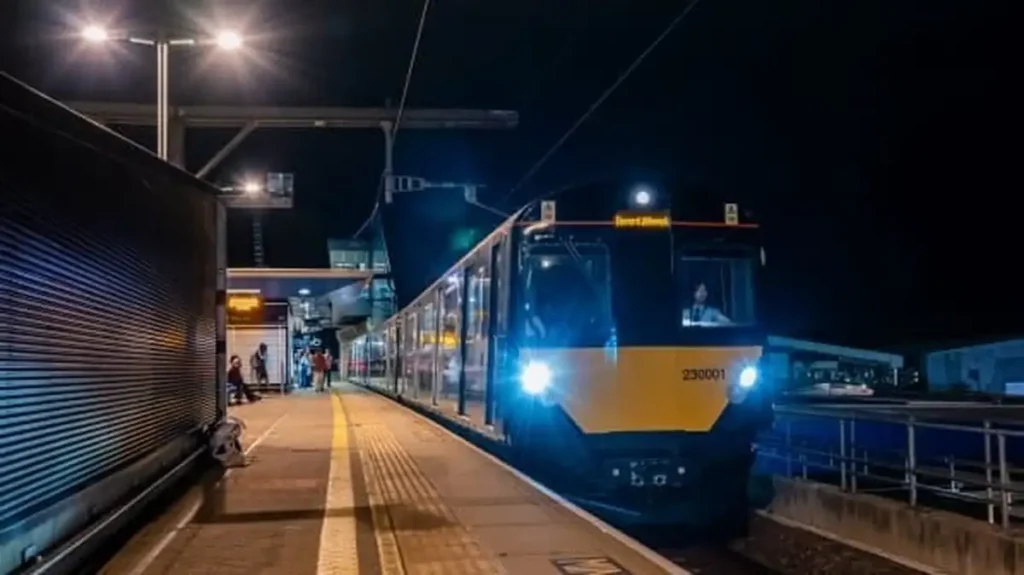
The British battery train GWR Class 230 traveled 320 kilometers on a single charge, breaking the previous world record and reinforcing the company’s leadership in the development of sustainable railway technologies. This is reported by the railway transport news portal Railway Supply.
Advantages and record of the battery train
The test began in Reading, where the train departed from the maintenance depot and headed to London Paddington. It then ran a route to Oxford and back, testing the system under real operating conditions.
Don’t miss…Railcar Procurement in Kazakhstan by 2029: Plans and Prospects
The previous record stood at 224 kilometers, set by the Stadler Flirt Akku train, which traveled between Berlin and Rostock in December 2021. Now, the British project has significantly improved this result, opening new opportunities for the rail industry.
The Class 230 train is equipped with a FastCharge system, allowing a full recharge in just 3.5 minutes. During the record-breaking trip, the train operated at speeds between 48 and 64 km/h, and at its maximum speed of 96 km/h, it can cover approximately 192 kilometers.
Prospects for battery train implementation
GWR plans to modernize its fleet, as about one-third of its trains still rely on diesel fuel. Transitioning to battery-powered models will help reduce emissions, cut maintenance costs, and speed up the shift to eco-friendly passenger services.
Experts note that GWR’s record is driving interest in battery technology not only in the UK but also across Europe and Asia. Rail operators view such trains as an efficient solution for regional routes that do not require extensive infrastructure upgrades.
This initiative aligns with the UK’s strategy to reduce its carbon footprint. As innovative technologies improve the efficiency and sustainability of passenger services, investors are showing growing interest in supporting these solutions.
Thus, GWR’s achievement demonstrates that battery trains are becoming a realistic alternative to diesel-powered fleets. And today, such projects are shaping the future of rail transportation.
What is a battery train?
It is a train powered by electricity stored in batteries. It does not require overhead lines and is ideal for regional routes.
Can a battery train be used for long distances?
Yes, but only if fast-charging stations are available. Modern models can travel up to 320 km on a single charge.
Why is a battery train beneficial for operators?
It reduces fuel and maintenance costs while helping operators meet environmental goals and comply with international sustainability standards.
News on railway transport, industry, and railway technologies from Railway Supply that you might have missed:
Find the latest news of the railway industry in Eastern Europe, the former Soviet Union and the rest of the world on our page on Facebook, Twitter, LinkedIn, read Railway Supply magazine online.Place your ads on webportal and in Railway Supply magazine. Detailed information is in Railway Supply media kit