Delhi–Meerut RRTS financing secures sustainable growth
01.10.2025
Delhi–Meerut RRTS took its last $299 million ADB loan that will make a $1.05 billion investment and will bring rapid travel, reducing emissions, and increased development to the National Capital Region.
This is reported by the railway transport news portal Railway Supply.
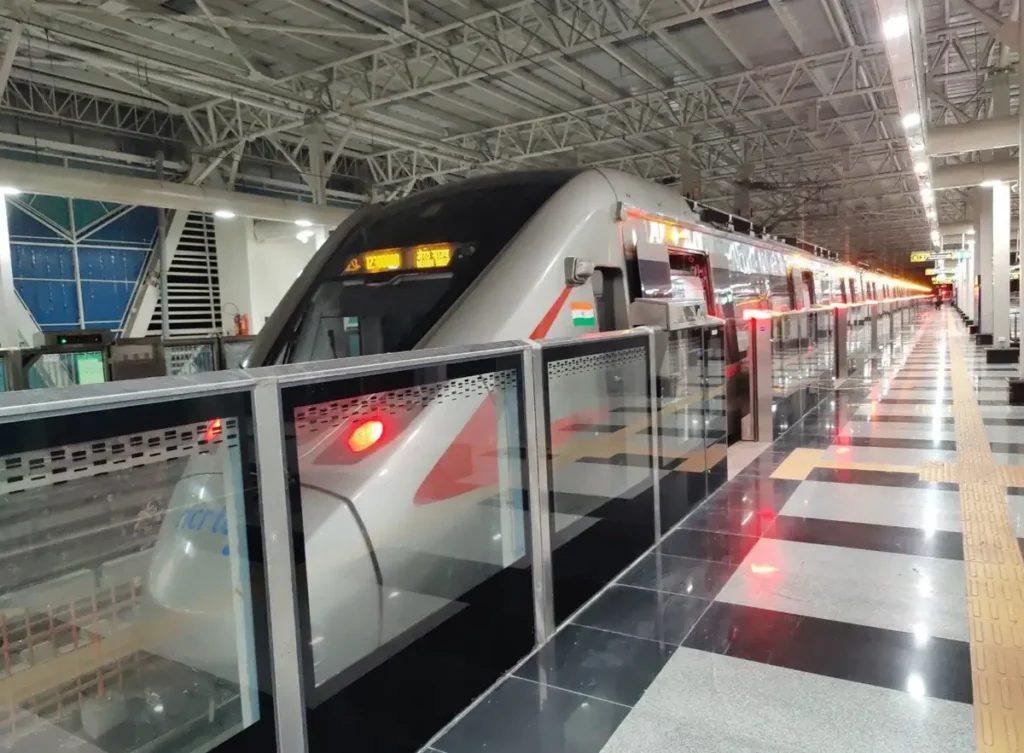
Delhi–Meerut RRTS and its local transformation
The 82-kilometer link between Delhi and Meerut runs trains at up to 180 km/h, decreasing travel times from over three hours to one. Due to departures each five to ten minutes, commuters benefit from speed and comfort.
Today, 55 kilometres of track are operational with 11 stations between New Ashok Nagar and Meerut South. And with ongoing building works, the corridor stands ready to be the first of three consequential RRTS lines being planned to redefine NCR transport.
ADB matched financing with knowledge of digital modeling, resilience planning, and value capture. And with the Asian Infrastructure Investment Bank and Japan Fund coming aboard, the project enjoys effective institutional support.
Delhi–Meerut RRTS: A template to be followed by future
The annual sequestration will be over 258,000 tons. That is commensurate with the climate plan of India, and thus the corridor shows how green transport initiatives can support national sustainable agendas.
Satellite town businesses look for increased growth, commuters get new freedom. City officials cite the project as a model template for future RRTS corridors, demonstrating speed, efficiency, and green gains together.
The end-of-the-line $299 million approval is a vote of approval of world-class transit delivery by India. And with high speed spreading its wings, the National Capital Region is poised to be the leader of sustainable mobility of the nation.
Source: railanalysis.in
News on railway transport, industry, and railway technologies from Railway Supply that you might have missed:
What is the Delhi–Meerut RRTS?
The Delhi–Meerut RRTS is an 82-km high-speed corridor connecting Delhi and Meerut, designed to cut travel time to one hour and reduce road congestion.
How does the Delhi–Meerut RRTS benefit the environment?
It will reduce more than 258,000 tons of carbon emissions annually by shifting commuters from cars and buses to faster, cleaner electric trains.
Who funds the Delhi–Meerut RRTS project?
The Asian Development Bank leads with $1.05 billion in financing, supported by the Asian Infrastructure Investment Bank and the Japan Fund for Prosperous and Resilient Asia and the Pacific.
Place your ads on webportal and in Railway Supply magazine. Detailed information is in Railway Supply media kit