
Czech Rail Freight Volume Rises but Hauls Get Shorter
CZECH REPUBLIC: Czech rail freight carried 83 million tonnes in 2025, up 3.2%, even as transport performance fell to a six-year low and average shipment distances shortened.
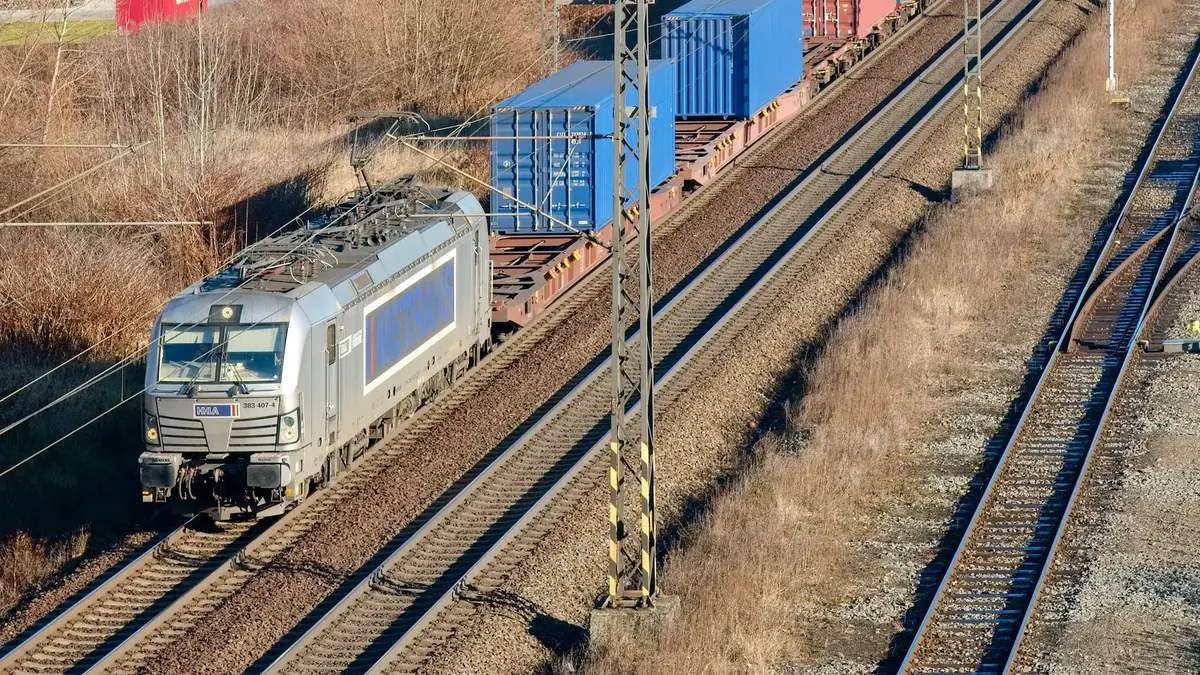
The Czech Ministry of Transport published the 2025 Transport Yearbook on 28 July 2026, covering passenger and freight flows, infrastructure, vehicle fleets, environmental indicators and safety. The full statistical tables show that imports and exports drove most of the increase in rail freight tonnage.
More Tonnes, Fewer Tonne-Kilometres
Despite the higher volume, rail freight generated 14.3 billion tonne-kilometres, the lowest result recorded in six years. A tonne-kilometre represents one tonne of cargo moved over one kilometre, so it measures both weight and distance rather than tonnage alone.
The ministry said the divergence points to shorter transport distances and a reduced share of transit traffic. In practical terms, Czech rail operators handled more cargo by weight, but the freight travelled fewer distance-weighted kilometres across the network.
Don’t miss…Union Pacific Big Boy Tour Ends After 7,145-Mile Journey
Road Freight Retains Its Dominant Share
Freight transport across all modes rose 5% to 563 million tonnes in 2025, while total performance increased 2.5% to 89.5 billion tonne-kilometres. Road transport accounted for most of the market, carrying 465.4 million tonnes and generating 73.4 billion tonne-kilometres.
Those road figures were 5.1% and 4.4% higher year on year, respectively. Road therefore represented about 83% of freight volume and 82% of freight performance, while rail’s tonnage growth did not translate into higher tonne-kilometres.
Passenger Rail Journeys Become Longer
Passenger rail remained broadly stable by headcount. The number of passengers increased 0.2%, but passenger-kilometres rose 2%, indicating that the average journey became slightly longer.
Transport Minister Ivan Bednárik said the national data showed two principal trends: continued growth in road transport and stabilisation in passenger rail, which has now moved above its 2019 pre-pandemic level.
News on railway transport, industry, and railway technologies from Railway Supply that you might have missed:


