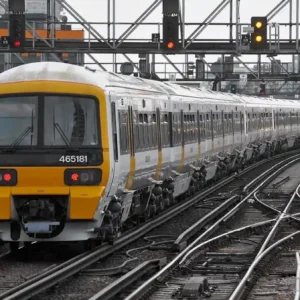
CAT boundary fares ruling reshapes UK passenger rights
14.11.2025
The CAT’s boundary fares decision quietly shifts the ground for rail disputes, because it spells out how far competition law can really go in policing everyday ticket fairness.
This is reported by the railway transport news portal Railway Supply.

Boundary fares and the real limits of competition law
The CAT used the boundary fares litigation, set out in the official judgment of the Competition Appeal Tribunal, to show, quite bluntly, how narrow the reach of competition law really is. It stressed that ordinary consumer fairness usually belongs to other legal regimes and regulators.
Don’t miss…Hitachi Rail modernizes the Raml tram line in Alexandria
The Tribunal went through allegations that several train operators downplayed these niche add-on tickets for Travelcard users, described in National Rail’s guidance on boundary tickets, and left passengers overpaying. But it saw claims built more on broad fairness language than on precise, verifiable evidence of abusive conduct.
In its reasoning, the ruling explains that operators have no legal duty to flag every cheaper option. They work inside a web of rail regulation and must juggle requirements that pull in several directions.
So the judges saw no basis for saying that modest promotion of this ticket category counted as an abuse of dominance. And, to be fair, they rejected a consumer-protection angle raised by the class representative.
The judgment gently but clearly separates the tools of competition law from consumer-law standards. As one lawyer might put it, this is not a “catch-all fairness code”, however tempting that idea may be.
Boundary fares in a digital market: what changes next
The second major theme looks ahead to how boundary fares may matter in an increasingly digital, contactless market. The Tribunal accepted that expectations could shift once more ticket sales move online.
For now, though, it noted that demand for online boundary-fare functionality remained limited during the claim period. Operators could reasonably wait for clearer signals from passengers and from the Department for Transport.
The judges also accepted fraud concerns as a practical justification for limits on some vending-machine sales. They noted that system-upgrade costs and complexity would need proper evidence rather than broad assertion.
Evidence, in the end, became the real fault line in the case. The Tribunal pointed to gaps in customer-awareness data, modelling of journeys and sales, and even in the robustness of the expert testimony presented.
Because those gaps ran through the core of the claims, the judges concluded that the collective action lacked the factual foundation needed to show harm. A narrow finding of abuse would hardly have justified its costs.
The ruling therefore sends a fairly sober message to future claimants. Build strong datasets, keep arguments within orthodox abuse-of-dominance doctrine, and accept that competition law will not expand to cover every dispute over ticket fairness — a theme that also runs through commentary on the CAT’s approach in cases such as Le Patourel v BT.
News on railway transport, industry, and railway technologies from Railway Supply that you might have missed:
Find the latest news of the railway industry in Eastern Europe, the former Soviet Union and the rest of the world on our page on Facebook, Twitter, LinkedIn, read Railway Supply magazine online.Place your ads on webportal and in Railway Supply magazine. Detailed information is in Railway Supply media kit