California high-speed rail systems contract under scrutiny
30.11.2025
California high-speed rail systems contract signals a new phase in the state’s high-speed programme, as the California High-Speed Rail Authority (CHSRA) moves ahead with a 3.5 billion track and systems RFP for 119 miles (191 km) of electrified alignment in the Central Valley.
This is reported by the railway transport news portal Railway Supply.
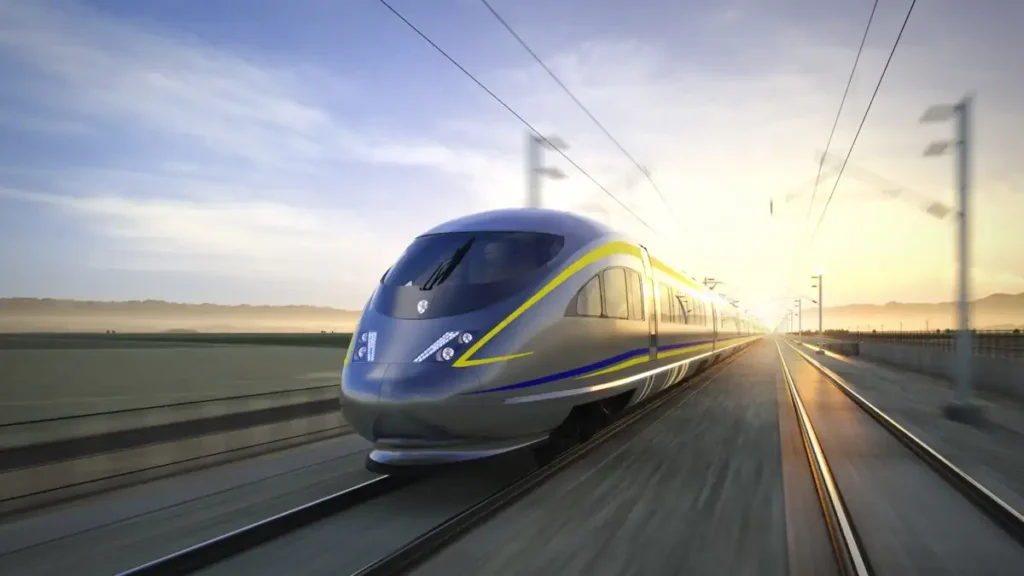
Approved by the Authority’s Board last week, this USD 3.5 billion RFP for track and systems is described as one of the largest rail infrastructure procurements currently active in the United States.
Don’t miss…MTA rail-car testing facility prepares New York’s new fleet
CHSRA presents the package as a core element of its revised delivery strategy, aimed at accelerating construction, containing costs and bringing the system closer to operation. “Bringing this contract to market today is a major milestone of our new delivery strategy: building faster, smarter, and more economically. Together with our innovative direct purchases of track and systems materials, this action puts us on an accelerated path to laying the first true high-speed rail track in the Western Hemisphere next year,” said Ian Choudri, CEO of the California High-Speed Rail Authority. The Authority expands on the scope and objectives of the Track and Systems Construction Contract in its official Track & Systems Construction Contract RFP documentation.
Details of the California high-speed rail systems contract
The California high-speed rail systems contract, formally designated as the Track and Systems Construction Contract, has a broad scope: trackwork, overhead contact system installation, train control, communications, safety certification and testing. The California high-speed rail track and systems contract covers the Central Valley segment from Madera to the future extensions toward Merced and Bakersfield. To match the pace of civil works, the contract is divided into nine packages with phased Notices to Proceed, so individual sections can advance as soon as underlying guideway structures are in place. These key parameters of the contract, including its value and geographic coverage, are also reflected in industry reporting such as Railway Supply.
This structure is intended to support predictable Merced–Bakersfield high-speed rail construction progress. At the same time, the USD 3.5 billion RFP California high-speed rail package offers bidders a clear pipeline of work along the Central Valley segment Madera–Bakersfield. For CHSRA, the Track and Systems Construction Contract, together with direct purchases of track and systems materials, forms a cornerstone of the updated delivery strategy.
Railhead facility and Central Valley construction progress
A dedicated railhead facility in Kern County underpins the upcoming phase of systems installation. At this 150-acre (61-hectare) site, CHSRA has completed track installation, turning the railhead facility in Kern County into a logistical hub for moving construction materials along the 119-mile alignment. With freight deliveries expected shortly, the Authority says it will be ready to begin large-scale systems installation soon after the California high-speed rail track and systems contract is awarded.
Beyond the railhead, Merced–Bakersfield high-speed rail construction progress continues along the wider 171-mile section that is in various stages of design and construction. More than 70 miles (113 km) of guideway have already been completed. Nearly 60 major structures are finished, and about 30 further structures remain under construction. On a typical day, up to 1,700 workers are active on sites across Madera, Fresno, Kings and Tulare counties, illustrating the scale of works on the Central Valley segment Madera–Bakersfield.
At the statewide level, 463 miles (745 km) of the planned 494-mile (795 km) San Francisco–Los Angeles/Anaheim Phase 1 system are now fully environmentally cleared. Since construction began, the project has created more than 16,100 jobs, with most of those positions filled by residents of the Central Valley. For supporters of the California high-speed rail systems contract, these employment figures are a key indicator of the project’s regional impact.
FRA federal funding withdrawal and project scrutiny
Alongside visible construction activity, the California programme is facing heightened federal scrutiny. In the summer of 2025, US Transportation Secretary Sean Duffy announced that the Federal Railroad Administration (FRA) had terminated approximately USD 4 billion in unspent federal funding for the California high-speed rail project. According to the Department of Transportation, after 16 years and around USD 15 billion spent, significant concerns remained over schedule delays, rising cost estimates and the continued absence of completed track — a decision set out in more detail by the US Department of Transportation. FRA cancels funding for California high-speed rail project thus became a central theme in the national debate around the scheme.
Sean Duffy criticism of CHSRA project management was explicit. “Federal dollars are not a blank check – they come with a promise to deliver results. After over a decade of failures, CHSRA’s mismanagement and incompetence has proven it cannot build its train to nowhere on time or on budget,” the Secretary said. Alongside cancelling the unspent funds, FRA federal funding withdrawal for California high-speed rail also triggered reviews of other grants linked to the project.
The Department of Transportation noted that it would consult with the US Department of Justice on issues raised in FRA’s compliance findings, including the potential recovery of federal funds. Under the terms of the grant agreement, CHSRA was given two opportunities to respond to FRA’s concerns, but the agency reported that these responses did not resolve the issues identified.
An oversight report issued in February pointed to further challenges, including projections that the Merced–Bakersfield line would not be completed by 2033. The broader Phase 1 system is still intended to connect San Francisco to Los Angeles/Anaheim in under three hours, and the current California high-speed rail systems contract is framed by the Authority as a crucial step toward eventually bringing that corridor into operation.
News on railway transport, industry, and railway technologies from Railway Supply that you might have missed:
Find the latest news of the railway industry in Eastern Europe, the former Soviet Union and the rest of the world on our page on Facebook, Twitter, LinkedIn, read Railway Supply magazine online.Place your ads on webportal and in Railway Supply magazine. Detailed information is in Railway Supply media kit