California High-Speed Rail Faces $7B Funding Crisis
28.03.2025
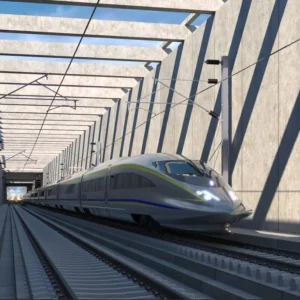
California’s $35 billion California high-speed rail project urgently demands a $7 billion bailout. Officials target completion of the Central Valley segment by 2033 despite hurdles. This is reported by the railway transport news portal Railway Supply.

The Trump administration actively probes federal contributions to this long-delayed rail initiative. Meanwhile, Congress debates a bill that could halt all future federal support entirely.
Don’t miss…Buenos Aires Metro Line F Tender Launches in 2025
Analysts from the Legislative Analyst’s Office estimate a $7 billion shortfall for Merced-to-Bakersfield. They warn that inflation and potential federal fund losses could widen this gap further.
Additionally, the LAO highlights uncertainties in future state Greenhouse Gas Reduction Fund revenues. These factors threaten the project’s timeline, pushing costs even higher than anticipated.
The California High Speed Rail Authority faces a critical deadline to secure funds. Experts say the agency must act before June 2026 to avoid severe schedule disruptions.
Transportation Secretary Sean Duffy recently addressed the project’s struggles in an X post. He notes that $15 billion has already vanished into the Los Angeles-to-San Francisco line.
Duffy reveals that federal funding accounts for $2.5 billion of the spent total so far. Moreover, he flags $4 billion in unspent federal money currently under intense review.
Surprisingly, zero miles of high-speed track exist despite the massive investment to date. Duffy estimates the full LA-SF line could now cost over $100 billion.
California High-Speed Rail Funding Woes Escalate
He vows to dig deeper into how federal dollars fuel this spiraling project. Duffy questions whether continued federal backing makes sense given the escalating costs.
Representative Kevin Kiley from California proposes legislation to end federal funding completely. His bill aims to terminate the troubled rail project once and for all.
Kiley labels the ambitious rail effort a worsening disaster in public statements. He argues that cutting federal ties offers the only solution to this fiscal mess.
Governor Gavin Newsom defends the project on his iHeartRadio podcast despite mounting criticism. Guest Ezra Klein challenges him on delays and ballooning expenses during a recent episode.
Newsom acknowledges constraints but insists high-speed rail enjoys global popularity and success. He emphasizes California’s bold attempt to pioneer this transport innovation nationwide.
Republican state lawmakers demand a clear funding strategy for the project’s first phase. They introduce AB 377 to force the HSRA to outline its financial plans.
California High-Speed Rail Faces Legislative Pushback
The bill sails through the Assembly Transportation Committee with unanimous bipartisan backing. Now, it advances to the Appropriations Committee for further review and discussion.
Assemblyman David Tangipa, who authored AB 377, represents Fresno, a key project area. He warns that without a plan, the rail risks becoming an unusable relic.
Tangipa compares the potential outcome to a modern Stonehenge if funding falters. His legislation seeks accountability to protect taxpayers from government mismanagement and waste.
California’s rapid-transit project teeters on the edge of financial collapse today. Yet, its leaders press forward, betting on a transformative future despite the odds.
Source: www.aol.com
News on railway transport, industry, and railway technologies from Railway Supply that you might have missed:
Find the latest news of the railway industry in Eastern Europe, the former Soviet Union and the rest of the world on our page on Facebook, Twitter, LinkedIn, read Railway Supply magazine online.Place your ads on webportal and in Railway Supply magazine. Detailed information is in Railway Supply media kit