Budapest moves ahead with ambitious tram depot upgrade
14.11.2025
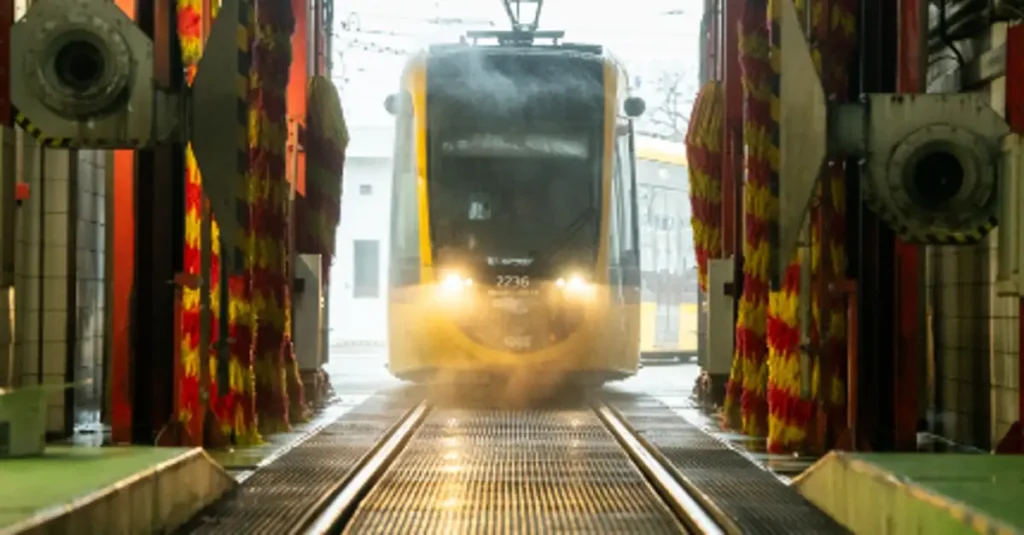
Budapest has cleared the way for a tram depot upgrade, and the city now fine-tunes design, funding and fleet planning so the new CAF trams can operate without daily bottlenecks.
This is reported by the railway transport news portal Railway Supply.
Why the tram depot upgrade matters for Budapest?
Budapest pushed its latest infrastructure step through the Metropolitan Assembly when it authorised BKK to launch procurement for design work on the Angyalföld facility and Tram Line 14. In practice, that decision turns a general concept into a concrete planning task.
Don’t miss…NJ Transit advances major Multilevel fleet overhaul plan
The design phase should run its course by late summer 2027, assuming the tender concludes successfully and EU funds arrive on time. EU support remains crucial, because BKK cannot move from paper to construction without that external financing.
Technical scope and long-term tram depot planning
The current concept for the site may include a new hall equipped with braking sand-filling systems for the CAF fleet, and designers must also draw up dedicated routes for trucks delivering that sand. These elements sound routine, but they shape daily operations.
At track level, the project covers the redesign of 18 depot points and targeted improvements on and around Line 14, including the branching of Line 12 at Fóti út and the crossing at Dózsa György út. Together, these junction changes aim to simplify movements around the complex.
Budapest plans to give the Angyalföld facility new duties, including storage and operation of shorter CAF units from Budafok depot. The reshuffle follows the arrival of 51 CAF LRVs, a fleet expansion also noted by Railway-News.
Budapest carried out similar depot works when introducing the Combino trams, as documented by Colas Alterra. Operators rarely buy modern vehicles without revisiting where and how they maintain them.
Once the necessary funding becomes available, the new CAF vehicles are expected to run on up to six additional lines, including Line 14. At the request of the Capital Assembly’s Committee on Climate Protection, Transport and Urban Development, BKK and BKV are also analysing what it would take to bring the same LRVs onto Lines 47 and 49.
BKK still expects EU money under the RRF programme and continues preparing technical documentation. This funding channel for Hungary’s sustainable transport appears in Bird & Bird’s analysis.
If funding fails to arrive, an emergency solution will keep the CAF trams in service. However, the capital will face higher long-term costs and passengers will see the new vehicles on fewer routes.
News on railway transport, industry, and railway technologies from Railway Supply that you might have missed:
Find the latest news of the railway industry in Eastern Europe, the former Soviet Union and the rest of the world on our page on Facebook, Twitter, LinkedIn, read Railway Supply magazine online.Place your ads on webportal and in Railway Supply magazine. Detailed information is in Railway Supply media kit