Brazil freight concessions programme drives rail investment
27.11.2025
Brazil freight concessions programme is at the centre of a new push by the federal government to expand rail freight investment in the country.
This is reported by the railway transport news portal Railway Supply.
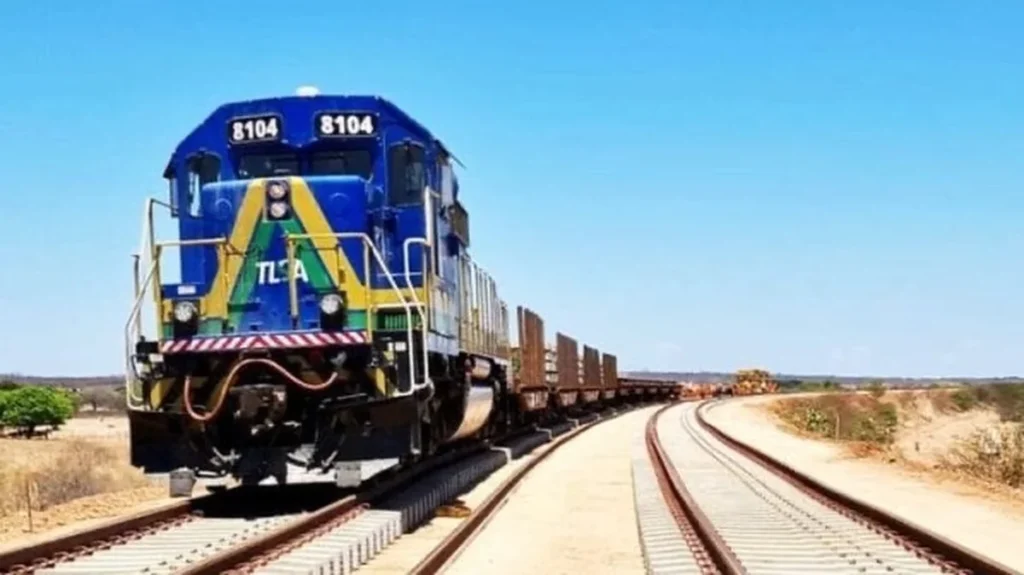
Announced on November 25 by minister of transport Renan Filho, the policy — as reported by International Railway Journal — introduces a funding model that combines public resources with private finance for railway construction. According to Brazil’s Ministry of Transport, the framework is designed to bring clearer rules for planning, governance and the long-term sustainability of new projects across the national rail network.
Don’t miss…BCPL RVNL electrification upgrade moves forward with lowest bid
New funding model mixing public and private finance
Under the new policy, the Ministry of Transport intends to award eight rail concessions next year, together covering more than 9000km of new and existing railway. The ministry expects this concessions package to attract around Reais 140bn ($US 26.3bn) in financing and, in total, unlock some Reais 600bn of investment in the rail network over time.
To make this funding model combining public and private finance work in practice, the government is also examining additional revenue sources. One option is property development linked directly to railway schemes. In parallel, the National Bank for Economic and Social Development (BNDES) will help design new lending instruments for the rail sector so that more private capital can be channelled into freight infrastructure.
Concessions timetable and Grain Rail corridor
The timetable for awarding the eight rail concessions in 2027 has been broken down into stages. First on the list is the Minas – Rio Corridor, scheduled for public auction in April. In June the Southeastern Railway Ring is due, followed in July by the Western Network and in August by the East – West Corridor.
The Grain Rail project is planned to go to auction in September, while December is reserved for three parts of the Southern Network: the Paraná – Santa Catarina Corridor, the Rio Grande Corridor and the Mercosul Corridor. Each concession will be awarded through a public auction, with bidding documentation issued three months before the respective auction date so that potential operators and investors have time to prepare their proposals.
In addition, the ministry will draw up documentation for a ninth freight concession covering the north extension of the North-South Railway. These documents are scheduled for publication in December 2026, with the auction planned for March 2027. Taken together, this Brazil rail concession timetable is meant to give the market more visibility on upcoming tenders.
The Ministry of Transport says that thousands of jobs will be created as the concessions unlock new railway construction projects. It particularly highlights the Grain Rail project to build a new corridor from Sinop in Mato Grosso state to Itaituba in Pará. According to the ministry, this Grain Rail Sinop – Itaituba line on its own has the potential to create more than 100,000 jobs during the construction phase.
Another pillar of the policy is a change in how environmental approvals are handled. Under the new concessions policy, the federal government will take responsibility for obtaining environmental approval for new construction. The ministry argues that this should help to avoid litigation, increase legal certainty and allow works to be completed more quickly once contracts are signed.
Early concession renewals under the Brazil freight concessions programme
Since taking office in 2023, the administration of president Luiz Inácio Lula da Silva has aimed to accelerate its freight concessions pipeline. Progress, however, has been slowed by the complexity of attracting private capital. To reduce risk and encourage private participation in freight operations, the government has adopted a strategy of early concession renewals for existing operators — a broader approach also described by Reuters in its coverage of Brazil’s rail policy.
Under this early renewal model, freight operators receive extended contracts in exchange for upfront payments. These payments are then used to finance the initial, highest-risk years of the new freight concession agreements, helping to stabilise cashflows and support investment in new routes and capacity. The ministry presents this as a way to strengthen Brazil rail freight concessions while keeping the federal rail programme funded.
Within this framework, the government has signed the final contract for the early renewal of the Southeastern Network concession held by MRS Logistics. The 1600km network serves the states of Minas Gerais, Rio de Janeiro and São Paulo, and its concession has now been extended from the end of 2025 to 2056.
This MRS Logistics Southeastern Network concession renewal has already generated Reais 2.8bn in funding for the federal rail programme and sits alongside other renewal agreements in Brazil that Railway Supply has highlighted in its coverage of freight rail investments, supporting broader plans to expand and modernise freight rail across the country.
News on railway transport, industry, and railway technologies from Railway Supply that you might have missed:
Find the latest news of the railway industry in Eastern Europe, the former Soviet Union and the rest of the world on our page on Facebook, Twitter, LinkedIn, read Railway Supply magazine online.Place your ads on webportal and in Railway Supply magazine. Detailed information is in Railway Supply media kit