Biomass Rail Freight in Poland Gains 50% More Capacity
POLAND: Biomass rail freight in Poland is gaining new import flows as Laude’s 60-container train design carries 4,500 cubic metres, 50% more volume than conventional open-top wagons.
Growing consumption is drawing sunflower husk pellets from Ukraine, wood pellets from Lithuania, Latvia and European seaports, and wood chips into the Polish market. Industry estimates cited by Laude Smart Intermodal put annual demand at up to six million tonnes by 2035.
Domestic supply already falls short during periods of strong consumption. Laude said imported biomass demand rose particularly during the latest winter, when domestic supplies could not cover the market, increasing rail demand from ports and eastern border crossings.
Containers raise biomass capacity by 50%
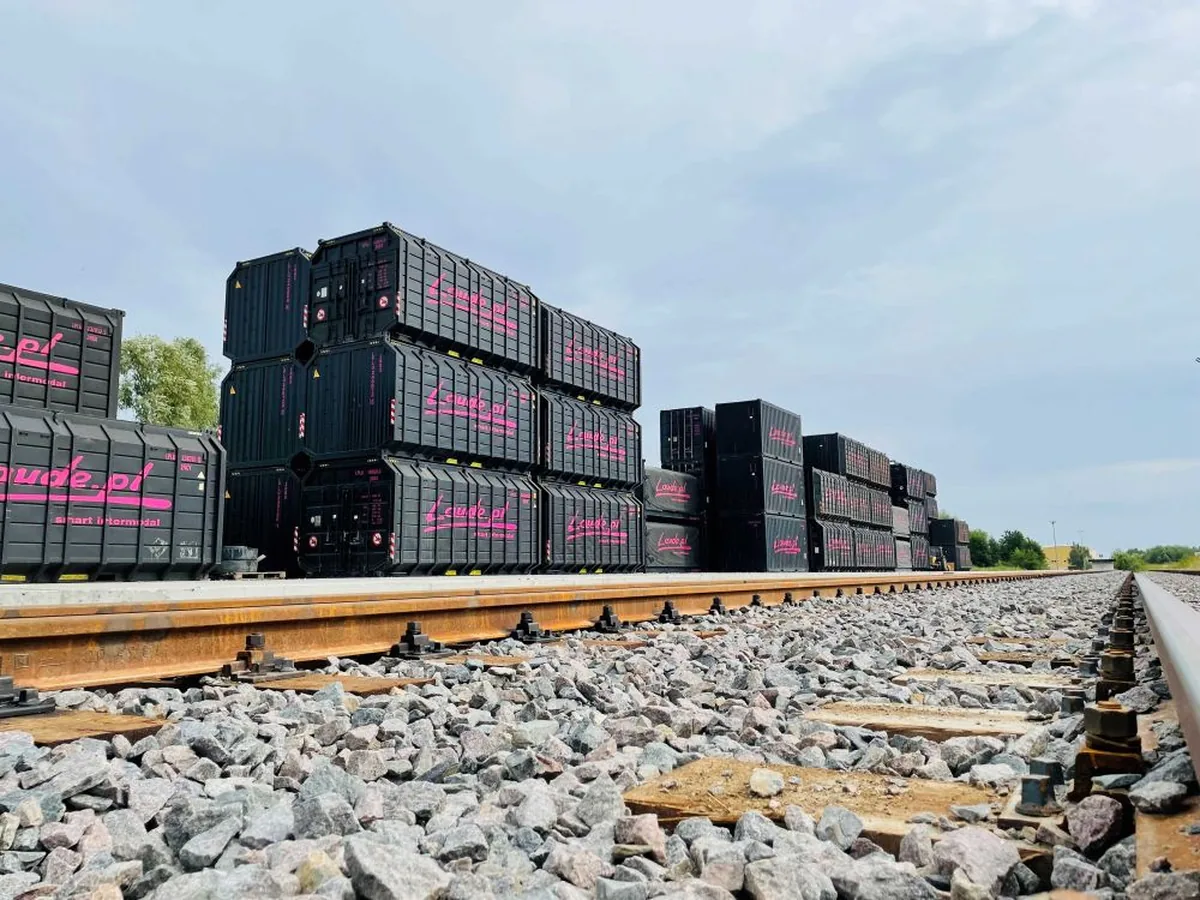
Biomass has low density, so available loading volume is critical. Laude has used containers designed for wood-chip transport for more than five years, and each train can combine sixty 30-foot units.
That formation holds about 4,500 cubic metres of biomass. A conventional open-top coal-wagon train of the same length holds around 3,000 cubic metres, giving the container system 50% more volume. Enclosed units also provide better protection from weather than open wagons covered with tarpaulins.
Don’t miss…Full U-Cross Rollout Approved for Heart of Wales Line
Containers simplify transfers between rail gauges
Imports from Ukraine and the Baltic states involve the 1,520 mm broad-gauge network and Europe’s 1,435 mm standard gauge. Containers can be transferred between trains without directly reloading the pellets or wood chips.
“Intermodal transport using containers is particularly important where conventional rail transport is complicated by different track gauges or limited transshipment infrastructure,” said Krzysztof Orkwiszewski, Laude’s Commercial Director, in the original freight report.
Flexible trainsets cover seasonal demand
Laude can reassign trainsets normally used for steel, grain, fertilisers or general cargo when biomass demand rises. Specially adapted road vehicles then handle final delivery from rail terminals.
The containers accept payloads of up to 30 tonnes, which Laude says is approximately 25% more than conventional road transport. Around 400,000 Polish households use pellet boilers, while combined heat and power plants also consume biomass for electricity and district heating.
The wider market is expanding as well: European pellet production reached 24.1 million tonnes in 2025, while global consumption rose to a record 51.5 million tonnes.
News on railway transport, industry, and railway technologies from Railway Supply that you might have missed: