Bhopal Metro inauguration launches Orange Line priority link
22.12.2025
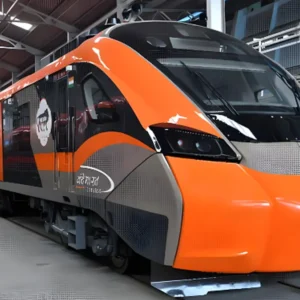
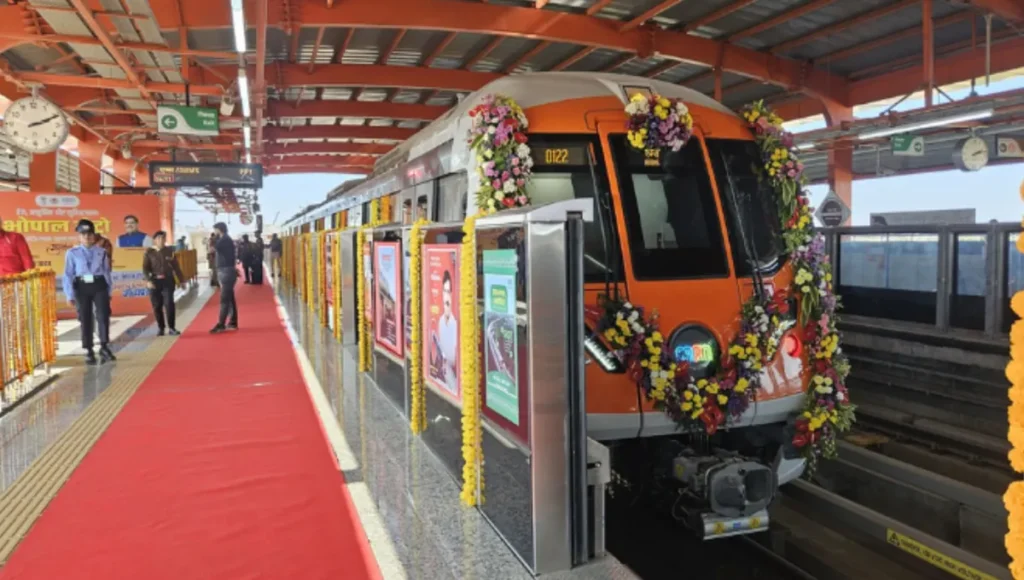
Bhopal Metro inauguration has brought the city’s first Metro services into operation, with Union Minister for Housing and Urban Affairs Shri Manohar Lal Khattar and Madhya Pradesh Chief Minister Dr. Mohan Yadav flagging off passenger trains, as outlined in a Press Information Bureau (PIB) release. It marks the operational start of the Orange Line Priority Corridor.
This is reported by the railway transport news portal Railway Supply.
With services now running, Bhopal becomes the 26th city in India to have an operational Metro system. The start of operations also takes India’s total operational Metro network length to 1,090 kilometres, reflecting the ongoing expansion of mass rapid transit systems to state capitals and emerging urban hubs.
Don’t miss…Rome Colosseum metro station opens as an archaeology hub
Bhopal Metro inauguration: the first corridor now in service
The first operational phase is the Orange Line Priority Corridor—an approximately 7-kilometre stretch connecting Subhash Nagar to AIIMS. The section has eight elevated stations: Subhash Nagar, Kendriya Vidyalaya, Board Office, MP Nagar, Rani Kamlapati, DRM Office, Alkapuri and AIIMS.
Designed as a fast, traffic-free option along some of Bhopal’s busiest routes, the Subhash Nagar–AIIMS section is positioned as a way to shift more trips to public transport. That is framed as supporting lower congestion and improved air quality in the city.
Bhopal Metro Rail Project overview and Phase-1 lines
The wider Bhopal Metro Rail Project spans 30.8 kilometres and comprises two corridors with a common depot. The system is being developed by Madhya Pradesh Metro Rail Corporation Limited (MPMRCL) as a Mass Rapid Transit System (MRTS), as also reflected in Railway Supply coverage of the Bhopal Metro project.
Phase 1 includes two routes. The Orange Line (Line-2) runs from Karond Circle to AIIMS, covering 16.74 km in total—13.35 km elevated and 3.39 km underground. The Blue Line (Line-5) is planned from Bhadbhada Square to Ratnagiri Tiraha, with a length of 14.16 km on an elevated alignment.
A common depot at Subhash Nagar will serve both lines, while Pul Bogda has been designated as an interchange station. Together, the corridors are intended to connect key commercial, residential and institutional areas and make daily travel faster, cleaner and more convenient for residents.
Safety, accessibility and passenger comfort features
Bhopal Metro has been planned around safety, accessibility and passenger comfort. Stations include high-speed lifts and escalators, and universal accessibility measures cover dedicated wheelchair spaces and facilities for Divyangjan.
The safety package listed for the system includes AI-based CCTV surveillance, Emergency Communication Buttons, Platform Screen Doors and Grade-4 signalling systems. Passenger-facing technology includes audio-visual passenger information displays and a state-of-the-art Operations Control Centre.
Coaches are fully air-conditioned and fitted with comfortable seating and mobile charging points. The project also highlights women’s safety measures, including continuous surveillance and instant SOS systems across stations and coaches.
Ceremony in Bhopal and the wider mobility goal
At the inauguration event, Shri Manohar Lal Khattar and Dr. Mohan Yadav launched the Metro passenger service by lighting a ceremonial lamp and pressing a remote button to flag off the trains. The programme was attended by several dignitaries and public representatives, including Shri Kailash Vijayvargiya, Sports and Youth Welfare Minister Shri Vishwas Kailash Sarang, MSME Minister Shri Chaitanya Kumar Kashyap, Minister of State Smt.
Pratima Bagri, MP Shri Alok Sharma, and Bhopal Mayor Smt. Malti Rai, according to a Madhya Pradesh Public Relations Department update. The guests also took a Metro ride to experience the facilities firsthand.
Framed as a step toward sustainable urban development, the Metro aims to encourage public transport use and reduce dependence on private vehicles. In doing so, the project is expected to support lower carbon emissions, better air quality, improved connectivity and more inclusive development across the city.
News on railway transport, industry, and railway technologies from Railway Supply that you might have missed:
Find the latest news of the railway industry in Eastern Europe, the former Soviet Union and the rest of the world on our page on Facebook, Twitter, LinkedIn, read Railway Supply magazine online.Place your ads on webportal and in Railway Supply magazine. Detailed information is in Railway Supply media kit