Beltline Transit Study prices 42 vehicles at $270m within $3.5bn estimate
The Beltline Transit Study puts Atlanta’s proposed three-route light rail network at $3.5 billion, including a $270 million concept-level estimate for 42 transit vehicles in its final recommendations.
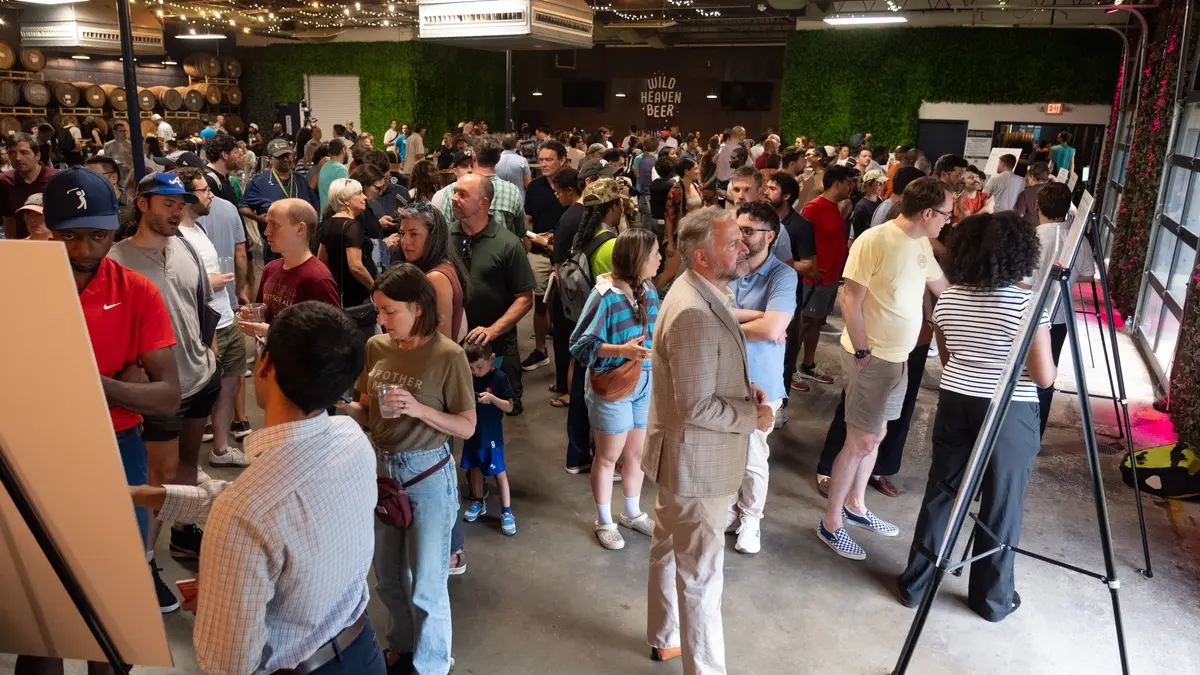
Atlanta Beltline presented the final recommendations at a Citywide Conversation on September 3, 2026. The organization dates the estimate to 2025. It is based on quantities developed from 10% to 20% design rather than on a cost-per-mile assumption.
Eight concept-level line items make up the published breakdown. Six cover route segments. The largest segment estimate is $800 million for the 5.5-mile northwest quadrant, while the smallest is $375 million for the southwest quadrant. Support facilities add $210 million, and 42 transit vehicles add $270 million. Dividing the fleet estimate by 42 gives an implied average of roughly $6.4 million per vehicle, but the source does not present that figure as a unit price or procurement value. The eight lines total $3.51 billion, which Atlanta Beltline reports as $3.5 billion.
| Cost line | Length (miles) | Estimate ($ million) | Estimate per mile ($ million) |
|---|---|---|---|
| Northwest quadrant | 5.5 | 800 | 145 |
| Northeast quadrant | 4.7 | 520 | 111 |
| Crosstown West | 4.0 | 500 | 125 |
| Crosstown East | 2.0 | 400 | 200 |
| Southwest quadrant | 3.7 | 375 | 101 |
| Southeast quadrant | 4.3 | 435 | 101 |
| Support facilities | — | 210 | — |
| 42 transit vehicles | — | 270 | — |
| Calculated total | 24.2 | 3,510 | — |
The six route-segment estimates total $3.03 billion, while support facilities and vehicles add $480 million. The published segment lengths sum to 24.2 miles. Totals and per-mile figures are Railway Supply calculations from the stated estimates and lengths, with per-mile values rounded to the nearest $1 million. Source: Atlanta Beltline, Citywide Conversation presentation, September 3, 2026.
What the Beltline Transit Study priced
The six published segment lengths sum to 24.2 miles, although the source does not separately describe that figure as the network’s total unique route mileage. Four quadrant segments account for 18.2 miles, while the two crosstown links account for the remaining six. The agency’s vehicle technology brief defines the study’s own scope as roughly 13 miles of the 22-mile loop. MARTA completed separate planning work for the northeast quadrant.
Dividing each published segment figure by its stated length shows how wide the spread is. For example, the southwest and southeast quadrants both sit near $101 million per mile. Still, the two-mile Crosstown East link sits near $200 million per mile, the highest of the six.
CSX alignment takes the northwest quadrant
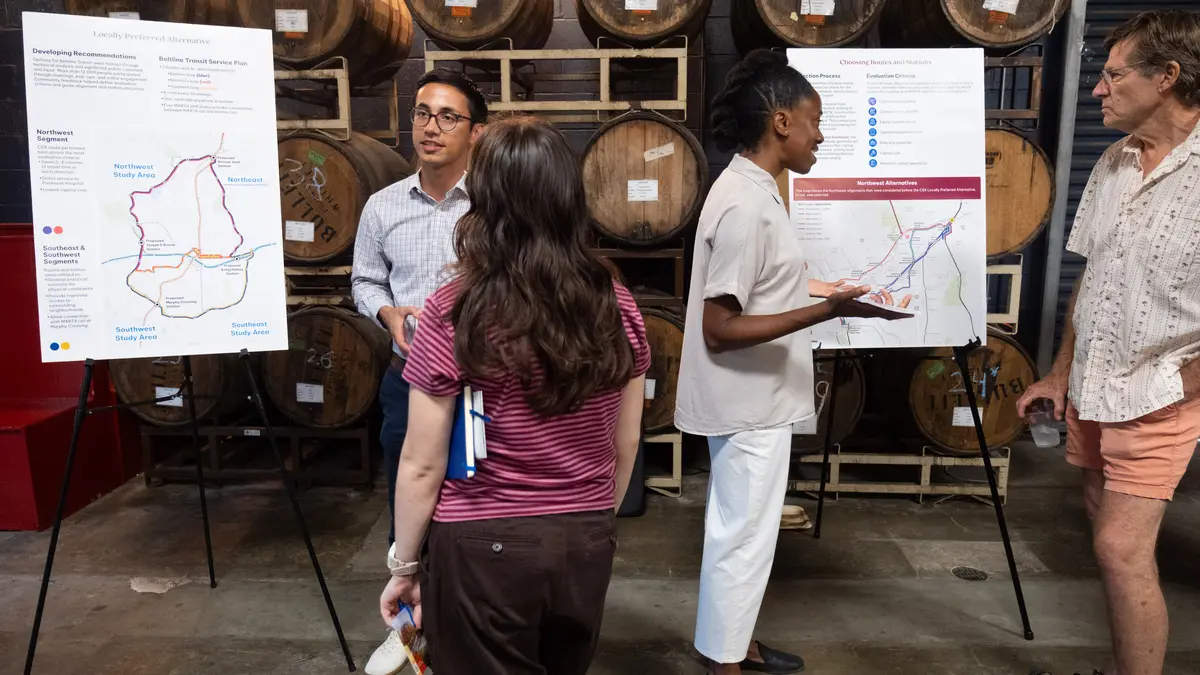
Planners cut 18 candidate segments down to three corridors and then to one locally preferred alternative. The three finalists were CSX, Peachtree and Ottley. Staff put CSX ahead on average speed, travel time, capital cost and projected ridership. The route also reaches Piedmont Hospital directly.
Still, each of the other two had its own case. Peachtree drew the strongest public feedback, although it carries the highest capital cost and would affect Peachtree Street. Meanwhile, Ottley opens access to the Armour-Ottley district while offering no hospital link and the weakest ridership of the three. CSX brings its own problems. They include railroad right-of-way, a conservation easement at Brookwood Hills and adjacent parcels with limited densification potential.
| Option | Stated benefits | Stated challenges |
|---|---|---|
| CSX (recommended) | Best average speed and travel time; direct link to Piedmont Hospital; lowest capital cost; highest projected ridership | Many adjacent parcels unlikely to densify; conservation easement at Brookwood Hills; CSX right-of-way |
| Peachtree | Direct link to Piedmont Hospital; top score in public feedback; State Street extension | CSX right-of-way between Peachtree Street and Armour Yards; highest capital cost; impact on Peachtree Street; mid-range ridership |
| Ottley | Better access to the Armour-Ottley district; emergency access and transit; mid-range cost; State Street extension | No hospital access; lowest ridership; NSR and I-85 rights-of-way; conservation easement at Brookwood Hills; limited densification on adjacent parcels |
The study team recommended CSX as the locally preferred alternative. Source: Atlanta Beltline, Citywide Conversation presentation, September 3, 2026.
Service plan and the ridership forecast
The recommended network comprises three bidirectional routes. The plan provides a one-seat ride anywhere on the system and includes MARTA heavy rail infill stations. Service assumes 18.5 hours a day, from 6 a.m. to 12:30 a.m. Each route has 20-minute headways, producing 10-minute headways at platforms served by two routes. Atlanta Beltline’s recap also lists thirteen final station recommendations.
The forecast comes from the Federal Transit Administration’s STOPS model, calibrated to metro Atlanta ridership in September 2024. Atlanta Beltline describes the projections as intentionally conservative because the model does not fully account for land-use changes. It produces 4.2 million annual unlinked trips under the preferred alternative. The presentation says 40% involve transit-dependent riders, 55% are associated with infill stations and 21% are new transit trips diverted from cars. These percentages measure different characteristics and are not mutually exclusive. For comparison, 2024 National Transit Database figures cited in the presentation put Baltimore light rail at 4.471 million annual unlinked trips and Charlotte light rail at 5.805 million.
What the recommendations leave open
The final recommendations identify neither a construction schedule nor a secured funding source. Atlanta Beltline lists the next steps as pursuing funding and advancing planning and engineering with MARTA and the City of Atlanta. The presentation also flags unresolved alignment questions at MARTA’s Lindbergh Center station, Hulsey Yard, Allene Avenue and Crosstown West, as well as station planning between Boulevard and Glenwood Avenue. Atlanta Beltline says its remit now covers work on the concept for a possible Murphy Crossing heavy rail infill station. A subsequent phase would examine feasibility, alternatives, conceptual designs and a planning-level cost estimate. Comments remain open until November 3, 2026.
Streetcar East Extension funding and design status
A separate Beltline-related transit project previously had an identified funding source. In 2023, MARTA estimated its roughly two-mile Streetcar East Extension at about $230 million and pointed to the More MARTA Atlanta program, funded by a half-penny sales tax, as the source. A later MARTA statement says the extension remains a More MARTA priority but had reached about 30% design. The City announced plans to reprioritize Beltline light rail at a MARTA board meeting on March 13, 2025. On May 27, the Program Governance Committee temporarily paused funding for two ongoing streetcar feasibility studies. MARTA said further spending was being held until the reprioritization was completed and a path forward determined.


