Battery-Powered Locomotives to be Deployed on Norland Line Railway
26.09.2023
The legendary Norland Line railway, which traverses Norway from north to south, connecting Trondheim to Bodo, is set to become the country’s first critically important route to undergo modernization through electrification and the use of battery-powered locomotives, as reported by the railway portal Railway Supply
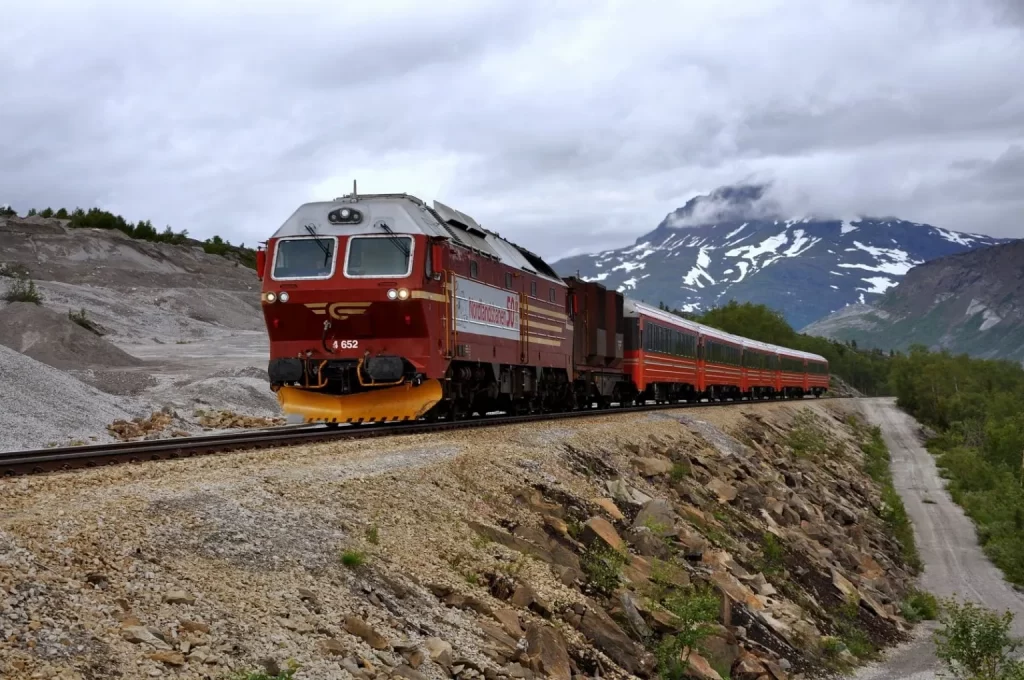
An investigation commissioned by Norway’s Ministry of Transport and conducted by the Norwegian Railway Directorate revealed that three routes, still relying on diesel traction, needed modernization after partial electrification, along with a plan for operating battery-powered locomotives.
In Mexico, freight train operations have been halted
The study considered several different green transition concepts for these routes, including hydrogen propulsion, diesel fuel usage, full electrification, and battery traction.
Ultimately, it was determined that a combination of electrification and battery-powered trains would be the most viable solution. Under this approach, trains can operate partially using electricity from overhead wires. In areas without overhead wires, they will continue to run using energy from their batteries, which can also recharge while transiting on electrified railway sections.
Currently, 80 percent of Norway’s railways are already electrified, with the remaining 20 percent still emitting approximately 50,000 tons of CO2 annually.
While this number might not seem significant, Norway is committed to a full transition of its transportation sector to greener energy sources.
Regarding the line modernization, the Nordland Line will take precedence with investments totaling 6.5 billion Norwegian Kroner (almost 570 million euros). The Røros and Solør lines, on the other hand, have higher estimated modernization costs, around 8.6 billion Norwegian Kroner (approximately 752 million euros).
Representative Offices of Ukrainian Railways Abroad
As a result, the Nordland Line’s modernization will be prioritized due to its lower estimated costs and central role in Norway’s rail network.
On the other hand, the Rauma Line, also serving freight transportation, will continue to use diesel traction due to its short distance, which maintains relatively low CO2 emissions levels.
News in railway transportation you might have missed:
CONTRACK technology received an award!
Find the latest news of the railway industry in Eastern Europe, the former Soviet Union and the rest of the world on our page on Facebook, Twitter, LinkedIn, read Railway Supply magazine online.Place your ads on webportal and in Railway Supply magazine. Detailed information is in Railway Supply media kit