Alto high-speed rail: Ottawa–Montreal phase set for 2029
14.12.2025
Alto high-speed rail is set to begin with an Ottawa–Montreal segment, after the federal government confirmed the first phase of Canada’s first high-speed rail line in a Transport Canada news release. The roughly 200-km link is intended as the opening move in a Toronto–Quebec City corridor of about 1,000 km.
This is reported by the railway transport news portal Railway Supply.

Alto high-speed rail timeline and the Ottawa–Montreal first phase
Construction on the initial Ottawa–Montreal high-speed rail segment is now expected to start in 2029. The federal government says the sequencing is meant to get Ontario and Quebec teams building at the same time, while giving crews experience that can support expansion west to Toronto and east to Quebec City.
Alto is both the name of the line and the federal Crown corporation created to oversee the public-private partnership delivering it. Federal transport minister Steven MacKinnon said the announcement reflects a push for faster, cleaner, and more connected transportation, and that work with Alto and partners across governments and communities is intended to lay the groundwork for a national high-speed rail network.
Don’t miss…Amtrak Roomette promotion: add a companion at no cost
Still, the article notes that no construction timelines have been set for the remaining sections of the Toronto–Quebec City corridor, and a completion date and an opening date for the Ottawa–Montreal phase have not been made public.
Ottawa and Montreal were chosen in part because the plan would allow parallel mobilization in both provinces. Beyond that, it remains unclear whether there are technical factors that make this segment easier to deliver first—such as more available space or the relative ease of creating a fully grade-separated right-of-way.
What the Ottawa–Montreal high-speed rail segment is designed to deliver?
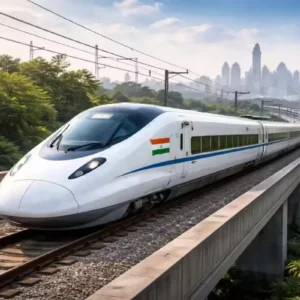
The proposal calls for trains capable of reaching speeds of up to 300 km/h on 100 per cent dedicated tracks, powered by overhead catenary electrical lines. In the article’s framing, that combination would cut travel times in half while linking major economic centres that represent nearly half of Canada’s population.
The text also points out that phased delivery is common for high-speed rail, given the cost, technical complexity, and political coordination involved. Starting with a shorter section can help teams test designs, build construction expertise, and show early benefits that help sustain long-term public and political support.
California’s high-speed rail project is cited as an example of both the logic and the risk. Construction began in the Central Valley, where land acquisition was simpler and costs were lower, but the early segment also faced criticism because it was far from the state’s largest population centres.
For Alto, Ottawa and Montreal are described as the temporary terminus stations for the first phase, with Toronto and Quebec City as the longer-term endpoints. Stations in Peterborough, Laval, and Trois-Rivières are also part of the stated intention.
Consultations, approvals, and the Cadence consortium
Starting in January 2026, Alto is set to launch an initial three-month public consultation process. The goal is to help determine a preferred route alignment and station locations, minimize impacts, and reinforce community benefits.
Alto president and CEO Martin Imbleau said the Ottawa–Montréal focus reflects multi-stage planning for what he described as one of the biggest infrastructure projects in Canada’s history. He said the approach is meant to optimize the project, accelerate delivery, and generate tangible local economic benefits, while continuing work on the full corridor from Toronto to Québec City.
The article ties the updated schedule to the 2025 federal budget, which indicated Alto’s engineering, regulatory, and permitting work would be accelerated. That shift is described as moving construction to 2029—four years from now—rather than an earlier timeline of eight years that pointed toward the mid-2030s. It also notes that earlier in 2025 the federal government selected a private consortium to lead the project and chose to evolve the concept from high-frequency rail (HFR) to high-speed rail (HSR).
In addition, the article references a November 2025 budget note that says the faster progress will be supported by the federal government’s newly created Major Projects Office (MPO), a theme also reflected in the Budget 2025 report and discussed by Railway Supply. The MPO is described as a way to cut red tape and fast-track “nation-building projects” with significant economic and/or national security value, including energy and transportation infrastructure. The same budget reference also points to forthcoming legislative amendments intended to streamline approval processes and reduce regulatory uncertainties.
At this preliminary stage, there is no official construction cost estimate. The article suggests the final figure will be in the tens of billions of dollars and will likely be far higher than the earlier preliminary estimate of $6 billion to $12 billion tied to the original HFR concept. For technical design, engineering, and planning work alone, the federal government has already set aside $3.9 billion before construction begins.
The private partner selected to deliver the project is Cadence, chosen in February 2025 after a lengthy procurement process. Cadence is described as a joint venture that includes SNCF Voyageurs—the French government-owned company that operates France’s high-speed rail network—alongside French transportation engineering firm SYSTRA. The consortium also includes Canadian institutional investor La Caisse (formerly CDPQ and backed by the Québec pension fund), Canadian engineering firm AtkinsRealis (formerly SNC-Lavalin), and Air Canada.
The article adds that La Caisse and AtkinsRealis have also been involved in other public-private projects, including Vancouver’s SkyTrain Canada Line and Montreal’s new REM metro network.
News on railway transport, industry, and railway technologies from Railway Supply that you might have missed:
Find the latest news of the railway industry in Eastern Europe, the former Soviet Union and the rest of the world on our page on Facebook, Twitter, LinkedIn, read Railway Supply magazine online.Place your ads on webportal and in Railway Supply magazine. Detailed information is in Railway Supply media kit