Alstom Citadis trams in Murcia keep the city moving
04.12.2025
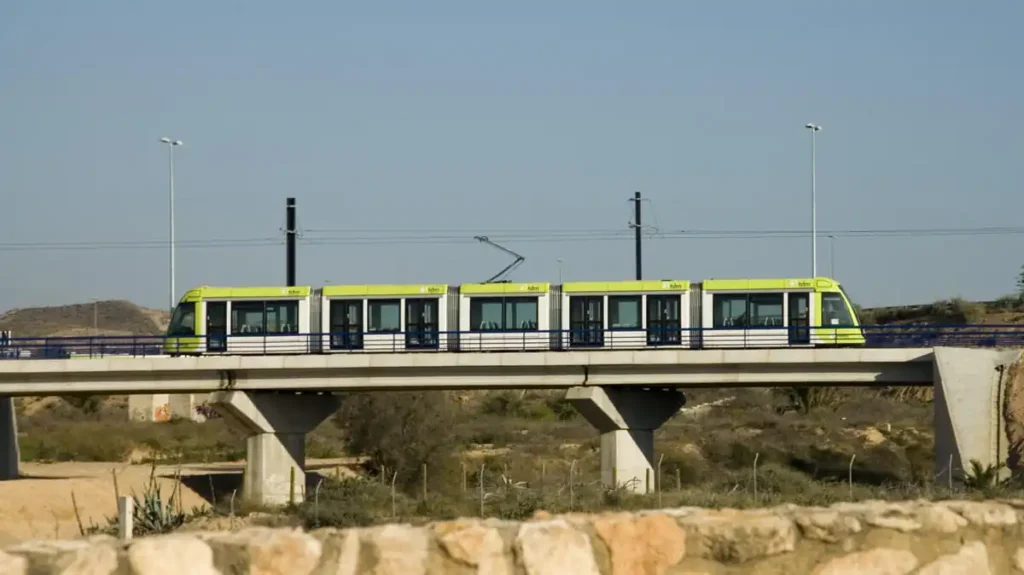
Alstom Citadis trams in Murcia have been leaving the depot every morning with 100% fleet availability for well over a decade.
This is reported by the railway transport news portal Railway Supply.
What looks like routine reliability is in fact the result of a tightly coordinated maintenance operation for operator Sociedad Concesionaria Tranvía de Murcia (TDM)*, overseen by Project Director Victor Montes and described in detail by Alstom.
Long-term partnership on the Murcia tramway
In the southern Spanish city of Murcia, Alstom has been looking after a fleet of eleven Citadis light rail vehicles since May 2011 — roughly 14 years of continuous cooperation. TDM (TranVÍA de Murcia) holds a 40-year concession from the local authorities to operate the Murcia tramway and contracts Alstom to maintain the vehicles. Within this arrangement, Alstom takes responsibility for everything inside the trams: preventive and corrective maintenance, wheel reprofiling, repairs and major overhauls.
Don’t miss…CAF trams for Maryland’s Purple Line delivered to MTA
The aim of this partnership is straightforward but demanding: the Murcia tram must be able to offer a reliable public transport service every day. Ridership on the tram system has been growing, and local residents increasingly depend on it for daily trips. For both TDM and Alstom, meeting these expectations is central to customer satisfaction and to the long-term success of the Murcia tram system.
How Alstom Citadis trams in Murcia achieve 100% fleet availability?
During peak periods, TDM operates 100% of the Citadis fleet in Murcia — not a single tram is left in reserve. As soon as the morning or evening rush is over, the first vehicle comes back into the depot for maintenance. The team decides the day before which tram will be withdrawn from service and what work it will receive, keeping the maintenance plan closely aligned with the timetable.
In this context, scheduling becomes the biggest challenge. Maintenance teams only have a few hours each day to complete their tasks, so large jobs are broken down into smaller phases to avoid disrupting operations. When a component has to be sent away for repair, it is swapped with another part so the tram can stay in service. Achieving 100% fleet availability under these conditions calls for careful logistics: tracking kilometres, recording where each spare part is used and organising workers’ shifts so preventive and corrective maintenance can be carried out on time.
For TDM, such performance is part of a wider sense of social responsibility. General Director Severiano Arias describes the Murcia tramway as “social responsibility in its purest form”. The objective, he stresses, is to offer a mobility service that performs well in terms of travel time, regularity, affordability and comfort, while improving environmental quality in the areas served. In practice, that means operating a Murcia tram system that the community can count on every day.
Digitalised maintenance with HealthHub and TrainTracer
Because the Citadis light rail vehicles cannot be taken out of service for long periods, maintenance on the Murcia tram has to be tightly monitored and optimised. Around 90% of maintenance surveillance and planning has already been digitalised. This allows the local services team to reduce the time vehicles spend immobilised and to keep 100% fleet availability as a realistic operational target rather than an exception.
Alstom is deploying HealthHub™ and TrainTracer on the Murcia fleet. These digital tools use smart and AI-based applications to collect and analyse data, detect emerging issues and support preventive maintenance. Thanks to this data monitoring, the team can plan interventions earlier while staying focused on next-day availability. Better visibility of each tram’s condition makes it easier to identify and resolve potential problems before they affect the Murcia tramway service.
The prototype for HealthHub was introduced three years ago and is now being scaled up, with the objective of having both HealthHub and TrainTracer fully deployed by 2026. The rollout is staged so that the services team can integrate digitalised maintenance into daily routines without undermining current performance levels on the Murcia tram.
At the same time, Alstom emphasises that technology only works when people can make the most of it. In Murcia, technicians are highly versatile: many combine mechanical, electrical and even painting skills. Their flexibility, commitment and quick reactions when issues arise are key to keeping Alstom Citadis trams in Murcia ready for service every morning and to maintaining 100% fleet availability at peak hours.
Lessons from 15 years of preventive and corrective maintenance
Over a 15-year period, the team in Murcia has failed to deliver 100% availability during peak hours on only four days — a result that Victor Montes considers remarkable. Achieving this level of consistency has required a rethink of how preventive and corrective maintenance is organised on the tramway. Rather than taking a tram out of service for several consecutive days to complete a major intervention, the work is divided into short sessions lasting a few hours and spread over several days.
The team often proceeds section by section — roof, body, interior — carrying out as much work as possible in the time available. Even extensive tasks such as wheel reprofiling are phased: one bogie is treated on one day and the second on another, so the vehicle can return to service between sessions. This modular, phased approach to maintenance is one of the key lessons from Murcia that can be applied to other Citadis light rail fleets and to similar sustainable public transport projects.
For Alstom, it is essential to keep teams aligned around these practices. The company works to ensure that everyone involved in the Murcia tramway — from depot staff to management — shares the same objective of supporting the operator and the city. Over 15 years, this mix of planning, flexibility and teamwork has allowed the operation to deliver 100% tram availability every morning, and TDM now regards Alstom not just as a subcontractor but as a long-term partner.
Murcia tram system growth, CO₂ savings and FCC concession
The Murcia tram is a light rail system inaugurated on 28 May 2011 to connect the city centre with the northern area and its outlying districts, a configuration also described by Railway Technology. The network consists of a single main line and a shuttle service, together covering 18 kilometres and 28 stops. In a characteristic “V” shape, the route links the city centre to the Nueva Condomina football stadium and to two major university campuses: the University of Murcia and UCAM Catholic University of Murcia.
Construction, maintenance and operation of the Murcia tramway are entrusted to FCC Construction for a 40-year period, counted from the start of civil works. This FCC Construction 40-year concession in Murcia has supported consistent development of the tram system. Since launch, the service has seen steady growth in ridership: from around 5.5 million users in its first year to more than 8.3 million in 2024, and over 66 million journeys in total. These figures confirm the Murcia tram as the city’s most widely used public transport mode.
Looking ahead, the city is preparing for the construction of an intermodal high-speed train station, with works expected to begin in about two years’ time, in line with broader developments on Spain’s high-speed network as previously covered by Railway Supply. In parallel, the tramway could be extended to connect with the future high-speed station and the new bus terminal, running through central Murcia and passing key points of interest.
The environmental impact of this sustainable public transport in Murcia is also substantial. By offering a tram-based alternative to private cars along main corridors, the system has prevented the emission of more than 35,000 tonnes of CO₂ since inauguration — an effect equivalent to planting over one million trees during the same period.
The fleet consists of 11 Citadis light rail vehicles, all fully accessible and with a capacity of 280 passengers each. Alstom is responsible for comprehensive maintenance of this entire fleet, ensuring that the Murcia tram continues to keep the city moving with reliable, frequent and environmentally friendly service.
News on railway transport, industry, and railway technologies from Railway Supply that you might have missed:
Find the latest news of the railway industry in Eastern Europe, the former Soviet Union and the rest of the world on our page on Facebook, Twitter, LinkedIn, read Railway Supply magazine online.Place your ads on webportal and in Railway Supply magazine. Detailed information is in Railway Supply media kit