A New Stage in the Development of Railway Transport in Mexico
16.07.2024
The inauguration of Mexico’s new president, Claudia Sheinbaum, marks an important stage in the development of the country’s passenger railway transport, this is reported by the railway transport news portal Railway Supply.

The president plans to continue and expand the railway revival program initiated by her predecessor, Andres Manuel Lopez Obrador.
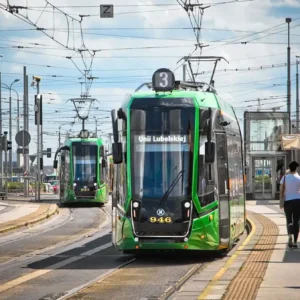
Turkish company Bozankaya has won the tender to supply trams for Belgrade
Special attention will be given to the construction of new passenger railway lines that will connect the capital, Mexico City, with the northern regions and the U.S. border.
Planned Projects
One of the key projects will be the construction of a line connecting Felipe Angeles International Airport (AIFA) with the city of Pachuca.
The length of this mainline will be 1,540 kilometers. Additionally, a railway line will be created from Mexico City through San Luis Potosi and Monterrey to Nuevo Laredo, with a length of 1,143 kilometers.
The third line will connect Mexico City with the cities of Querétaro and Guadalajara, with a length of 581 kilometers.
Tren Maya Model
The new projects will be based on the Tren Maya model, which involves a combination of new line construction and the modernization of existing infrastructure.
This model has already proven effective in current projects. Tenders for construction are planned for this year, with the start of construction scheduled for 2025.
Completion of Current Projects
Claudia Sheinbaum also intends to complete the construction of the Tren Maya mainline and the modernization of the interoceanic corridor through the Isthmus of Tehuantepec.
According to her, these projects will take four to five years, and by the end of her term, 3,000 kilometers of new passenger railway lines will be built in the country.
Characteristics of the New Railway Lines
The new railway lines will be electrified and designed for a maximum train speed of 160 kilometers per hour.
Currently, freight trains in Mexico operate on diesel traction, making the transition to electric traction a significant step forward in terms of ecology and resource savings.
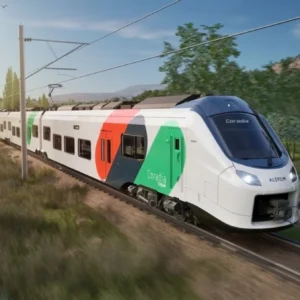
Rolling stock for the new lines will be produced in Mexico, where such global manufacturers as Alstom, CAF, and CRRC already have their facilities.
President Claudia Sheinbaum’s program for the development of passenger railway transport opens new prospects for Mexico’s transport system.
It is expected that the implementation of these projects will significantly improve the country’s infrastructure, reduce travel time between major cities, and make railway transport more accessible and environmentally friendly.
Photo: Tren Maya
Rail business, industry, and railway technology news from Railway Supply that you might have missed:
Wabtec is investing in the future of Kazakhstan’s railway industry
Find the latest news of the railway industry in Eastern Europe, the former Soviet Union and the rest of the world on our page on Facebook, Twitter, LinkedIn, read Railway Supply magazine online.Place your ads on webportal and in Railway Supply magazine. Detailed information is in Railway Supply media kit