
ÖBB Digital Automatic Coupling demonstration points to pioneer trains
In Austria, an ÖBB Digital Automatic Coupling demonstration took place under operating conditions at Vienna’s Floridsdorf freight yard on 11 September, ahead of commercial PioDAC operations in 2027/28.
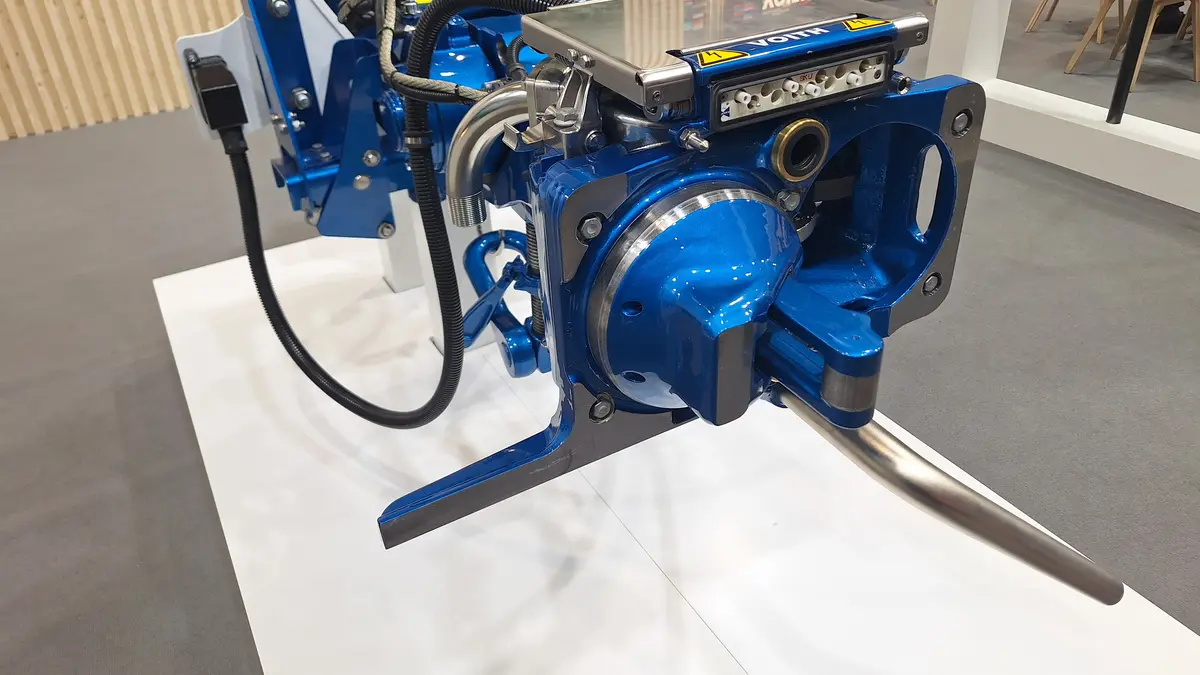
Behind the demonstration sits a schedule. ÖBB has named the Pioneer DAC Trains programme, or PioDAC, as its next milestone. Under the project, ÖBB says it will deploy the technology in commercial rail freight for the first time, working with European partners. The project is co-financed by the Connecting Europe Facility. Until now the technology has travelled on a dedicated demonstrator train within Europe’s Rail project FP5-TRANS4M-R. That train also carries couplers on locomotives, not only on wagons.
Winter trials in Salzburg’s Pongau region
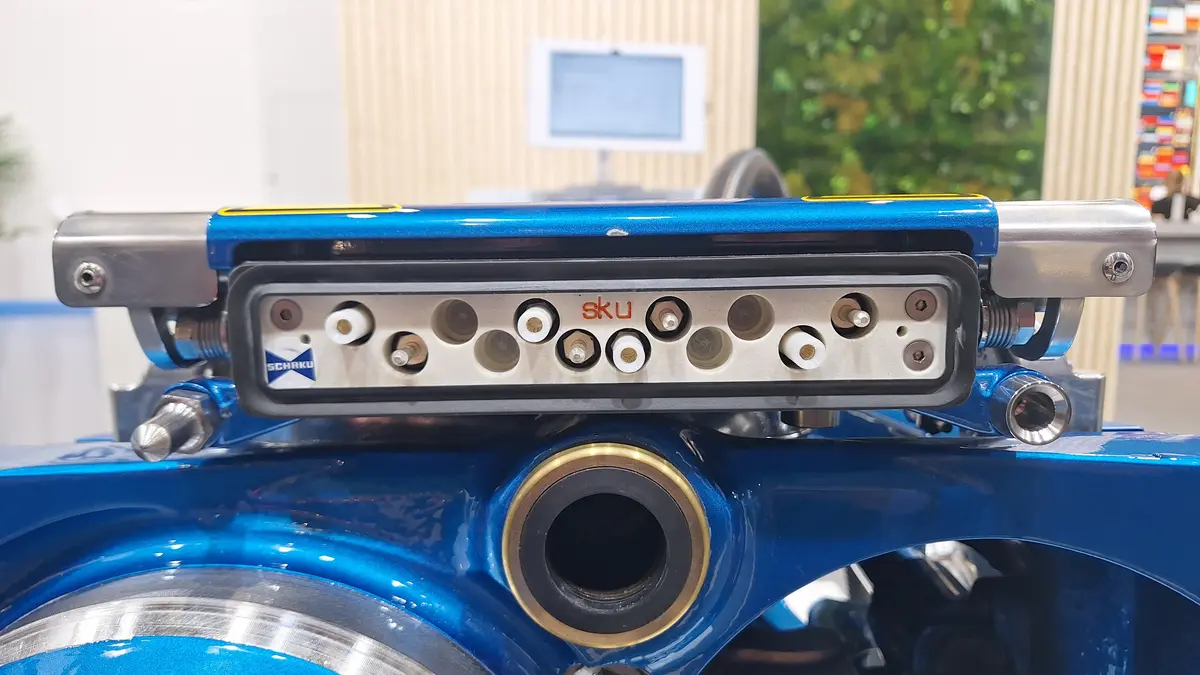
Much of the evidence comes from last winter. The test team spent three weeks in January coupling and uncoupling at Schwarzach-St. Veit in Salzburg’s Pongau region. The crew worked through freezing rain, fresh snow and temperatures near minus 15 degrees Celsius. Lubricants stiffen in that cold, rubber seals harden, and packed snow can reach the electrical contacts. Those parts therefore drew most of the attention. Afterwards the crew pulled the rake apart at Böckstein and let snow settle into every opening. The train then stood there for ten days to simulate the extended idle periods that occur in ordinary freight operations. ÖBB reported positive interim results, with the tested systems holding up in winter conditions.
From the Minden climate chamber to 550 kilonewtons
The field trials form part of a broader programme under FP5-DACtiVate, which complements FP5-TRANS4M-R. The Minden climate-chamber series ran from August to October 2025, before the Austrian winter trials. Testers exposed equipment from all manufacturers to temperatures from minus 25 to plus 40 degrees Celsius.
They also worked in powder snow, wet snow and ice, deliberately mixing equipment from different manufacturers to test cross-manufacturer compatibility. Separately, at Görlitz, three locomotives pushed a rake through an S-curve. That loads the coupling much as a banking locomotive loads it on a mountain pass.
Valerie Baumgartner, who coordinates DAC testing at ÖBB Rail Cargo Group, set the target well above the equipment it replaces:
“We do not merely want the DAC to match the performance of the screw coupling. We want it to be twice as good.”
In figures, the target is 550 kilonewtons for DAC, compared with 240 kilonewtons for the conventional screw-coupling-and-side-buffer arrangement. Nearly 100 pushing trials ran under TÜV SÜD supervision. Afterwards the test track itself needed replacing.
| Test series | Period | Location | Conditions and load |
|---|---|---|---|
| Derailment and pushing trials | June–July 2025 | Görlitz, Germany | Push force of up to 550 kilonewtons through an S-curve; nearly 100 runs supervised by TÜV SÜD |
| Climate chamber | August–October 2025 | Minden, Germany | Minus 25 degrees Celsius to plus 40; powder snow, wet snow and ice; couplers of different makes mated with each other |
| Winter field trials | January–February 2026 | Schwarzach-St. Veit and Böckstein, Austria | Freezing rain and fresh snow at temperatures near minus 15 degrees Celsius; ten days standing with snow inside the components |
| Crash tests (planned) | Autumn 2026 | Görlitz, Germany | Impacts at five to ten metres per second, with hazardous-goods wagons striking an immovable obstacle |
Sources: ÖBB Rail Cargo Group, test programme report of 23 July 2026; ÖBB, press release of 6 March 2026. The completed climate-chamber, pushing and winter field tests are preparing the technology for the pioneer phase; the crash-test series was still scheduled for autumn 2026 when the July report was published.
What the pioneer phase will demand
PioDAC will raise the operational exposure sharply. Seven pilot trains will run across Europe, several of them across borders. The project covers approximately 500 DAC units, 250 freight wagons and 15 locomotives. Over the operating phase those trains should cover roughly nine million route kilometres and perform about 17,000 coupling and shunting operations. The trains will also face temperatures from minus 20 to plus 45 degrees Celsius and height differences of up to 1,300 metres. The Austrian train will carry gravel between Hegyeshalom and Vienna, with shunting trials at the Wien Kledering hump yard.
Still, that phase has already slipped once. In December 2024 the European DAC Delivery Programme revised its master plan. Running the pioneer trains moved back a year, to 2027/28. The change reflected the FP5-TRANS4M-R schedule, under which technology development was extended through the end of 2026.
Behind that schedule sits the size of the migration task. VPI estimates that roughly 450,000 European freight wagons would need the new coupling technology.
| Date | Step |
|---|---|
| 22 June 2020 | The DAC4EU consortium receives the German pilot project covering demonstration, testing and approval |
| September 2021 | The Scharfenberg/Latch Type design is chosen as the European coupler type |
| 2022 to end-2026 | FP5-TRANS4M-R develops the technology and runs the demonstrator trains |
| December 2024 | The European DAC Delivery Programme confirms master plan version 02 and moves pioneer train operation to 2027/28 |
| 2027/28 | Pioneer DAC Trains carry paying freight across Europe |
Sources: DAC4EU project information; Europe’s Rail, European DAC Delivery Programme. The pioneer trains are intended to provide evidence for further European decisions on DAC deployment.
Meanwhile, other operators are preparing pioneer trains of their own, including intermodal services on the Oslo–Bergen route in Norway. For ÖBB, the next task is to demonstrate certification readiness and economic benefits under commercial operating conditions.


