New Haven Line flooding hits a stretch already cut for bridge work
In the United States, New Haven Line flooding stopped Amtrak’s New York–Boston trains on 13 September during a weekend already running reduced schedules for WALK Bridge work.
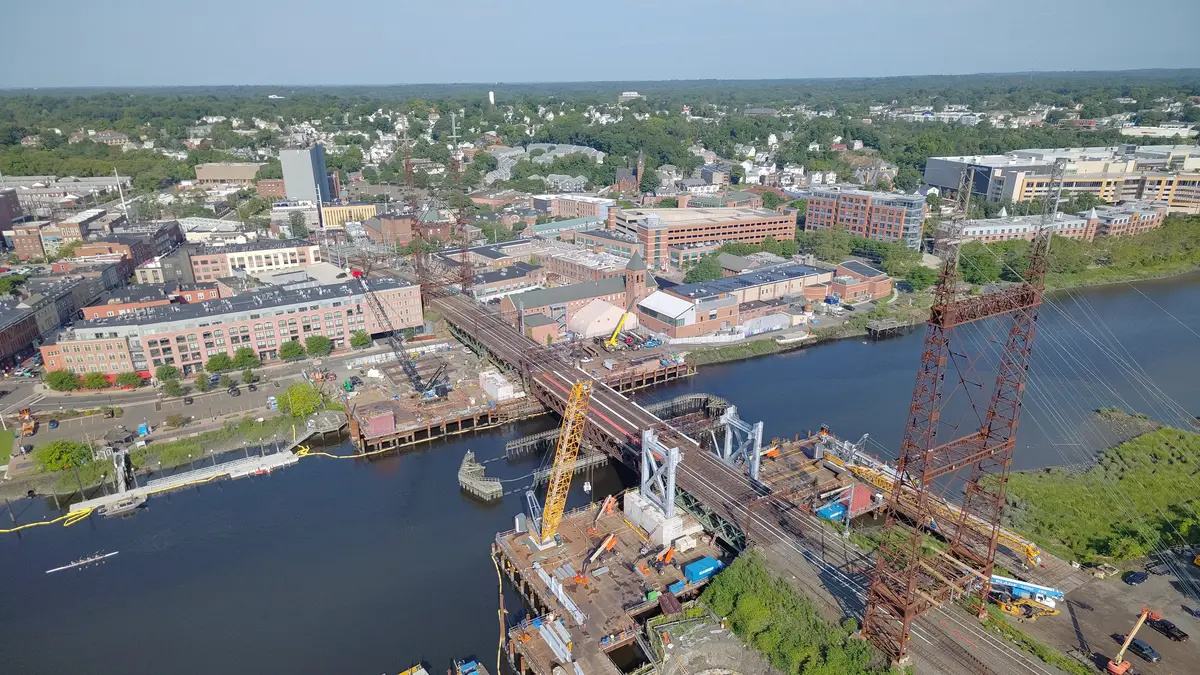
The water also closed part of the Northeast Corridor through southern Connecticut. The disruption landed on a weekend when the corridor already ran a reduced timetable for bridge work at Norwalk.
Amtrak cited high tides and debris near New Haven for the suspension between Boston and New York. The operator also said railroad crews were inspecting the affected tracks to ensure that trains could operate safely. It was coordinating with Metro-North and had no estimated restart time on Sunday evening.
Meanwhile, the office of Connecticut Governor Ned Lamont reported suspended Metro-North and Amtrak service between Norwalk and Bridgeport because of track conditions caused by heavy rain. Flash flooding hit several parts of the state that morning. The same storm also closed the departures terminal at Tweed New Haven Airport.
What the WALK Bridge weekend plan already required
Before the storm, the corridor already worked to a reduced plan. On 9 September, the Connecticut Department of Transportation (CTDOT), Metro-North and Amtrak reminded customers about modified weekend schedules between New Haven and New York. Those cuts run on selected weekends from 12 September through 1 November. Behind them sits the removal of two 234-foot utility towers and their overhead wire at the WALK Bridge Replacement Project in Norwalk.
The weekend of 12–13 September was the first of five such reductions over eight weeks. Because legacy catenary wire was coming down, a diesel plan covered through trains between Grand Central Terminal and New Haven. Those trains ran through the work zone at roughly 90-minute intervals. Seating fell by about 55% against a normal Metro-North weekend. A shuttle linked New Haven and Bridgeport, while main-line trains ran between Grand Central and South Norwalk.
Who owns the track Amtrak was waiting on
CTDOT owns the Connecticut portion of the New Haven Line and acts as its commuter rail authority. Metro-North operates the line under an agreement with the department. Amtrak therefore uses infrastructure that it does not own on this part of the New York–Boston route. On Sunday evening, Amtrak said it was coordinating with Metro-North while railroad crews inspected the affected tracks and determined when the route would be safe for trains.
The WALK Bridge record before replacement
The four-track swing bridge over the Norwalk River dates from the 1890s and runs 564 feet. CTDOT puts pre-pandemic traffic across it at roughly 175 trains and 125,000 passengers a day. Furthermore, the department records 12 failures in 138 openings during 2011. In 2013 the bridge failed 16 times in 271 openings. Two more failures followed inside two weeks in 2014, and the CTDOT commissioner signed an emergency declaration on 8 July 2014. CTDOT anticipates completion of the replacement by 2030.
| Feature | Bridge in use | Replacement |
|---|---|---|
| Type | Four-span swing bridge, 564 feet long | Multi-span bridge with 240-foot dual lift spans and fixed east and west approaches |
| Timeline | Built in the 1890s | Completion anticipated by 2030 |
| Track layout | Four-track bridge with a swing span | Two movable spans of two tracks each, each able to work on its own during a track outage |
| Towers | Two 234-foot utility towers, now being removed | Lift towers 150 feet above rail level, nearly 100 feet shorter than the towers being removed |
| Recorded opening failures | 12 of 138 openings in 2011 (8.7%); 16 of 271 in 2013 (5.9%); two inside two weeks in 2014 | No operating record yet |
Percentages are a Railway Supply calculation from the failure and opening counts published by CTDOT, rounded to one decimal place. Sources: WALK Bridge Program overview; The New WALK Bridge Design; CTDOT, 13 August 2026.
CTDOT has dated three more reductions: 19–20 September, 10–11 October and 17–18 October. On the October weekends electric trains keep running through the reconstruction zone in scheduled work windows, with about five trains per window and roughly 30% fewer seats.
In its 13 August announcement, CTDOT counted five weekend reductions through 1 November but identified dates for only four of them. It did not give a date for the fifth. In February, meanwhile, a blizzard closed the same New York–Boston section, although that shutdown came from snow rather than water.
| Weekend | Work | Service plan | Seats against a typical weekend |
|---|---|---|---|
| 12–13 September | Catenary wire demolition | Diesel-hauled through trains, Grand Central Terminal to New Haven, roughly every 90 minutes in the work zone | About 55% fewer |
| 19–20 September | Catenary wire demolition | Diesel-hauled through trains, Grand Central Terminal to New Haven, roughly every 90 minutes in the work zone | About 55% fewer |
| 10–11 October | High tower construction | Electric trains keep running through the reconstruction zone in scheduled windows, about five trains per window | About 30% fewer |
| 17–18 October | High tower construction | Electric trains keep running through the reconstruction zone in scheduled windows, about five trains per window | About 30% fewer |
| Fifth weekend | Not published | Not published | Not published |
CTDOT counts five weekend reductions over eight weeks through 1 November 2026 and has published dates for four of them. October schedules were due from Metro-North in late September, and the department notes that the construction schedule can change. Sources: CTDOT, 13 August 2026; CTDOT, 9 September 2026.


