FRA Proposes English Proficiency Rule and 10-Mile Limit
USA: The FRA English proficiency proposal would make language ability part of engineer and conductor certification while codifying a 10-route-mile limit for Mexican-based crews operating across the southern border.
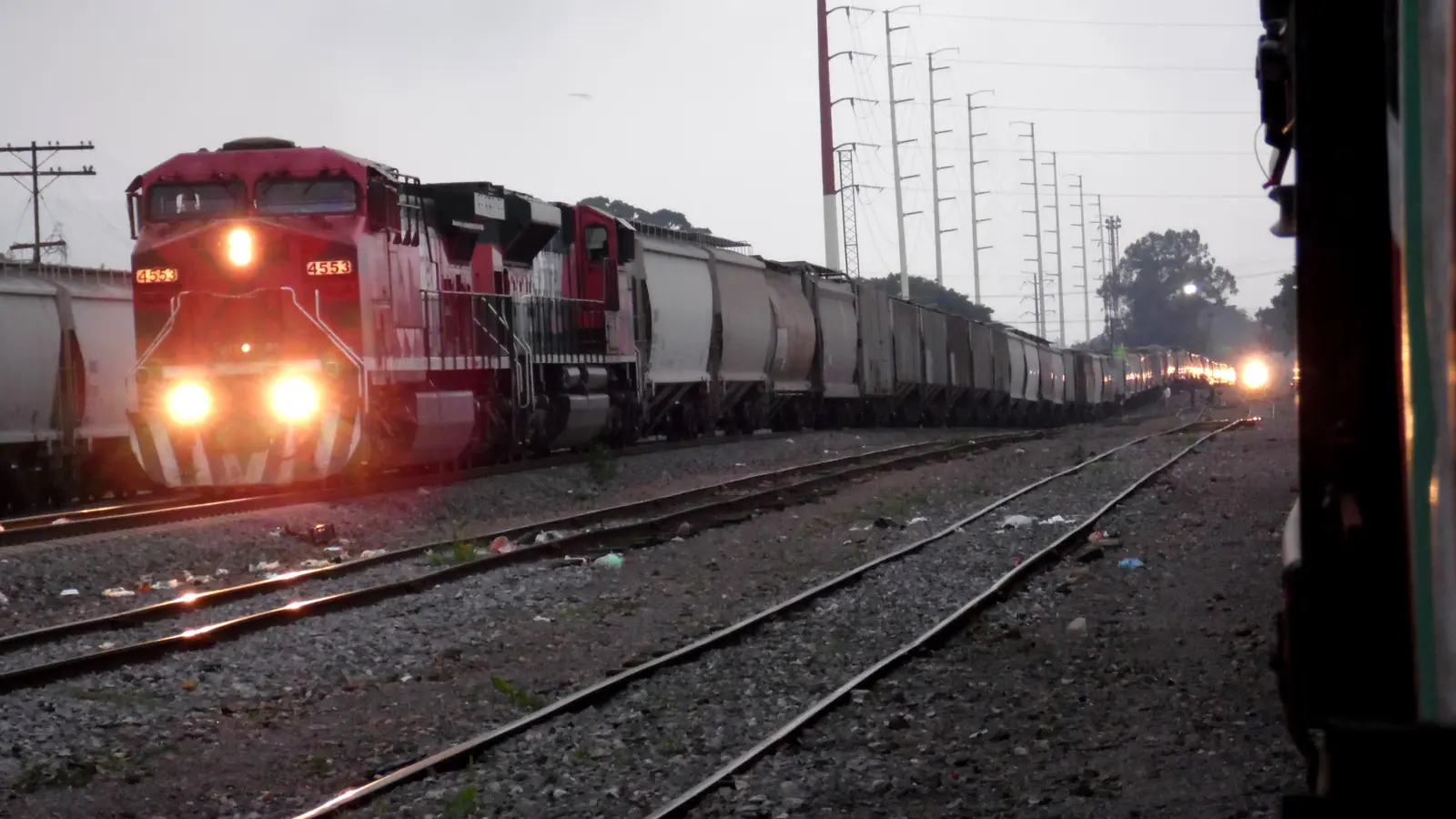
The notice of proposed rulemaking would amend 49 CFR Parts 240 and 242. Railroads would have to confirm that engineers and conductors can read, speak, and write English well enough to perform safety-critical duties before issuing or renewing certification.
FRA is not proposing a general fluency test. Its standard is job-specific: crew members would need to understand operating rules, timetables, signage, and mandatory directives; communicate with dispatchers and emergency responders; explain hazards and cargo information; and complete required safety records. Railroads could design their own evaluation methods, while the draft guidance recommends documented conversational interviews.
Mexican-based crews would face a codified 10-mile limit
A Mexican-based engineer or conductor could be certified for U.S. operation only after the controlling U.S. railroad trained, tested, and certified that employee under its FRA-approved program. The railroad could not rely on qualification decisions by Mexican carriers or authorities.
The crew member would have to meet the English standard or work with a U.S.-certified, territory-qualified pilot proficient in English and Spanish. If neither the engineer nor conductor met the standard, one pilot could cover both positions only when holding both certifications.
Movement would be limited to a continuous trip between the international border and a U.S. railroad yard whose southernmost point of entry is within 10 route miles of the border crossing. The proposal would codify the restriction FRA detailed for Union Pacific and CPKC in December 2025, after inspectors observed instances in which inbound crews appeared to have difficulty interpreting General Track Bulletins and communicating safety requirements. FRA says existing crew-change points are already within the limit, so this provision should not disrupt current operations.
Canadian-based crews would also need English proficiency, but FRA is not proposing a 10-mile cap at the northern border because it regards Canadian qualification standards and regulatory oversight as comparable.
Don’t miss…Knorr-Bremse Agrees to Sell Merak Rail HVAC Business
FRA estimates 11,309 inbound trains from Mexico
FRA cited 11,309 inbound trains from Mexico in 2025, or about 31 per day. From that traffic, the agency estimated that as many as 93 Mexican-based crew members might need English training, while warning that this upper bound may overstate demand because some already meet the proposed standard.
Using an assumed $467 course cost per worker in 2025 dollars, FRA estimated $43,431 in first-year training costs and $51,837 in undiscounted costs over ten years. It expects only minimal costs for most U.S. railroads because training and testing are already conducted in English, and it would not require program resubmission solely to add the new standard.
Manual skills testing would also change
The proposal also says triennial engineer skills examinations and annual monitoring observations could not be conducted while an energy management system controlling the throttle is engaged, unless it is integrated with a critical-safety system. FRA says the change is intended to ensure supervisors assess manual throttle and braking performance.
Territorial qualification would become direction-specific, so qualifying over a route in one direction would not automatically qualify an engineer or conductor for the reverse movement. The notice is scheduled for Federal Register publication on July 31, opening a 60-day comment period under Docket FRA-2026-2014. Until a final rule takes effect, the new certification provisions remain proposals.
News on railway transport, industry, and railway technologies from Railway Supply that you might have missed:


