Amtrak OIG Flags Five Challenges Through Fiscal 2027
USA: The Amtrak Office of Inspector General has identified five Amtrak management challenges for fiscal years 2026 and 2027, spanning safety, investment, finances, customer service and technology.
Issued on July 20 as report OIG-SP-2026-008, the official OIG review groups the priorities into safety and security, capital investment, financial management, customer service and technology. The watchdog says the pressures converge as Amtrak operates a round-the-clock passenger railroad, delivers a large capital portfolio and pursues operational profitability.
Safety and capital execution lead the agenda
Safety remains the first priority despite changes introduced after earlier derailments. Amtrak implemented its Safety Management System before the March 2021 regulatory deadline, elevated Safety and Security to an executive function and deployed Positive Train Control across most of its network.
The OIG also quantified risks beyond derailments. From FY 2020 through FY 2023, Amtrak was involved in approximately 800 train strikes that resulted in 594 deaths and 279 injuries. Nearly all the fatalities occurred at highway grade crossings or on host-railroad tracks, where Amtrak has limited control over crossings and fencing.
Capital delivery is expanding at the same time. Amtrak has nearly 500 projects between planning and execution, including at least 10 worth more than $1 billion each. Capital expenditure exceeded $5.5 billion in FY 2025 and is forecast to peak near $7.8 billion in FY 2027, according to the OIG press release.
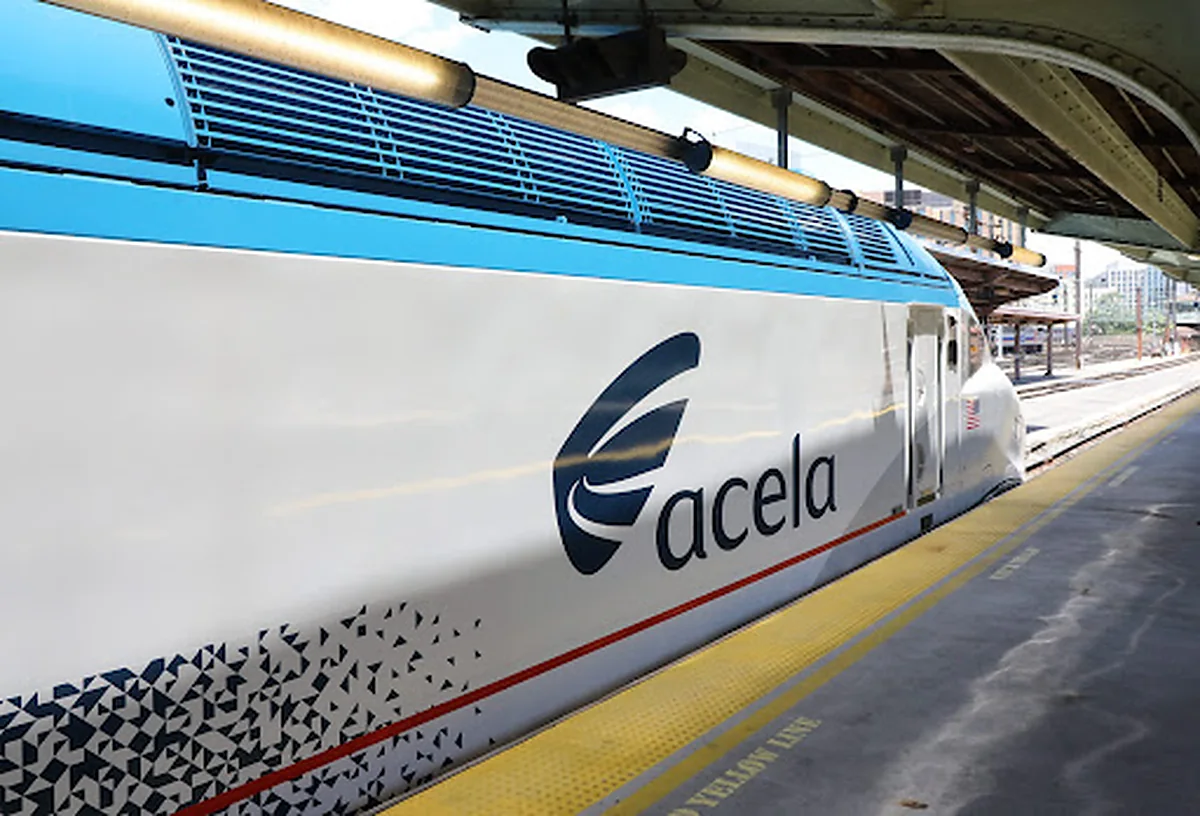
The portfolio includes the approximately $1.5 billion NextGen Acela program, the roughly $3.6 billion Airo procurement and a multibillion-dollar long-distance fleet replacement. The OIG said NextGen Acela faced a four-year safety-approval delay and subsequent quality problems, while the long-distance procurement was rebid and delayed by more than two years after unrealistic designs were developed.
Don’t miss…Union Pacific Big Boy Tour Ends After 7,145-Mile Journey
Financial controls face a larger spending pipeline
Amtrak’s adjusted operating loss fell from $1.08 billion in FY 2021 to $598.4 million in FY 2025, with $460.6 million planned for FY 2026. The company aims to reach operational profitability by the end of FY 2028.
The OIG nevertheless identified contract discipline as a continuing risk because approximately $7 billion in planned FY 2026 capital spending will flow to contractors. It also reported more than 75 fraud investigations since FY 2022 and said several earlier recommendations, particularly those concerning health-care fraud, remain incomplete.
Delays, accessibility and technology shape passenger impact
Long-distance on-time performance fell from 57% in FY 2024 to 53% in FY 2025, while state-supported and Northeast Corridor services have also trended downward since FY 2021. Among delayed passengers, satisfaction with train-status communications averaged 68% during the first seven months of FY 2026.
Accessibility remains another measurable gap. Only 163 of 382 stations served by Amtrak—43%—were ADA compliant. The underlying OIG report lists 2031 as the company’s goal for making stations accessible, leaving 219 stations to address.
Technology adds a separate delivery challenge. The OIG estimates that modernization of core business systems will cost more than $340 million and calls for stronger project management, cybersecurity controls and data governance as Amtrak replaces outdated systems and integrates artificial intelligence.
For passengers, the five management priorities converge in daily outcomes: safer operations, more reliable trains, clearer disruption information and accessible stations while Amtrak executes its investment program.
News on railway transport, industry, and railway technologies from Railway Supply that you might have missed:


